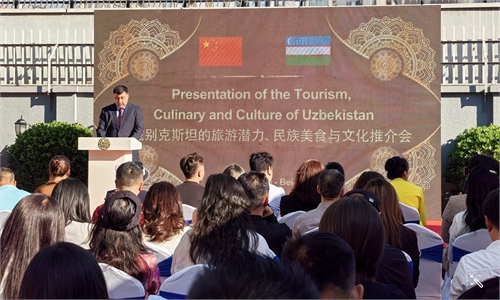
Uzbek Ambassador to China Farhod Arziev publishes signed article titled ‘Interregional dialogue is becoming an important dimension of Uzbek-Chinese cooperation’ on the Global Times
Vitality engine
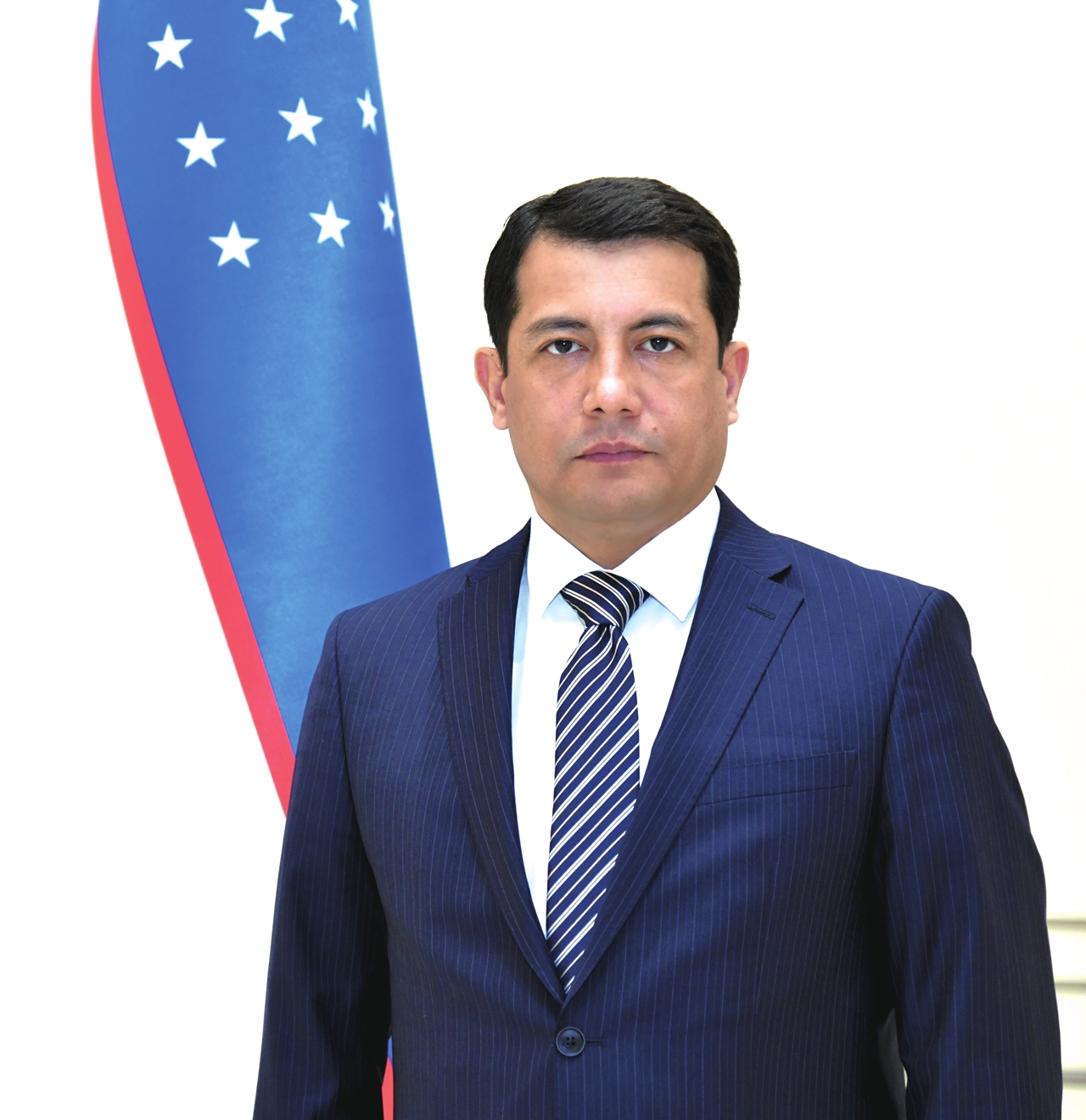
Farhod Arziev, Uzbek Ambassador to China Photo: Courtesy of the Embassy of Uzbekistan in China
Today, China-Uzbekistan all-weather comprehensive strategic partnership for a new era has reached an unprecedentedly high level, accompanied by an expansion of practical cooperation. One dimension of mutually beneficial ties is interregional cooperation.The Third Uzbek-Chinese Interregional Forum, which is taking place from May 20 to 22 in the historic city of Xi'an, Northwest China's Shaanxi Province, will undoubtedly become another important milestone in deepening cooperation between the regions of our countries.
The ties between the regions of Uzbekistan and China stretch back centuries, forming a unique historical foundation. The ancient cities of Uzbekistan and China were connected by trade, culture, science, and people-to-people contacts. The ancient Silk Road not only facilitated economic prosperity but also served as a space for the exchange of ideas, technologies, knowledge, and cultural traditions.
In recent years, under the strategic guidance of the heads of state, relations between the two countries have acquired a qualitatively new dimension and our cooperation has entered a "golden period of development."
The close relations between the two heads of state serve as a strong foundation and the most important factor in bilateral cooperation. Regular meetings between the heads of state, a high level of political trust, and alignment of views on a wide range of international and regional issues create favorable conditions for expanding practical interaction across all spheres.
Interregional dialogue is becoming one of the most dynamically developing components of this cooperation.
In January 2024, the First Uzbek-Chinese Interregional Forum was held in the city of Urumqi, marking a new starting point for the development of horizontal ties between the regions of the two countries.
The Second Interregional Forum, held on June 1-2, 2025, in Samarkand, confirmed that regional interaction is gradually turning into one of the key pillars of bilateral partnership. Its scale has grown noticeably. The events were attended by over 2,800 representatives from both countries - from government structures, regional administrations, business circles, educational and scientific institutions.
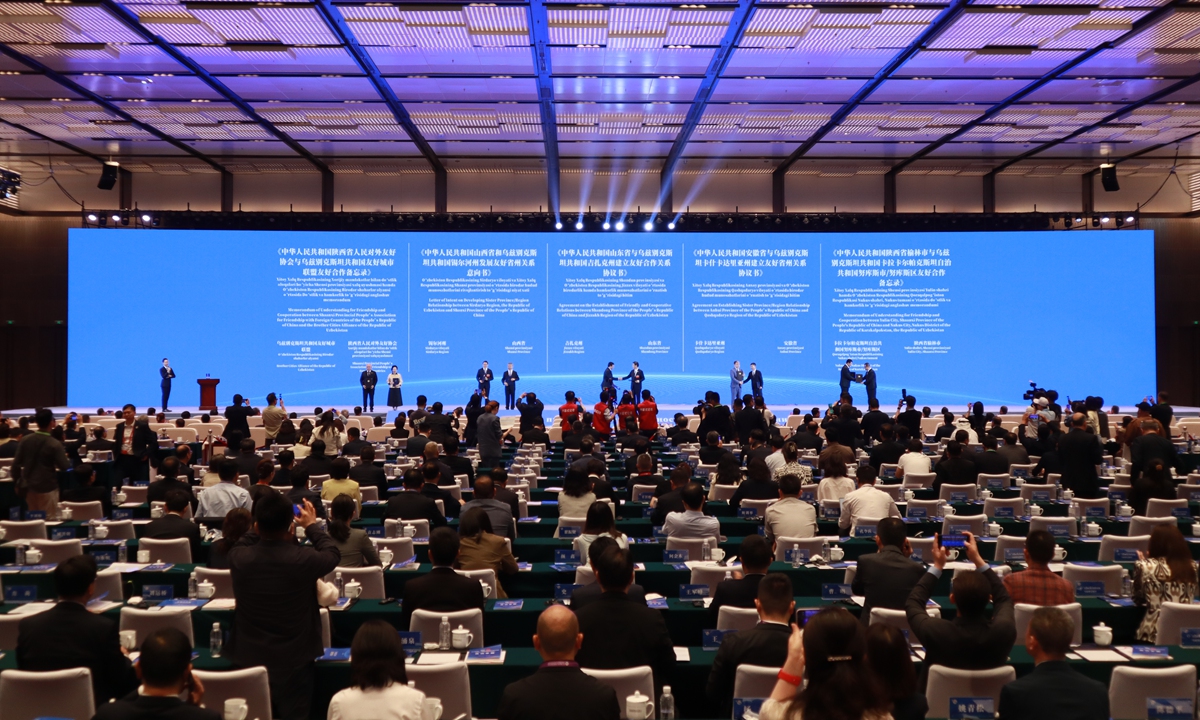
The Third Uzbek-Chinese Interregional Forum opens in Xi'an, Northwest China's Shaanxi Province, on May 21, 2026. Delegates exchange cooperation agreements during the opening ceremony. Photos: VCG
The Third Interregional Forum, which takes place in Xi'an - the ancient capital of China and the historical starting point of the ancient Silk Road - promises to be the next milestone in its development.From this city, routes connecting China with Samarkand, Bukhara, Fergana, and other ancient centers of our country once began. For centuries, Xi'an served as a meeting place for civilizations, trade, scientific knowledge, and cultural exchange. Undoubtedly, the forum will raise interregional cooperation between Uzbekistan and China to an even higher level, opening new opportunities for implementing joint initiatives, expanding investment partnerships, and further bringing our peoples closer together.
The dynamics of the relationship are also reflected in economic indicators. A significant part of this dynamic is driven by interregional cooperation. Thanks to investments, new production facilities, industrial capacities, logistics centers, and energy infrastructure projects are being created in the regions. Over the past five years, the total volume of mutual trade has increased threefold. Today, there are 5,400 enterprises with Chinese capital operating in our country.
The continuously improving level of connectivity has laid a solid foundation for facilitating in-depth local cooperation between the two countries. Currently, more than 60 flights per week are operated between Uzbekistan and China on more than ten routes. These routes connect not only capitals but also major regional centers, opening additional opportunities for business, tourism, and investment contacts. From Tashkent, Samarkand, and Fergana, passengers can fly directly to Beijing, Shanghai, Xi'an, Guangzhou, Hangzhou, Chengdu, Urumqi, Sanya, and several other Chinese cities.
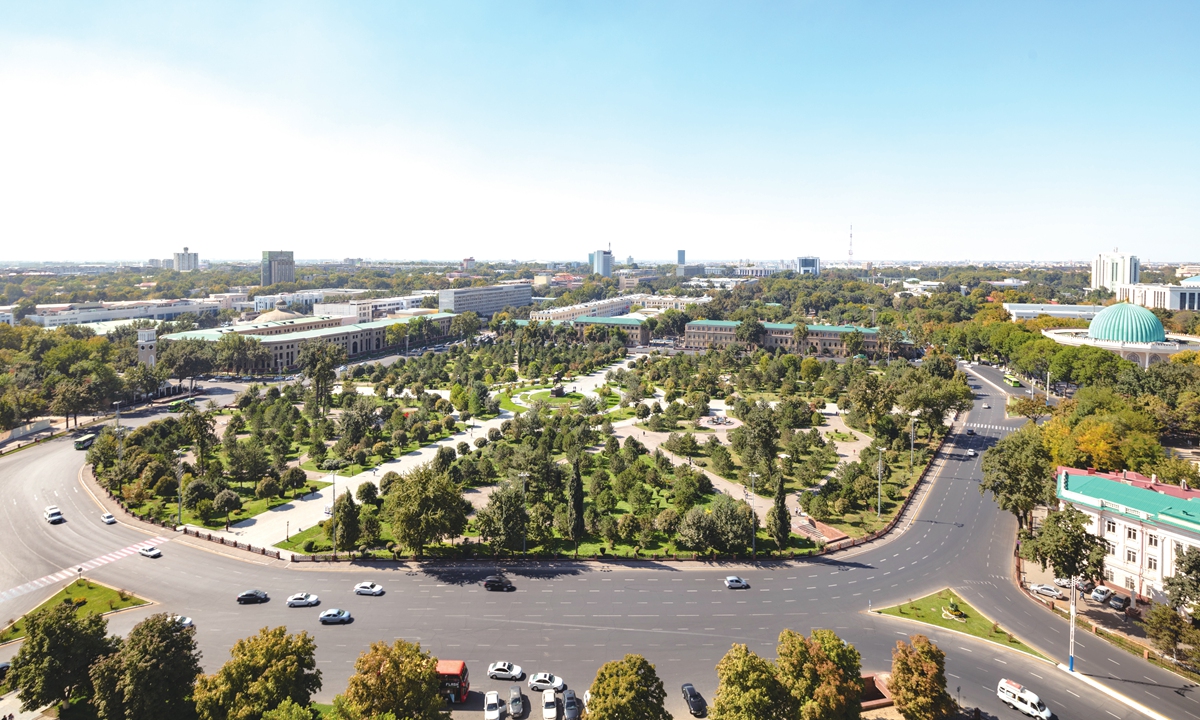
Amir Temur Square in downtown Tashkent, Uzbekistan
Against this backdrop, the number of mutual tourist visits is growing. In 2025, over 300,000 Chinese tourists visited Uzbekistan, several times more than in the previous year. This is facilitated by the 30-day visa-free policy established between our countries in June 2025.In general, in current conditions, regions are increasingly becoming points of economic growth, platforms for technology implementation, attracting investment, developing industrial cooperation, and humanitarian exchanges.
Uzbekistan is willing to work with China to give full play to the role of interregional cooperation mechanisms and platforms, promote the implementation of more practical cooperation results, continuously enrich the connotation of the Uzbekistan-China all-weather comprehensive strategic partnership for a new era, and promote the friendly cooperation between the two countries to move forward.
The author is the Ambassador of Uzbekistan to China
RELATED ARTICLES