EU reportedly proposes temporary lift of ban on Chinese chipmaker; reported plan, result of intense industry pressure, shows 'de-risking' approach infeasible: analyst
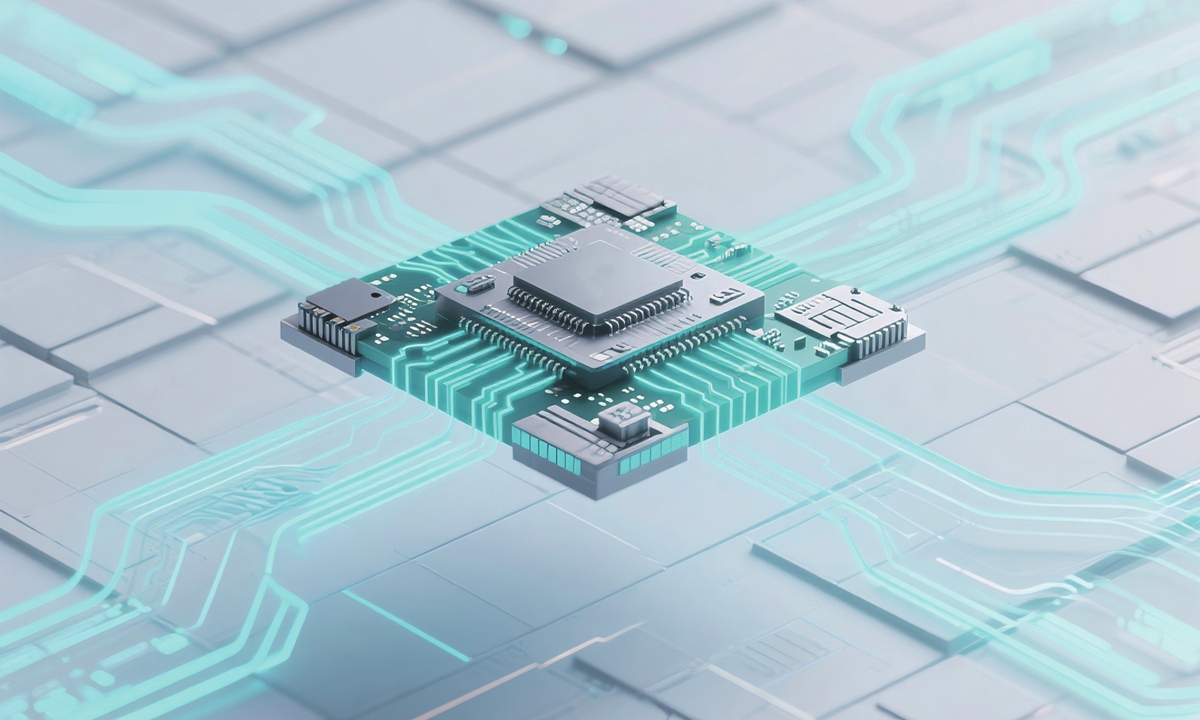
An AI-generated image of a chip Photo: VCG
The European Union will propose temporarily lifting unilateral sanctions on a Chinese semiconductor supplier, as early as this week, after the bloc's automakers warned of impending supply chain chaos if the ban isn't removed, Bloomberg reported. Chinese analysts pointed out that this is the result of intense pressure from EU's industries and enterprises, and it also confirms that EU's so-called "de-risking" approach is inherently unreasonable and lacks market feasibility when confronted with real-world industrial cooperation.
According to a Bloomberg report citing people familiar with the matter, the European Commission, the EU's executive arm, will propose the exemption for chip manufacturer Yangzhou Yangjie Electronic Technology Co as early as this week. Implementation of such a move would require approval by the bloc's 27 member states.
According to the European Commission, Yangjie Electronic is a leading Chinese IDM manufacturer specializing in semiconductor devices used in various industries, including automotive, new energy, and consumer electronics.
Yangjie Electronic was sanctioned by the EU in April, included in the EU's 20th sanctions package, which listed entities based in China that the bloc claimed provided dual-use goods or weapons systems to Russia, said Bloomberg.
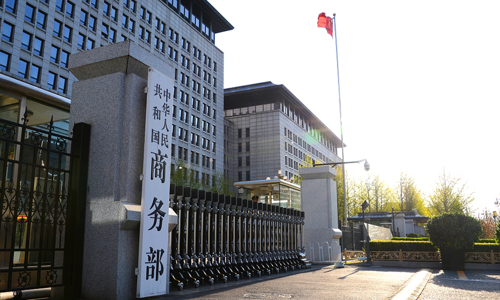
When asked to comment on EU's sanction package that included Chinese enterprises, a spokesperson for the Ministry of Commerce said on April 25 that the EU, disregarding China's repeated representations and strong opposition, has brazenly included Chinese companies in its 20th round of sanctions against Russia. China expresses strong dissatisfaction and firm opposition to this action.
"China has repeatedly reiterated its resolute opposition to unilateral sanctions that lack authorization from the United Nations Security Council, as well as to the EU's so-called long-arm jurisdiction over Chinese companies and individuals. China urges the EU to immediately remove Chinese companies and individuals from its sanctions list," said the spokesperson.
China will take necessary measures to firmly safeguard the legitimate rights and interests of Chinese enterprises. All consequences arising therefrom shall be borne entirely by the European side, the spokesperson stressed.
European automakers lobbied the EU to delay the ban, saying they have not had time to diversify their supply chains and that the measures would cause stocks to be depleted in weeks, said the people who spoke on the condition of anonymity, according to Bloomberg. Any derogation would be temporary and likely last several months to give the industry more time to find alternative suppliers, Bloomberg said.
"The European Automobile Manufacturers' Association (ACEA) and major players such as Volkswagen and BMW have long warned of the risks of supply chain disruptions. The EU's potential compromise this time is not a sudden awakening of conscience, but rather a concession forced by real business interests and supply chain cooperation. When factory shutdowns hurt more than the so-called 'de-risking' need, sanctions naturally loosen," Zhang Xiaorong, director of the Beijing-based Cutting-Edge Technology Research Institute, told the Global Times on Friday.
Zhang noted that sanctions are essentially political manipulation, yet the semiconductor industry features extremely deep global division of labor. Forcible decoupling would cause European automakers' costs to surge and paralyze production capacity. This kind of "self-harming sanction" exposes the blind spots in the EU's so-called strategic autonomy.
Apart from Yangjie Electronic, the Bloomberg report also noted that EU's auto industry already felt severe supply strains late in 2025, citing Chinese-owned chipmaker Nexperia, whose operations located in the Netherlands were taken control by the Dutch government in October.
ACEA in late October voiced deep concern over potential significant disruption to European vehicle manufacturing if the interruption of Nexperia chip supplies cannot be immediately resolved.
Bloomberg said that since then, a demand surge for memory chips led by artificial intelligence applications has also crimped supplies and pushed prices sharply higher.
Chinese experts noted that the so-called "Nexperia crisis" was triggered by the Dutch move, which represented a clear politicization of economic and trade matters, violating international norms, the spirit of contractual agreements, and basic market principles. It set a dangerous precedent for both the Netherlands and the broader EU.
Zhang noted that the Nexperia issue and the proposed ban lift on Yangjie Electronic proved that the European automotive industry has deep cooperation with Chinese suppliers, such as insulated gate bipolar transistors and other power semiconductor devices. This also proved that EU's so-called "de-risking" approach is inherently unreasonable and lacks market feasibility.
"China is already the world's largest producer of semiconductor discrete devices. There is critical supply chain cooperation between Chinese and European automobile industries that cannot be easily severed," said Zhang.
RELATED ARTICLES