Xizang marks 75th anniversary of peaceful liberation; experts gather in Lhasa to review regional development
By and Yang Ruijia in Lhasa Published: May 23, 2026 07:21 PM

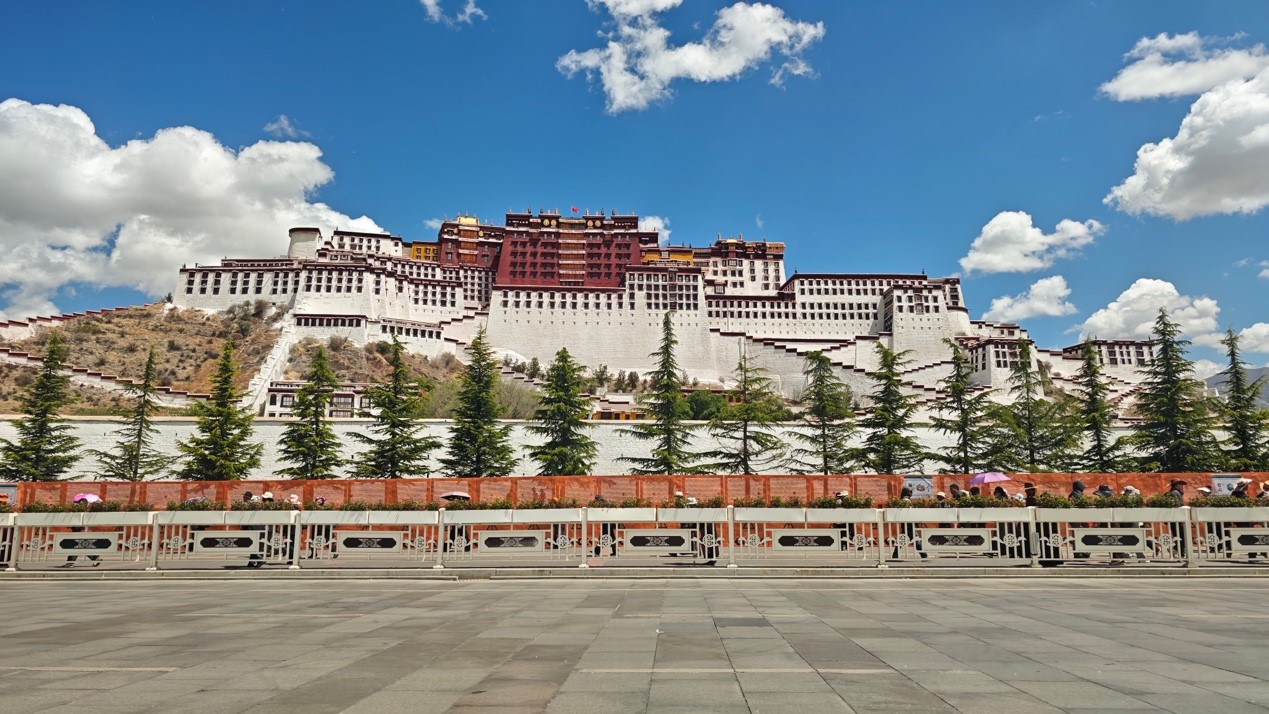
The Potala Palace on May 23, 2026 Photo: Shan Jie/GT
Xizang Autonomous Region (XAR) in Southwest China celebrated the 75th anniversary of its peaceful liberation on Saturday, with scholars and experts gathering in Lhasa for an international symposium to discuss the historic significance of the peaceful liberation and the region's remarkable transformation over the past decades.Held at the Xizang Museum, the symposium, themed "75 Years since the Peaceful Liberation: Achievements and Implications of Xizang's Development," focused on topics including high-quality economic development in Xizang, progress in human rights protection, and the experience and value of building a beautiful Xizang.
Participants included Chinese scholars from major research institutions and universities, as well as foreign experts from overseas and those based in China.
In the keynote session, Sun Xianzhong, vice chairman of the Standing Committee of the People's Congress of XAR and secretary of the Party Committee of Xizang University, said that over the past 75 years, under the strong leadership of the Communist Party of China and with the full support of the people across the country, the people of all ethnic groups in Xizang have become masters of their own destiny, creating a vibrant picture of political stability, economic prosperity, cultural flourishing, social harmony and sound ecology, and achieving a human miracle of "leaping across a thousand years in just a few decades."
Krishna Prasad Oli, former ambassador of Nepal to China and ecological expert, said at the opening ceremony that Xizang's ecological protection carries significance beyond the region itself. "Protecting its ecosystem is not only a priority, but a global responsibility," Oli, who is also a professor at the Nepal National Planning Commission said. "Integrating traditional wisdom with modern science, Xizang can serve as a model for ecological governance."
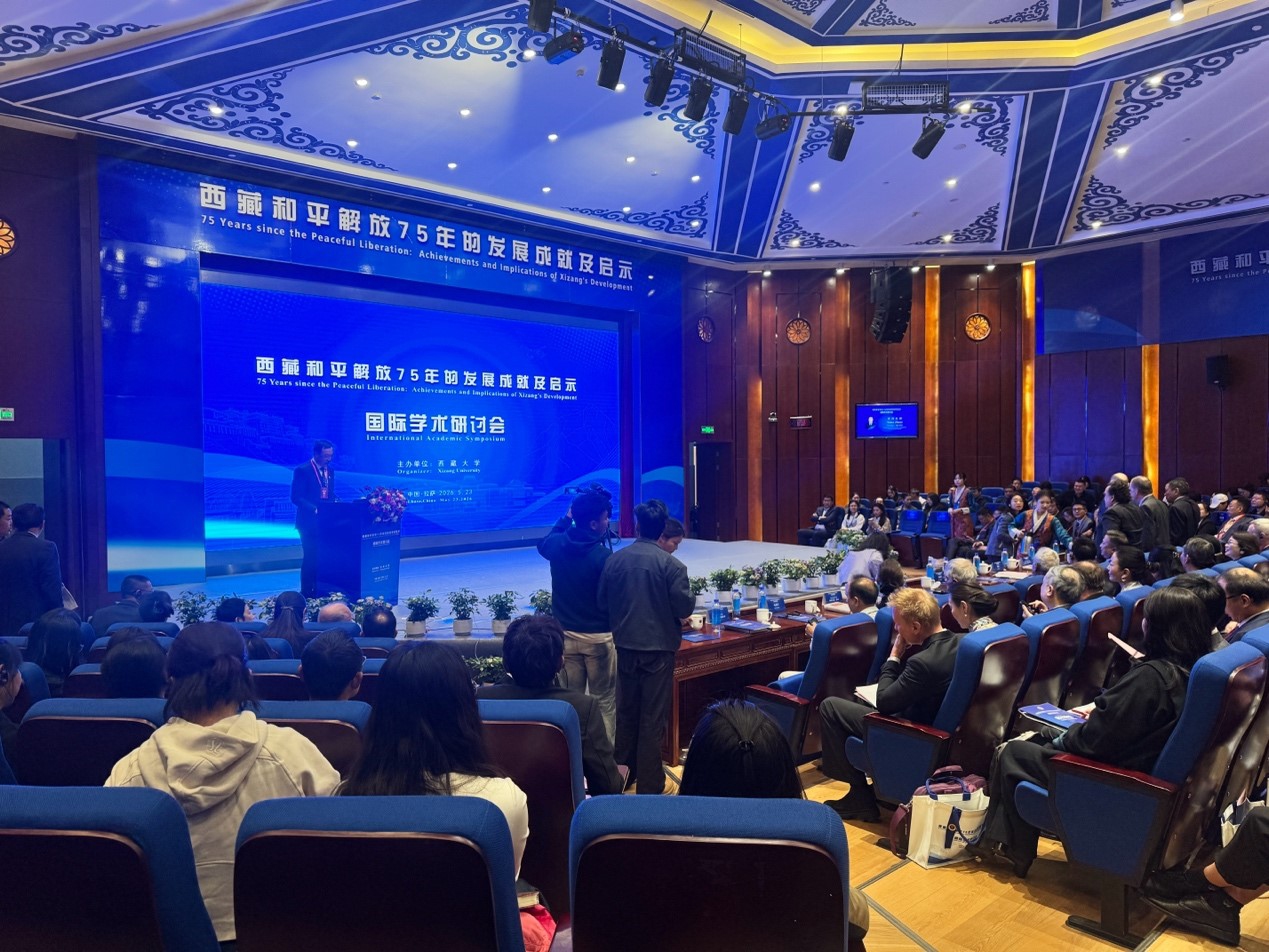
The international symposium, themed "75 Years since the Peaceful Liberation: Achievements and Implications of Xizang's Development," is held in Lhasa, Southwest China's Xizang Autonomous Region on May 23, 2026. Photo: Shan Jie/GT
For many participants, the discussion was not only academic but also grounded in firsthand observation. Before and during the meeting, experts visited local museums, cultural sites and development projects, gaining a closer look at how modern development, cultural preservation and ecological protection are being advanced together on the plateau.Michael Crook, co-founder of the Western Academy of Beijing and a recipient of the Chinese Government Friendship Award, who has spent much of his life in China, shared his observations from visits to welfare and rehabilitation projects in Xizang.
He told the Global Times that he was impressed by a training and employment center in Xigaze for people with disabilities, where local residents were learning practical skills and could stay on as employees after completing their training.
"People were being taught skills, and what was even better was that once they mastered those skills, they could stay on and become employees," Crook said, recalling his visit to the local training and employment center in Xigaze. "They sign contracts, receive a basic wage and are paid for the pieces they produce. I was greatly impressed."
Dominik Pietzcker, professor at the School of Global Studies at Shanghai International Studies University, told media that he found that in Xizang, train, public transport, plane and accommodation meet the same standards as in any other region of China..
"Xizang is no longer an isolated place. With education comes intellectual development and emancipation," Pietzcker said, adding that education has helped open up new paths of personal development for young people from farming and herding families in Xizang, giving them the ability to pursue higher education and make their own choices about their future.
Francis Stonier, a professor at Southwest University, told the Global Times that his first visit to Xizang left him impressed by both the region's modern infrastructure and its cultural vitality. He said the Tibetan language could be seen "everywhere" on public signs and in schools, showing that local culture is not merely preserved as a tourist performance, but remains part of people's daily lives.
Stonier also noted the importance of combining modern opportunities with historical heritage. In his view, a society must provide opportunities for younger generations to stay and build their lives, otherwise cultural inheritance would face greater pressure. The integration of modern development and tradition, he said, offers a practical path for Xizang's future.
On May 23, 1951, in Beijing, the plenipotentiaries of the Central People's Government and the local government of Xizang signed the Agreement of the Central People's Government and the Local Government of Xizang on Measures for the Peaceful Liberation of Xizang, also referred to as the 17-Article Agreement, according to the Xinhua News Agency.
This agreement marked the peaceful liberation of the region, freeing Xizang from imperialist aggression and political and economic control. It effectively safeguarded the national sovereignty, unity and territorial integrity of China, and created the necessary conditions for Xizang to progress and develop along with the rest of the country, laying firm foundations for the region's human rights cause in the process.
RELATED ARTICLES