ARTS / CULTURE & LEISURE
Fusing fun, intangible cultural heritage and soul in pop toys
Culture goes increasingly trendy
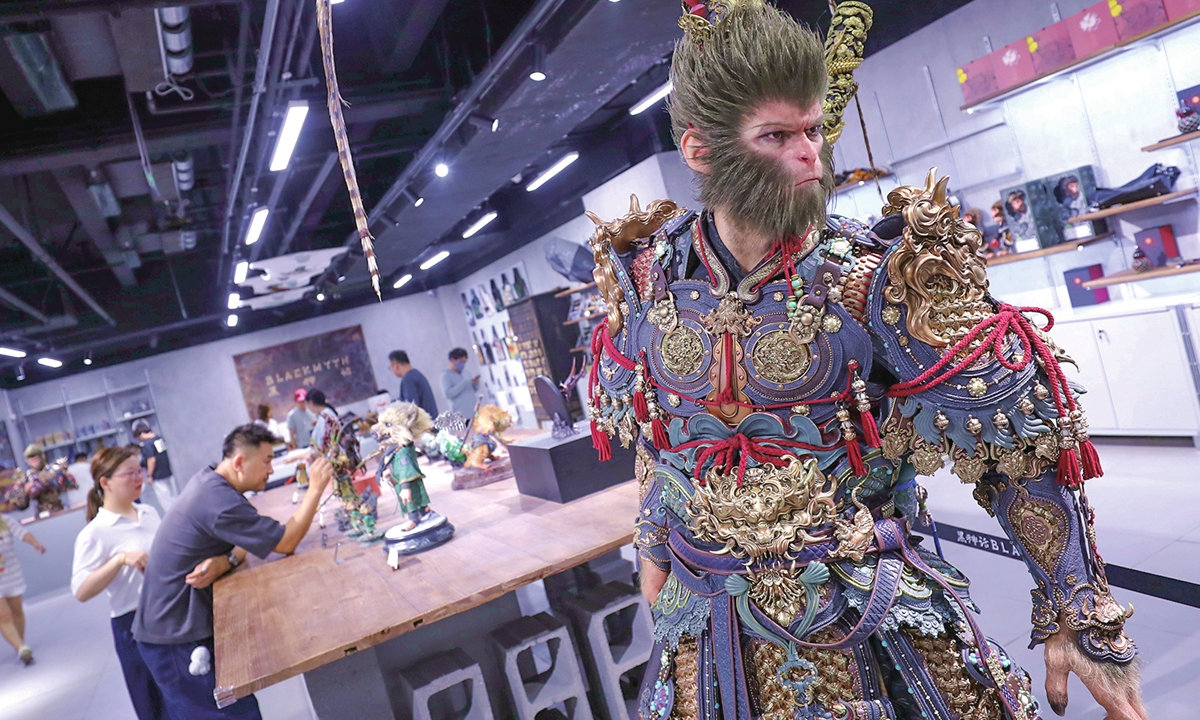
The Destined One from Black Myth: Wukong displays at a shop during the event
At the First China New Cultural and Creative Fair and Trendy Toy Carnival, queues formed early and rarely thinned.Visitors came for collectible figures such as Labubu and Dimoo, but many left with their bags filled with items far beyond the world of pop toys, carrying Sanxingdui-inspired accessories, hand-burned gourds from Tianjin and embroidered handicrafts rooted in China's intangible cultural heritage traditions.
Held over 10 days and concluding Sunday at Beijing's Chaoyang Park, the fair turned the lakeside venue into a busy crossroads of pop fandom and traditional craftsmanship, where pop toy booths stood next to traditional craft stalls along the lakeside venue, with visitors moving continuously between them.
Inside the exhibition area, major institutions including the Palace Museum, the National Museum of China and the Capital Museum showcased some of their most popular cultural products. Younger visitors gathered in front of booths featuring Labubu collectibles, merchandise from the hit video game Black Myth: Wukong, and designs inspired by the ancient Sanxingdui archaeological site. One moment, a visitor queued for a blind box figure, and the next, they might examine a handcrafted ancient-style charm.
For many attendees, the fair was not simply a shopping destination but a layered cultural experience. A parent from Beijing's Dongcheng district told the Global Times that he spent several hours there with his fourth-grade son on May 16. The child had initially come for a figure from Black Myth: Wukong, but gradually shifted interest toward traditional crafts.
Bu Xiting, an associate researcher at the School of Cultural Industries Management at the Communication University of China, told the Global Times that the trend reflects growing cultural confidence among younger Chinese consumers, who are increasingly drawn to products that combine fun elements with emotional resonance.
He noted that China's trendy toy industry has expanded rapidly lately, driven by original IP development, stronger design capabilities and the integration of traditional cultural elements into contemporary aesthetics. The rise of homegrown characters and collectibles is supported by social media circulation, collaborations between museums, games and entertainment franchises.
"Consumers today are buying not just products, but cultural meaning, emotional value and the social connection behind them," he said.
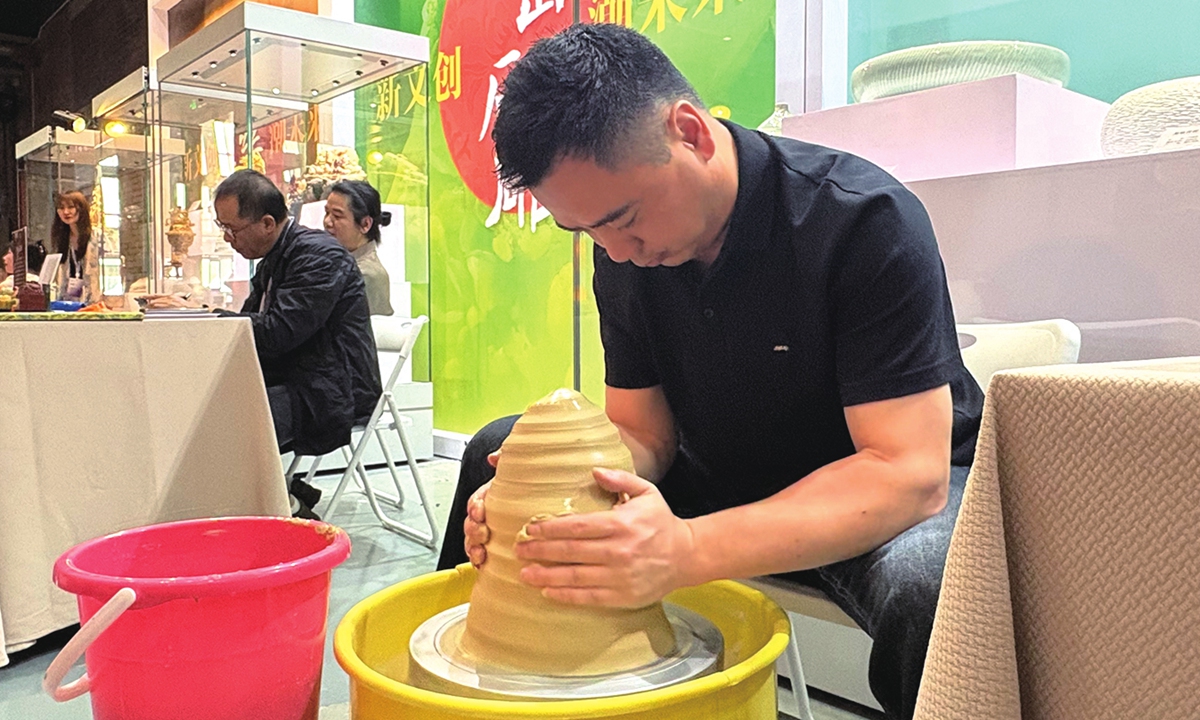
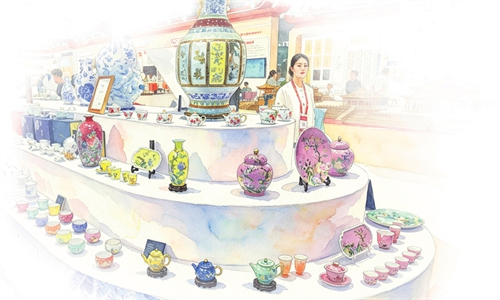
An ICH practitioner makes a porcelain piece. Photos: Li Hang/GT
Heritage in motion
As China's first national-level cultural and creative fair integrating exhibitions, trade, experiences and industry forums, the event covered 66,000 square meters and brought together institutions from all 31 provincial-level regions of the Chinese mainland, the Xinjiang Production and Construction Corps, and the Hong Kong and Macao special administrative regions.
Its cultural and creative exhibition zone featured 46 major museums and cultural institutions across the country, alongside performances and displays from 43 ICH projects, including jade carvings from Hebei Province, Sichuan brocade weaving and more.
The Palace Museum displayed tea cups inspired by China's five famous kilns, dragon-shaped bookmarks and blankets featuring imperial motifs. The National Museum of China drew attention with phoenix-crown-shaped ice cream, jewelry inspired by ancient artifacts and refrigerator magnets based on ancient decorative paintings. The Capital Museum presented playful dolls and ice cream products inspired by historical relics.
Zhao Wei, a national-level inheritor of Tianjin's intangible cultural heritage gourd-making technique, demonstrated traditional pyrography, carving and hand-painting skills at the fair, transforming gourds into small figurines and toy-like objects, as well as fridge magnets, pendants, bracelets and necklaces.
Despite intermittent rain during the event, Zhao said that visitor traffic remained steady throughout the fair's run.
He told the Global Times that traditional gourd craftsmanship is increasingly being integrated into cultural and creative products through techniques such as carving, pyrography and painting, allowing artisans to reimagine gourds as contemporary items ranging from figurines and toys to accessories and home décor.
"Making ICH more practical and visually appealing is key to attracting younger audiences," said Zhao. He also stressed that such traditions can only be sustained if they continue to resonate with younger generations.
From viewing to participation
The growing popularity of traditional culture-inspired products is being fueled by the success of Chinese cultural IPs in entertainment and gaming.
Characters such as Labubu and Dimoo have built massive followings online, while collaborations between trendy toy brands and traditional Chinese cultural elements are increasingly common. Ancient motifs once associated mainly with museums are now appearing on figurines, blind boxes, badges and plush toys.
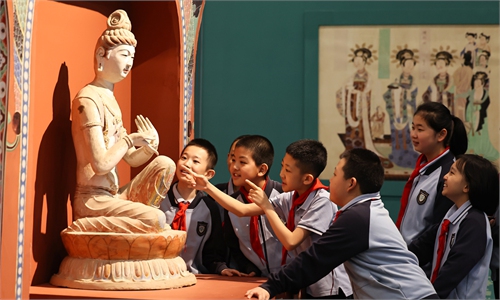
From the ancient Sanxingdui civilization to Dunhuang murals, traditional Chinese imagery is creative material for modern consumer brands. The blockbuster success of Black Myth: Wukong, inspired by the classic Chinese novel Journey to the West, further accelerated interest among younger consumers in mythology-themed cultural products.
This shift reflects a broader change in cultural consumption, from passive viewing to interactive participation, Bu noted.
At the fair, Cao Jiaping, a representative from Chinese toy company 52TOYS, told the Global Times that trendy toys today carry more than entertainment value.
"Toys contain warmth, feelings and cultural expression," Cao said.
He added that the products on display reflected how cultural IPs are increasingly designed to be part of everyday use rather than displayed alone.
Among them was a new panda series showcased at the event that blends original design with China's panda culture, aiming to reach younger consumers through more accessible formats while also bringing this Chinese cultural IP into everyday life and expanding its presence in international markets.
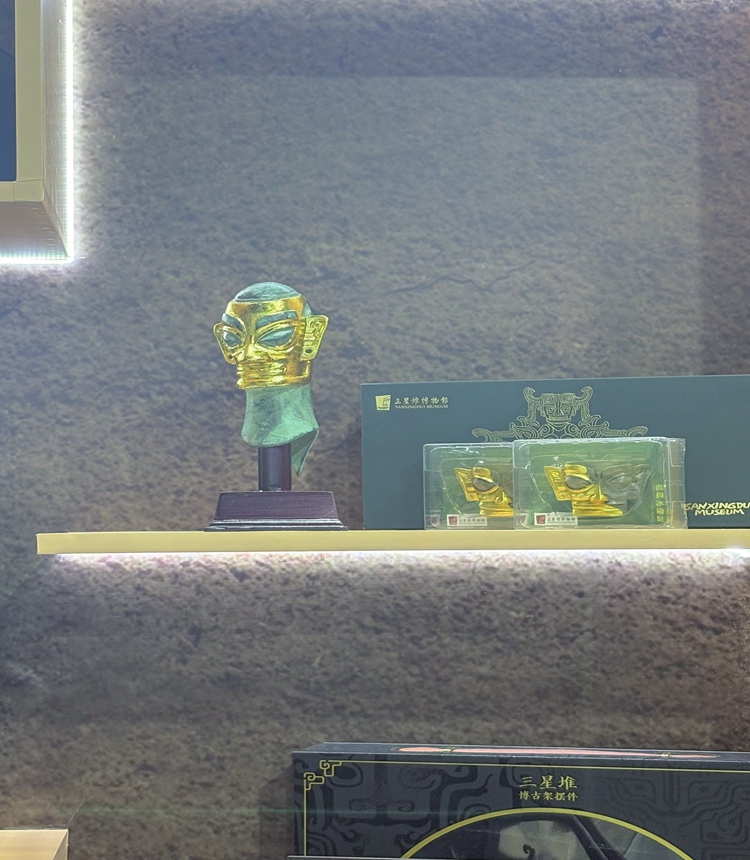
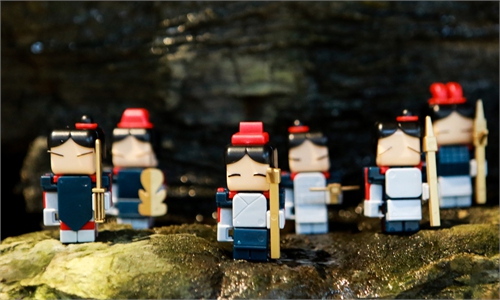
A Sanxingdui-themed cultural product (top)
RELATED ARTICLES