US, Iran reportedly close to signing an agreement; Hormuz Strait, uranium stockpiles remain key uncertainties: Chinese expert
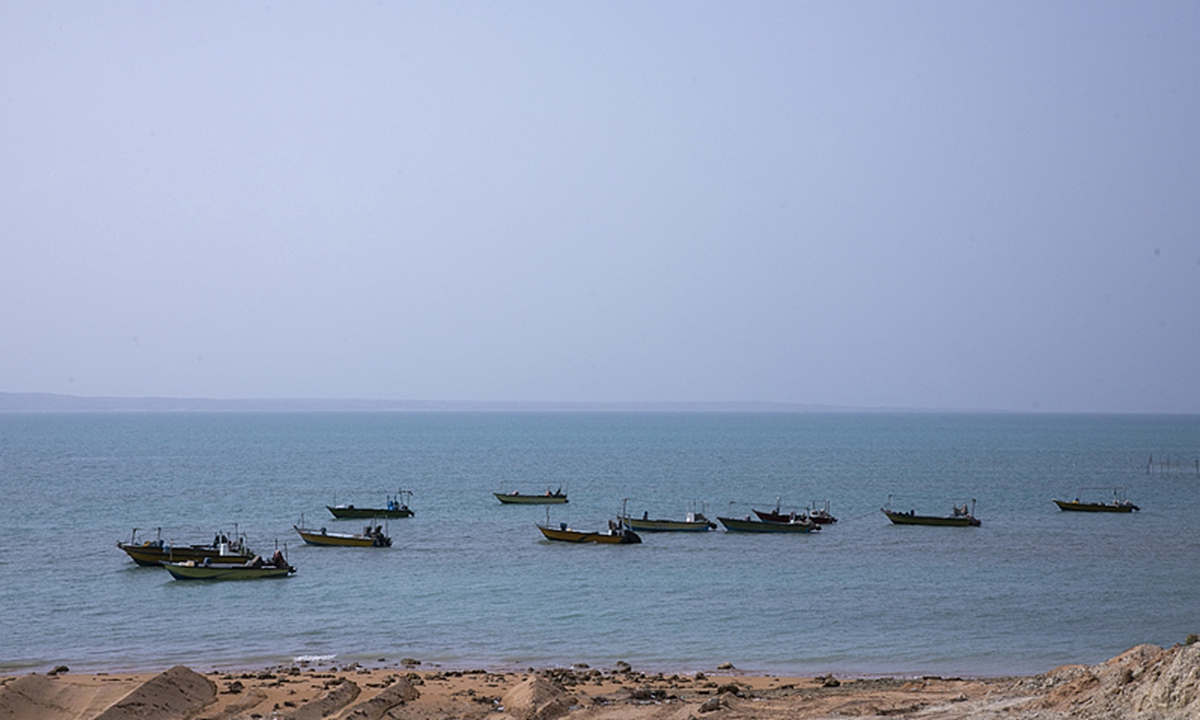
Fishing boats sit idle on May 17, 2026 along the Strait of Hormuz in, on Qeshm Island, Iran. Photo: VCG
As the US-Iran conflict approaches what some observers described as a potential turning point, diplomatic efforts appear to be entering a decisive phase. Observers noted that from an optimistic perspective, the conflict may be close to ending. However, the two major issues of navigation through the Strait of Hormuz and the fate of Iran's enriched uranium stockpiles still hold significant uncertainty.Late on Saturday, Axios reported that the US and Iran are close to signing an agreement. "The agreement the US and Iran are close to signing involves a 60-day ceasefire extension during which the Strait of Hormuz would be reopened, Iran would be able to freely sell oil, and negotiations would be held on curbing Iran's nuclear program," according to a US official.
US President Donald Trump said on Saturday that a "largely negotiated" MoU on an Iran peace deal would reopen the Strait of Hormuz, Reuters reported. "Final aspects and details of the Deal are currently being discussed, and will be announced shortly," Trump posted on social media, with no details on timing.
He said he had spoken with leaders from Saudi Arabia, the United Arab Emirates, Qatar, Pakistan, Turkey, Egypt, Jordan and Bahrain, and separately with Israel. He described it as a "Memorandum of Understanding pertaining to PEACE" that still must be finalized by the US, Iran and the other countries that participated in Saturday's talks, the Associated Press reported.
A day earlier, Trump in the Oval Office was notably vague about his weekend plans when asked about attending his eldest son, Donald Trump Jr.'s wedding. "This is not good timing for me," he added. "Everything called Iran and other things," CNN reported.
Indian media outlet Hindustan Times also reported that, calling it "good news" for the world, US Secretary of State Marco Rubio, who is currently in New Delhi, hinted at a possible deal with Iran hours after Trump's announcement.
Iran offered a more cautious response. Iran's Fars News Agency said on Sunday afternoon that, contrary to what some media outlets were suggesting, there is no commitment in the agreement for Iran to relinquish nuclear stockpiles, remove equipment, shut down facilities, or commit to not building a nuclear bomb.
Instead, according to the report, the parties agreed to release all or part of Iran's frozen funds as a step toward entering negotiations. The draft agreement also reportedly stipulates that passage through the Strait of Hormuz would return to pre-war levels under Iran's management, alongside the lifting of the naval blockade.
Zhu Yongbiao, director of the Center for Afghanistan Studies at Lanzhou University, told the Global Times that the core of the negotiations lies in the exchange between lifting economic sanctions on Iran and restricting Iran's uranium enrichment activities, with the two sides continuing to bargain over uranium stockpiles, enrichment levels, and the pace of sanctions relief.
Zhu noted that the prolonged war has become a strategic burden for the US, and the current US administration is in urgent need of a face-saving exit, making US-Iran negotiations the only realistic option.
However, the impact [of the conflict] will continue and will not stop anytime soon, the expert added. Even if the war ends now, full oil flows through the strait would not return before the first or second quarter of 2027, the head of the United Arab Emirates' state oil firm ADNOC said last week, according to Reuters.
On May 15, a Chinese Foreign Ministry spokesperson in response to a related question, said that "the recent US-Iran ceasefire and efforts to explore resolving issues through negotiation are welcomed by regional countries and the international community."
The spokesperson said China has always believed that dialogue and negotiation are the right way forward and that the use of force is a dead end. "Now that the door of dialogue has been opened, it should not be shut again," the spokesperson said.
The spokesperson also stressed the importance of reaching a comprehensive and lasting ceasefire as soon as possible, ensuring peace and stability return to the Middle East and the Gulf region at an early date, and laying the foundation for a sustainable regional security architecture.
RELATED ARTICLES