BUSINESS / PRESS RELEASE
From hair dryers to global shipping routes: A quick look at Ningbo’s manufacturing network
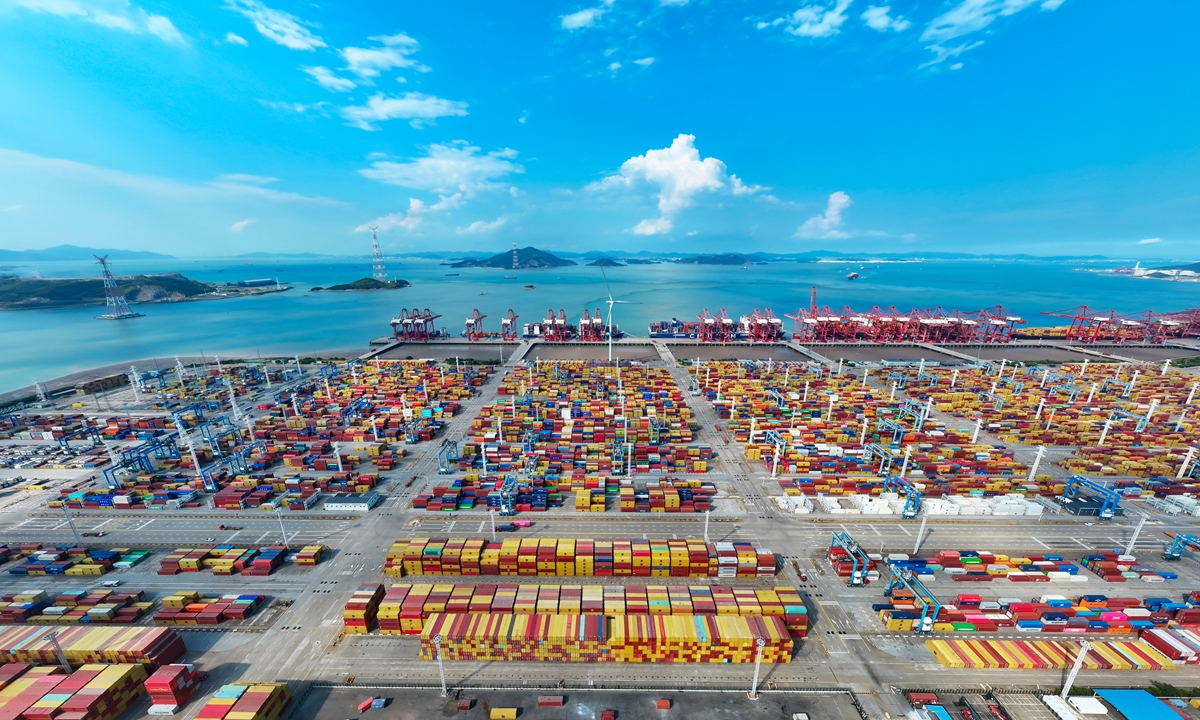
A view of the Ningbo-Zhoushan Port in East China's Zhejiang Province Photo: Courtesy of Ningbo Beilun Third Container Terminal Co
In a small appliance factory in Cixi, Ningbo, East China's Zhejiang Province, rows of hair dryers roll off assembly lines before being loaded onto container trucks bound for Ningbo-Zhoushan Port.Within hours, these newly made products will depart from the world's busiest cargo port aboard vessels headed for Europe, the Middle East and Southeast Asia - part of the vast flow of Chinese-made goods linking Ningbo's factories with global markets.
Standing on the observation deck overlooking the Chuanshan Port area of Ningbo-Zhoushan Port, the Global Times reporter watched towering cranes loom through the mist like a forest of steel as container trucks moved constantly across the sprawling docks. In the distance, giant cargo vessels waited at deep-water berths for loading and unloading, while rows of multicolored containers stretched almost beyond sight - a glimpse into the vast scale of the world's busiest cargo port.
As the world's busiest cargo port by throughput for several consecutive years, Ningbo-Zhoushan Port has evolved from a gateway for China's foreign trade into a critical hub linking global supply chains. Its Chuanshan Port area, one of the port's core container terminals, operates 11 deep-water berths capable of accommodating 200,000-ton container vessels around the clock. In 2025, container throughput at the terminal surpassed 12 million TEUs for the first time, supported by more than 50 international shipping routes connecting markets across Europe, the Americas, Africa and Belt and Road countries and regions.
"Many local manufacturers rely on the port to reach global markets, while the port's growth is also supported by the region's strong industrial base," Zhou Chenfeng, director of Ningbo Beilun Third Container Terminal Co, told the Global Times.
The drive from Chuanshan Port area to Cixi takes only about an hour, but in Ningbo, the link between the port and the region's manufacturing base feels even closer than that distance suggests.
Cixi is one of China's leading hubs for small household appliances. More than 2,000 appliance makers and thousands of suppliers are clustered here, forming a dense industrial network where many products can move from factory floor to export dock within just a few dozen kilometers.
Yueli Group is one of the region's leading manufacturers of hair care appliances. Starting out as an OEM manufacturer for overseas brands, the company has gradually expanded into product design and its own consumer brands. In 2025, Yueli produced 35 million small appliances, including 12 million hair dryers, making it one of the world's largest hair dryer makers.
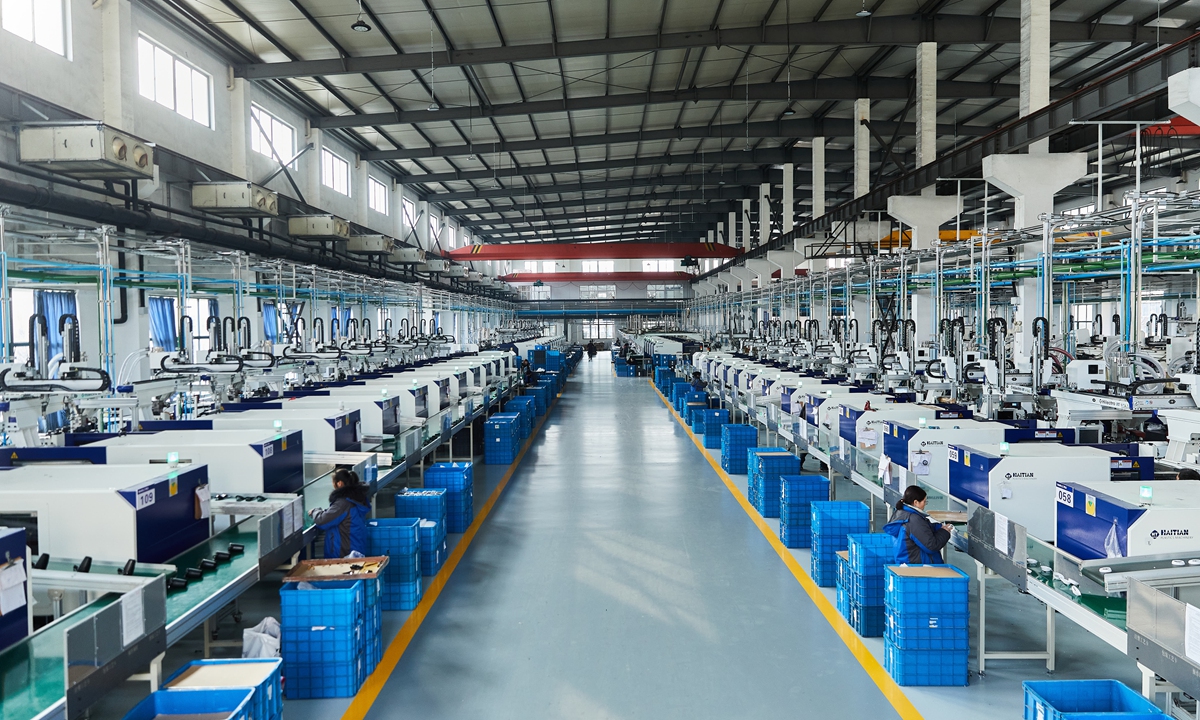
A view of the production workshop of Yueli Group Photo: Courtesy of Yueli Group Co
Jamie Li, marketing director of Yueli Group, told the Global Times that the company has continued investing in research and development as China's manufacturing sector moves up the value chain, launching more than 40 new products each year, including smart hair dryers equipped with sensor-based and AI-powered features.He said Yueli is gradually shifting from an export-driven model toward growth supported by both domestic sales and overseas markets through its own brand development. Brands under the company, including ShowSee, are gaining popularity in China while expanding into Southeast Asian markets.
At the same time, Yueli is advancing greener production through greater use of solar power, recyclable materials and energy-saving technologies.
For years, many Chinese manufacturers produced goods for overseas brands without selling under their own names. Now, more Ningbo companies are building their own global brands.
Starting with its first self-developed curved range hood in 1996, Fotile began building its own core technologies through independent R&D. "Today, Fotile products have entered major US retail chains including Lowe's, while continuing to expand in markets including Malaysia and Indonesia," a Fotile representative told the Global Times, adding that the company has also won multiple awards at the KBIS kitchen and bath exhibition in the US.
As manufacturing becomes smarter and more technology-driven, the port itself is also evolving. "Many operational decisions that once relied largely on experience are now made through data analysis and intelligent scheduling," Zhou told the Global Times.
The Chuanshan Port area is now fully covered by 5G networks, with some bridge cranes and gantry cranes already being operated remotely, he said, adding that the port's smart upgrades are helping improve loading efficiency and shorten vessel turnaround times.
Despite shifts in the global shipping landscape, Ningbo-Zhoushan Port has maintained steady operations. "In recent years, we've continued expanding and diversifying our international shipping routes to better withstand external uncertainties, while using technological upgrades to improve both efficiency and service quality," Zhou said.
Even after dusk, operations at the Chuanshan Port area continue around the clock, with cranes and container trucks operating day and night, a crane operator at the port told the Global Times.
More than 1,000 years ago, silk and porcelain departed from Ningbo-Zhoushan Port along the ancient Maritime Silk Road. Today, hair dryers from Cixi, smart kitchen appliances in Ningbo and more products produced by China's advanced manufacturing sector are leaving the port along new global shipping routes bound for overseas markets.
RELATED ARTICLES