IN-DEPTH / IN-DEPTH
Chinese medical teams in Solomon Islands turn health aid into lasting capacity, bringing treatment closer to patients in remote communities
Anchoring healthcare
By Published: May 26, 2026 09:06 PM
Editor's Note:
China has consistently made poverty eradication a key priority in national governance. Over the past few decades, China has lifted 800 million people out of poverty, achieving the poverty reduction goals of the UN's 2030 Agenda for Sustainable Development a full decade ahead of schedule.
This unwavering commitment, described by Chinese President Xi Jinping as the "endurance, perseverance and striving spirit that enables water drops to penetrate rocks over time and turns blueprints into reality," has ensured both policy continuity and long-term success, according to the Xinhua News Agency.
Poverty eradication remains a global challenge. China's remarkable achievements in poverty alleviation have drawn extensive international attention. Having lifted a massive population out of poverty within a short period, China's development practices embody profound wisdom and offer valuable experience for other nations.
Numerous developing countries are eager to explore the secrets behind China's victory in poverty relief, with many dispatching delegations to learn from China's experience.
In light of this, the Global Times is launching Season Two of the series "constant dropping wears away a stone" to explore how China's poverty alleviation achievements and compelling stories are benefiting populations abroad and providing inspiration to Global South countries.
In this second episode, we look at Chinese medical teams in Solomon Islands, who have worked at the China-aided Comprehensive Medical Center at the National Referral Hospital, provided free clinics on remote islands, and helped train local doctors, showing how health cooperation can improve people's livelihoods and strengthen local medical capacity.
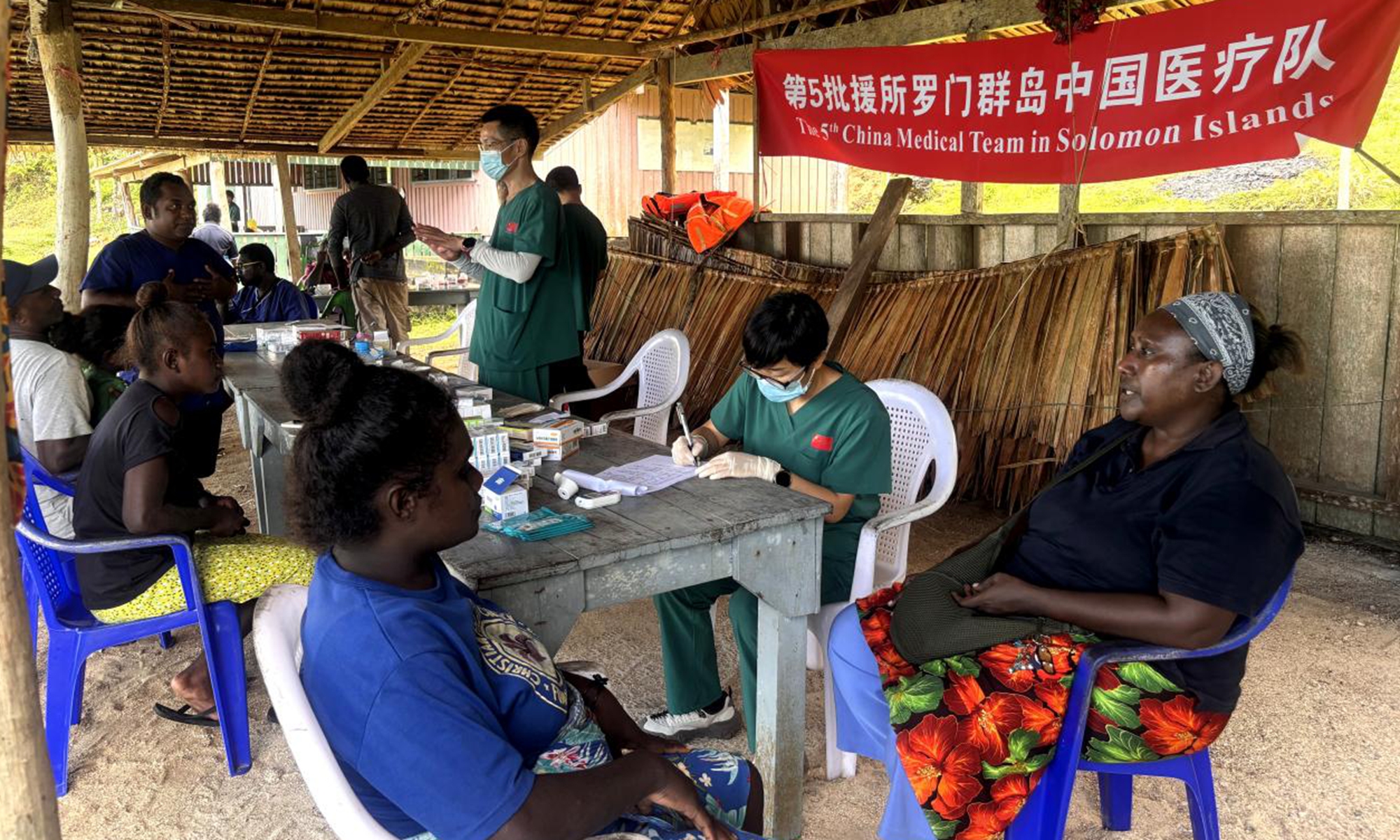
After a tropical cyclone swept through the Western Province of Solomon Islands, traces of the disaster were still visible along the coast of Rarumana community. Trees had been brought down, and seaweed farms were damaged.
For this remote community in the South Pacific, separated from the capital Honiara, the storm made it even harder for medicines and medical workers to reach local residents.
It was under these conditions that Dr Chu Liangzhao, head of the fifth Chinese medical team to Solomon Islands, and his colleagues arrived in Rarumana by boat.
Before the boat had fully docked, people were already waving from the shore. The village chief and residents stood in the sea breeze to welcome the Chinese doctors. A temporary clinic was soon set up, where villagers from Rarumana and nearby communities came for consultations. Some had walked a long distance.
"They were very warm and welcoming," Chu told the Global Times on May 19, shortly after he and his team returned to Honiara from a seven-day medical outreach in the Western Province. In one week, the team visited remote communities and schools, registering more than 600 patients.
Such scenes offer a glimpse into China-Solomon Islands medical cooperation. Since the two countries established diplomatic relations in 2019, health cooperation has become an important part of bilateral cooperation. Since 2022, Southwest China's Guizhou Province has sent organized medical teams to Solomon Islands.
Today, the fifth Chinese medical team is continuing that work at the China-aided National Referral Hospital Comprehensive Medical Center, providing treatment, training local doctors and trying to ensure that more medical skills remain in this remote island nation.
Across 6,000 kilometers
Fifteen-year-old Basi Sammuel may never have imagined that the chest tightness and shortness of breath that had troubled him for a long time would eventually be treated in China, 6,000 kilometers away.
The boy from Solomon Islands first found himself panting after physical activity. Later, he even experienced shortness of breath while walking. A local hospital initially diagnosed him with congenital heart disease, but due to limited medical conditions, doctors there were unable to further identify the full complexity of his condition.
His family later learned that a Chinese medical team was stationed at the National Referral Hospital in Solomon Islands, and took him there for treatment. After examinations by the Chinese medical team, Basi was diagnosed with an atrial septal defect and was found to be in urgent need of surgery.
With coordination from both China and Solomon Islands, Basi and his family embarked on a journey for treatment, traveling from the South Pacific to Guizhou Province, some 6,000 kilometers away.
After he arrived at the Affiliated Hospital of Guizhou Medical University, doctors found that his condition was more complicated than the initial diagnosis had suggested. A multidisciplinary team, including specialists in cardiovascular surgery, cardiology, intensive care, anesthesiology, ultrasound and imaging, discussed his treatment plan.
In the operating room, the cross-border "heart repair" surgery lasted about three hours. With the support of cardiopulmonary bypass, doctors completed vascular reconstruction, valve repair and defect closure.
The day after the surgery, Basi was already able to get out of bed. Follow-up examinations showed that the abnormal blood flow in his heart had been corrected. The chest tightness and shortness of breath that had troubled him for months had disappeared.
On the day of his discharge, Basi's father presented the hospital with a silk banner. He said the Chinese government, the Chinese medical team in Solomon Islands and the Affiliated Hospital of Guizhou Medical University had given his child a "second life."
Basi's case required treatment in China. But in Solomon Islands, the Chinese medical team is also trying to bring more specialized medical services to the National Referral Hospital.
Wang Zhangrong, interpreter for the fifth Chinese medical team, told the Global Times that the most urgent health needs among local residents include chronic disease treatment, infectious disease prevention and control, maternal and child health, access to primary healthcare, shortages of medicines and equipment, and oral health problems.
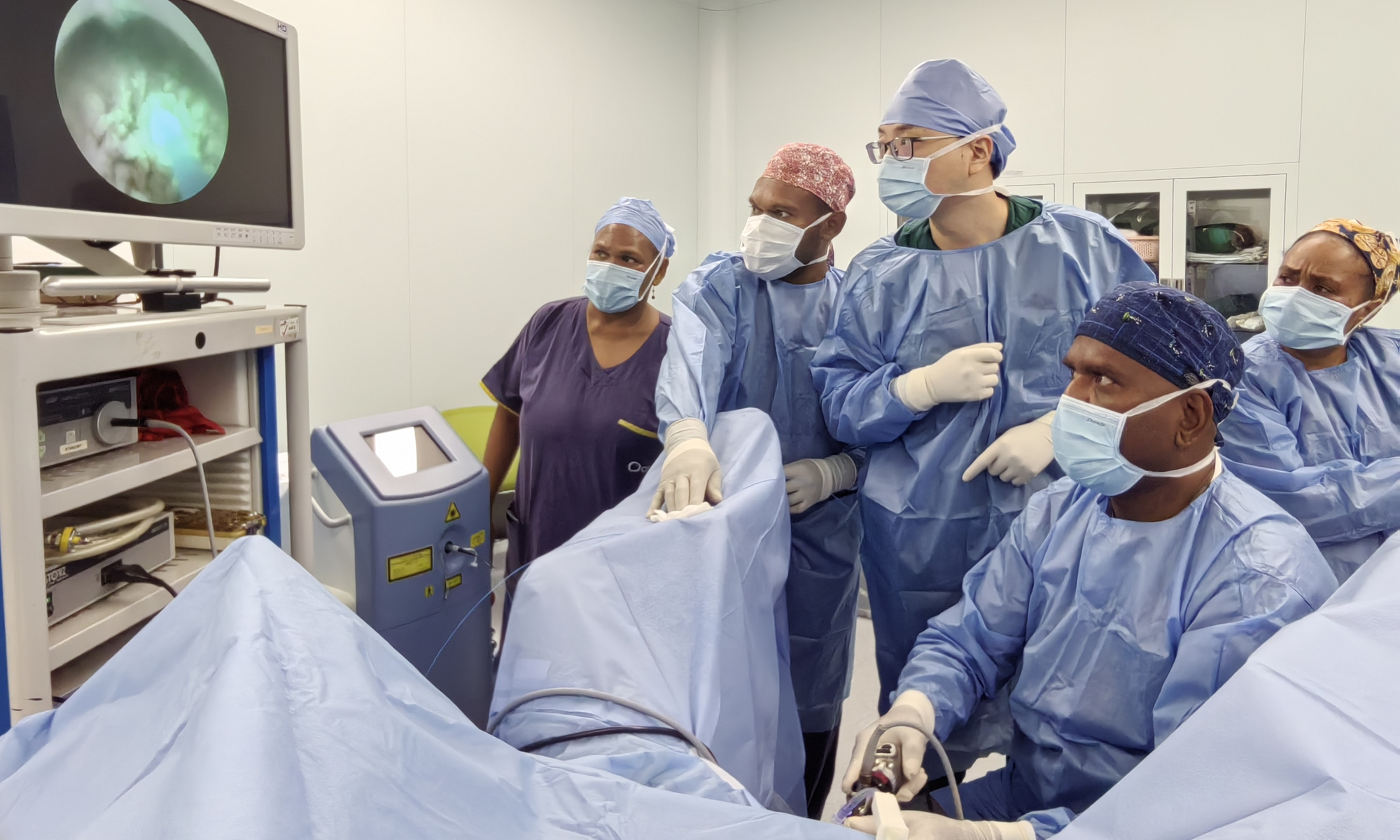
With improved facilities and techniques, Chinese doctors are helping more patients receive treatment locally. A 3-year-old boy had a urethral stone removed through minimally invasive laser surgery and was discharged the next day. An 18-year-old girl had a breast lump removed through a small cosmetic incision.
In another case, doctors completed a seven-hour emergency operation on a man with a severe head injury - the first neurosurgical surgery performed by the Chinese medical team in Solomon Islands.
Wang said that, in the past, many patients with complex diseases had few options other than waiting to travel to Australia or New Zealand, or delaying care under limited local conditions.
For him, the link between medical aid and poverty reduction is practical. "True poverty reduction is not only about giving money or materials," Wang told the Global Times. "More importantly, it is about empowering people through health and preventing illness from pushing families into poverty."
A hospital of friendship
Zhao Xueke, head of the fourth Chinese medical team to Solomon Islands, still remembers the day in June 2025 when the Comprehensive Medical Center at the National Referral Hospital was officially put into use. "Many people came with expectations. They were very happy and actively took part," he recalled.
The opening ceremony was held together with a handover ceremony for medical supplies and medicines donated by Guizhou Province. Representatives from Solomon Islands' health authorities, the Chinese embassy, local medical workers and residents attended the event.
"After the Comprehensive Medical Center officially opened last June, we have seen a number of technological breakthroughs," Zhao told the Global Times."
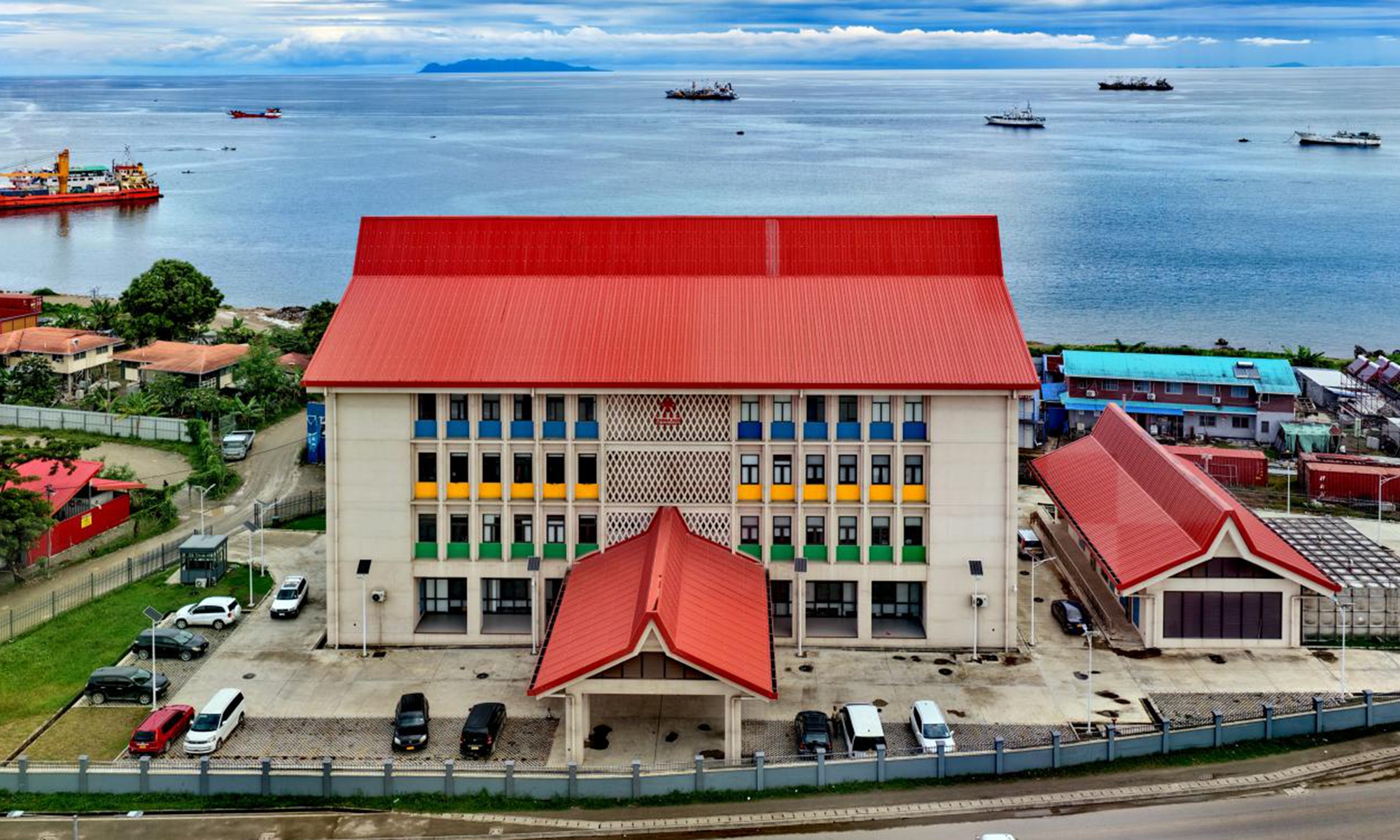
With the center in operation, Chinese doctors and local teams began performing cardiovascular interventional procedures such as coronary angiography and stent implantation in the catheterization lab. Urologists introduced minimally invasive procedures such as holmium laser lithotripsy, giving patients an option that causes less trauma than traditional open surgery. Hemodialysis began offering a new treatment option for patients with kidney failure.
Traditional Chinese acupuncture, once unfamiliar to many local patients, gradually became a service for which people were willing to queue and make appointments.
During its year in Solomon Islands, the fourth Chinese medical team provided more than 13,000 medical services. Some techniques that had once been difficult to perform locally were becoming part of routine medical practice.
China-Solomon Islands medical cooperation did not begin with this medical center.
Since China and Solomon Islands established diplomatic relations in 2019, health cooperation has gradually become an important part of bilateral people-centered cooperation.
Since 2022, Guizhou has sent organized medical teams to Solomon Islands. China has also aided the construction of the Comprehensive Medical Center, stationed medical teams at the National Referral Hospital.
In 2023, the Chinese naval hospital ship Peace Ark made its first visit to Solomon Islands and provided humanitarian medical services, allowing more local residents to receive medical support from China.
According to an article published in Qiushi Journal in 2024, China sent its first overseas medical team to Algeria in 1963. Over the past six decades, more than 30,000 Chinese medical aid workers have provided care to nearly 300 million patients in 76 countries and regions.
Teaching people how to fish
For the Chinese medical teams, the work does not end when a surgery is completed.
This approach of "teaching while doing" is bringing more local doctors into new treatment practices.
Zhao told the Global Times that nine doctors from Solomon Islands had previously traveled to Guizhou for training focused on the development of the minimally invasive urology surgery center.
Their training covered urology, anesthesiology, pathology, emergency medicine and other related fields. After returning home, they continued to take part in the development of minimally invasive urology services in Solomon Islands.
When the fourth Chinese medical team returned to China, several local doctors traveled with them to Guizhou for a one-year training program in traditional Chinese acupuncture, massage, physiotherapy and moxibustion.
Guizhou was once one of China's key battlegrounds in poverty alleviation, where improving access to basic healthcare was an important part of local development.
Wang said Guizhou had accumulated experience in health-related poverty alleviation through years of medical support from more developed regions in China and through its own long-term assistance to grassroots hospitals. This dual experience, he said, has helped Guizhou medical workers better understand what recipient countries need and where Chinese medical aid can be most effective.
Chinese doctors will eventually rotate out, hoping to leave behind equipment, techniques and experience that local doctors can continue to use. For a country of scattered islands and limited medical resources, that goes further than one operation.
China has consistently made poverty eradication a key priority in national governance. Over the past few decades, China has lifted 800 million people out of poverty, achieving the poverty reduction goals of the UN's 2030 Agenda for Sustainable Development a full decade ahead of schedule.
This unwavering commitment, described by Chinese President Xi Jinping as the "endurance, perseverance and striving spirit that enables water drops to penetrate rocks over time and turns blueprints into reality," has ensured both policy continuity and long-term success, according to the Xinhua News Agency.
Poverty eradication remains a global challenge. China's remarkable achievements in poverty alleviation have drawn extensive international attention. Having lifted a massive population out of poverty within a short period, China's development practices embody profound wisdom and offer valuable experience for other nations.
Numerous developing countries are eager to explore the secrets behind China's victory in poverty relief, with many dispatching delegations to learn from China's experience.
In light of this, the Global Times is launching Season Two of the series "constant dropping wears away a stone" to explore how China's poverty alleviation achievements and compelling stories are benefiting populations abroad and providing inspiration to Global South countries.
In this second episode, we look at Chinese medical teams in Solomon Islands, who have worked at the China-aided Comprehensive Medical Center at the National Referral Hospital, provided free clinics on remote islands, and helped train local doctors, showing how health cooperation can improve people's livelihoods and strengthen local medical capacity.
Members of the Chinese medical team to Solomon Islands provide post-cyclone medical assistance in Western Province, Solomon Islands, in May 2026. Photo: Courtesy of the Chinese medical team
After a tropical cyclone swept through the Western Province of Solomon Islands, traces of the disaster were still visible along the coast of Rarumana community. Trees had been brought down, and seaweed farms were damaged.
For this remote community in the South Pacific, separated from the capital Honiara, the storm made it even harder for medicines and medical workers to reach local residents.
It was under these conditions that Dr Chu Liangzhao, head of the fifth Chinese medical team to Solomon Islands, and his colleagues arrived in Rarumana by boat.
Before the boat had fully docked, people were already waving from the shore. The village chief and residents stood in the sea breeze to welcome the Chinese doctors. A temporary clinic was soon set up, where villagers from Rarumana and nearby communities came for consultations. Some had walked a long distance.
"They were very warm and welcoming," Chu told the Global Times on May 19, shortly after he and his team returned to Honiara from a seven-day medical outreach in the Western Province. In one week, the team visited remote communities and schools, registering more than 600 patients.
Such scenes offer a glimpse into China-Solomon Islands medical cooperation. Since the two countries established diplomatic relations in 2019, health cooperation has become an important part of bilateral cooperation. Since 2022, Southwest China's Guizhou Province has sent organized medical teams to Solomon Islands.
Today, the fifth Chinese medical team is continuing that work at the China-aided National Referral Hospital Comprehensive Medical Center, providing treatment, training local doctors and trying to ensure that more medical skills remain in this remote island nation.
Across 6,000 kilometers
Fifteen-year-old Basi Sammuel may never have imagined that the chest tightness and shortness of breath that had troubled him for a long time would eventually be treated in China, 6,000 kilometers away.
The boy from Solomon Islands first found himself panting after physical activity. Later, he even experienced shortness of breath while walking. A local hospital initially diagnosed him with congenital heart disease, but due to limited medical conditions, doctors there were unable to further identify the full complexity of his condition.
His family later learned that a Chinese medical team was stationed at the National Referral Hospital in Solomon Islands, and took him there for treatment. After examinations by the Chinese medical team, Basi was diagnosed with an atrial septal defect and was found to be in urgent need of surgery.
With coordination from both China and Solomon Islands, Basi and his family embarked on a journey for treatment, traveling from the South Pacific to Guizhou Province, some 6,000 kilometers away.
After he arrived at the Affiliated Hospital of Guizhou Medical University, doctors found that his condition was more complicated than the initial diagnosis had suggested. A multidisciplinary team, including specialists in cardiovascular surgery, cardiology, intensive care, anesthesiology, ultrasound and imaging, discussed his treatment plan.
In the operating room, the cross-border "heart repair" surgery lasted about three hours. With the support of cardiopulmonary bypass, doctors completed vascular reconstruction, valve repair and defect closure.
The day after the surgery, Basi was already able to get out of bed. Follow-up examinations showed that the abnormal blood flow in his heart had been corrected. The chest tightness and shortness of breath that had troubled him for months had disappeared.
On the day of his discharge, Basi's father presented the hospital with a silk banner. He said the Chinese government, the Chinese medical team in Solomon Islands and the Affiliated Hospital of Guizhou Medical University had given his child a "second life."
Basi's case required treatment in China. But in Solomon Islands, the Chinese medical team is also trying to bring more specialized medical services to the National Referral Hospital.
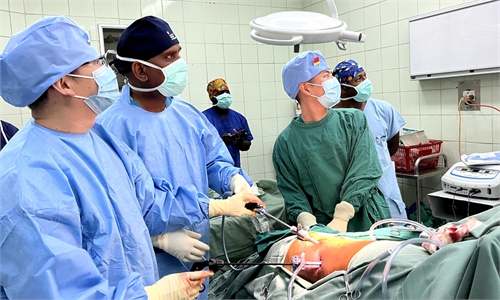
Chinese and local doctors perform the country's first holmium laser lithotripsy for bladder stones in Solomon Islands on October 23, 2025. Photo: Courtesy of the Chinese medical team
The fifth Chinese medical team arrived in Solomon Islands in March 2026. The eight-member team covers specialties including cardiology, urology, acupuncture, neurosurgery and breast surgery. Neurosurgery and breast surgery were newly added in this batch.Wang Zhangrong, interpreter for the fifth Chinese medical team, told the Global Times that the most urgent health needs among local residents include chronic disease treatment, infectious disease prevention and control, maternal and child health, access to primary healthcare, shortages of medicines and equipment, and oral health problems.
With improved facilities and techniques, Chinese doctors are helping more patients receive treatment locally. A 3-year-old boy had a urethral stone removed through minimally invasive laser surgery and was discharged the next day. An 18-year-old girl had a breast lump removed through a small cosmetic incision.
In another case, doctors completed a seven-hour emergency operation on a man with a severe head injury - the first neurosurgical surgery performed by the Chinese medical team in Solomon Islands.
Wang said that, in the past, many patients with complex diseases had few options other than waiting to travel to Australia or New Zealand, or delaying care under limited local conditions.
For him, the link between medical aid and poverty reduction is practical. "True poverty reduction is not only about giving money or materials," Wang told the Global Times. "More importantly, it is about empowering people through health and preventing illness from pushing families into poverty."
A hospital of friendship
Zhao Xueke, head of the fourth Chinese medical team to Solomon Islands, still remembers the day in June 2025 when the Comprehensive Medical Center at the National Referral Hospital was officially put into use. "Many people came with expectations. They were very happy and actively took part," he recalled.
The opening ceremony was held together with a handover ceremony for medical supplies and medicines donated by Guizhou Province. Representatives from Solomon Islands' health authorities, the Chinese embassy, local medical workers and residents attended the event.
"After the Comprehensive Medical Center officially opened last June, we have seen a number of technological breakthroughs," Zhao told the Global Times."
The China-aided Comprehensive Medical Center at the National Referral Hospital in Honiara, Solomon Islands Photo: Courtesy of the Chinese medical team
With the center in operation, Chinese doctors and local teams began performing cardiovascular interventional procedures such as coronary angiography and stent implantation in the catheterization lab. Urologists introduced minimally invasive procedures such as holmium laser lithotripsy, giving patients an option that causes less trauma than traditional open surgery. Hemodialysis began offering a new treatment option for patients with kidney failure.
Traditional Chinese acupuncture, once unfamiliar to many local patients, gradually became a service for which people were willing to queue and make appointments.
During its year in Solomon Islands, the fourth Chinese medical team provided more than 13,000 medical services. Some techniques that had once been difficult to perform locally were becoming part of routine medical practice.
China-Solomon Islands medical cooperation did not begin with this medical center.
Since China and Solomon Islands established diplomatic relations in 2019, health cooperation has gradually become an important part of bilateral people-centered cooperation.
Since 2022, Guizhou has sent organized medical teams to Solomon Islands. China has also aided the construction of the Comprehensive Medical Center, stationed medical teams at the National Referral Hospital.
In 2023, the Chinese naval hospital ship Peace Ark made its first visit to Solomon Islands and provided humanitarian medical services, allowing more local residents to receive medical support from China.
According to an article published in Qiushi Journal in 2024, China sent its first overseas medical team to Algeria in 1963. Over the past six decades, more than 30,000 Chinese medical aid workers have provided care to nearly 300 million patients in 76 countries and regions.
Teaching people how to fish
For the Chinese medical teams, the work does not end when a surgery is completed.
This approach of "teaching while doing" is bringing more local doctors into new treatment practices.
Zhao told the Global Times that nine doctors from Solomon Islands had previously traveled to Guizhou for training focused on the development of the minimally invasive urology surgery center.
Their training covered urology, anesthesiology, pathology, emergency medicine and other related fields. After returning home, they continued to take part in the development of minimally invasive urology services in Solomon Islands.
When the fourth Chinese medical team returned to China, several local doctors traveled with them to Guizhou for a one-year training program in traditional Chinese acupuncture, massage, physiotherapy and moxibustion.
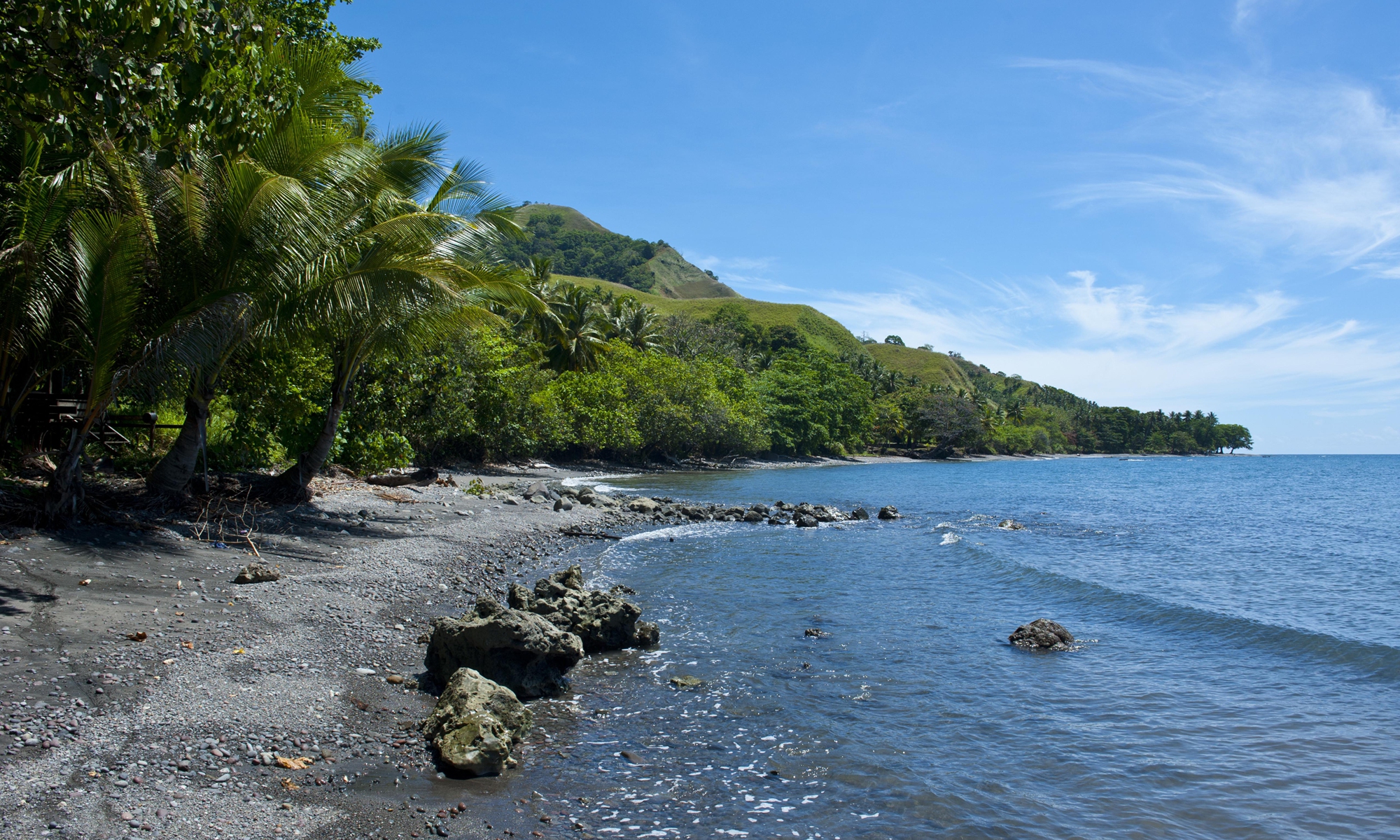
A coastal view of Solomon Islands Photo: VCG
For Zhao, this is what makes the Chinese medical teams different from some short-term international medical aid missions. "We truly teach them these medical techniques hand by hand," he said.Guizhou was once one of China's key battlegrounds in poverty alleviation, where improving access to basic healthcare was an important part of local development.
Wang said Guizhou had accumulated experience in health-related poverty alleviation through years of medical support from more developed regions in China and through its own long-term assistance to grassroots hospitals. This dual experience, he said, has helped Guizhou medical workers better understand what recipient countries need and where Chinese medical aid can be most effective.
Chinese doctors will eventually rotate out, hoping to leave behind equipment, techniques and experience that local doctors can continue to use. For a country of scattered islands and limited medical resources, that goes further than one operation.
RELATED ARTICLES