From Tsinghua, CPC Museum to Xiaomi, Vucic’s packed itinerary highlights high-standard of ties, bridges past and future
By and Li Yu Published: May 26, 2026 11:58 PM
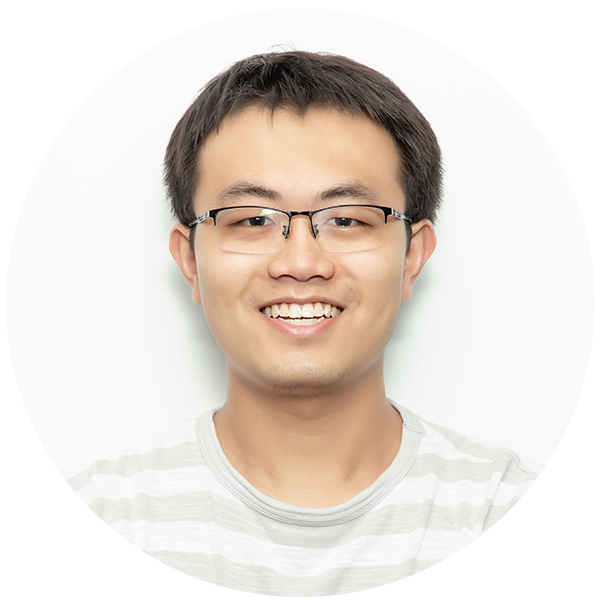
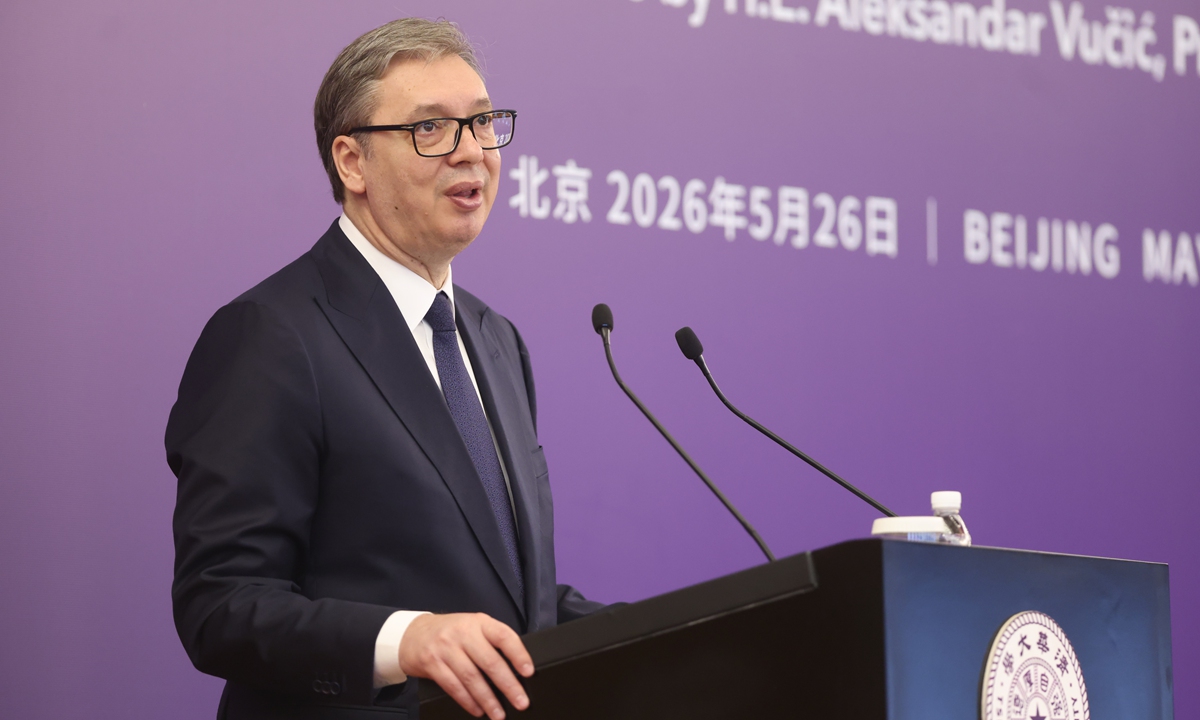
Serbian President Aleksandar Vucic delivers a speech at Tsinghua University in Beijing on May 26, 2026. Photo: VCG
During his state visit to China, Serbian President Aleksandar Vucic on Tuesday embarked on an in-depth tour of Beijing on the third day of his stay. His packed itinerary included visits to Tsinghua University, the Museum of the Communist Party of China and Xiaomi's auto factory. Spanning history, current development and future prospects, the distinctive route fully presents the diverse connotations and high-standard of China-Serbia bilateral relations, analysts said.
The Serbian leader is on a state visit to China from May 24 to 28. Chinese leader and Vucic held talks in Beijing on Monday, hailing the ironclad friendship between the two countries, with Chinese leader awarding Vucic the Friendship Medal of the People's Republic of China, the Xinhua News Agency reported.
In his first stop on Tuesday at Tsinghua University, Vucic delivered a speech in which he said that Serbia will continue to support and respect China, and noted that China is making steady progress each day, according to Serbian media RTV.
In an interview with Chinese media at Tsinghua University, Vucic also shared a warm personal detail, revealing that his youngest son has started learning Chinese. "I'm too old to be able to learn it. That's one of my biggest mistakes," he said in a CCTV News video clip.
Moving on to the Museum of the Communist Party of China (CPC), Vucic wrote in the guest book that the visit offered a unique opportunity to deepen his understanding of China's development under the leadership of the CPC, according to RTV.
The Serbian leader hailed China's remarkable progress achieved over the past 76 years, adding that discipline, diligence and sound national strategy have underpinned China's historical development, per the Serbian media.
Continuing his journey to explore modern and futuristic China, Vucic visited Xiaomi's auto factory, a representative showcase of China's world-class intelligent manufacturing and automotive innovation capabilities.
"I could learn a lot here, especially about the results that China achieved. This place is amazing, I've never seen anything like this before," Vucic said in a Facebook post on Tuesday, sharing photos of himself sitting in the driving seat of a Xiaomi car.
"Everything is automated, everything is done by two thousand robots, which produce 1,500 cars in two shifts," said Vucic on social media, "We invited them, if they are going to think about investing in Europe, to choose Serbia, and we also invited them to showcase their products at EXPO 2027."
Liang Xue, an assistant research fellow at the China Institute of International Studies (CIIS), told the Global Times on Tuesday that Vucic's itinerary fully demonstrates the distinctive nature and high standard of bilateral relations between the two countries.
"His trip to the Museum of the CPC marks a concrete exchange of governance experience between the two nations. His visits to Xiaomi's factory and Tsinghua University, along with his message to young Chinese people, demonstrate his emphasis on the future development of China-Serbia relations," Liang said.
Prior to his packed schedule on Tuesday, Vucic visited the Great Wall on Sunday shortly after his arrival in China, where he spoke highly of the perseverance and dedication of the Chinese people. On rainy Monday morning, he visited Tiananmen Square and laid a wreath at the Monument to the People's Heroes in Beijing.
Apart from top-level talks, Vucic had a full and diverse schedule during his stay in Beijing. His itinerary manifests profound respect for China's culture and history, and sends a clear message of closer people-to-people and educational exchanges, said Kong Tianping, a research fellow at the Institute of European Studies of Chinese Academy of Social Sciences.
Meanwhile, his tour of Xiaomi's factory, a testament to China's world-class technology, underscores his will to keep taking the China-Serbia comprehensive strategic partnership to new heights, with intensified cooperation in advanced productive forces and economic and trade fields that define the future, Kong added.
After their talks on Monday, the two heads of state jointly witnessed the signing of over 20 cooperation documents in areas including politics, economy and trade, science and technology, education, legal affairs and culture.
The two sides also issued a joint statement on continuously promoting the building of a China-Serbia community with a shared future in the new era, and a joint statement on jointly promoting the implementation of the Global Development Initiative, the Global Security Initiative, the Global Civilization Initiative and the Global Governance Initiative.
Led by head-of-state diplomacy, China and Serbia are expected to further align development strategies and advance practical cooperation across multiple fields, delivering tangible benefits to the two peoples, Liang said.
RELATED ARTICLES