CCTV documentary exposes case of spies disguised as wedding photographers to secretly film military ports
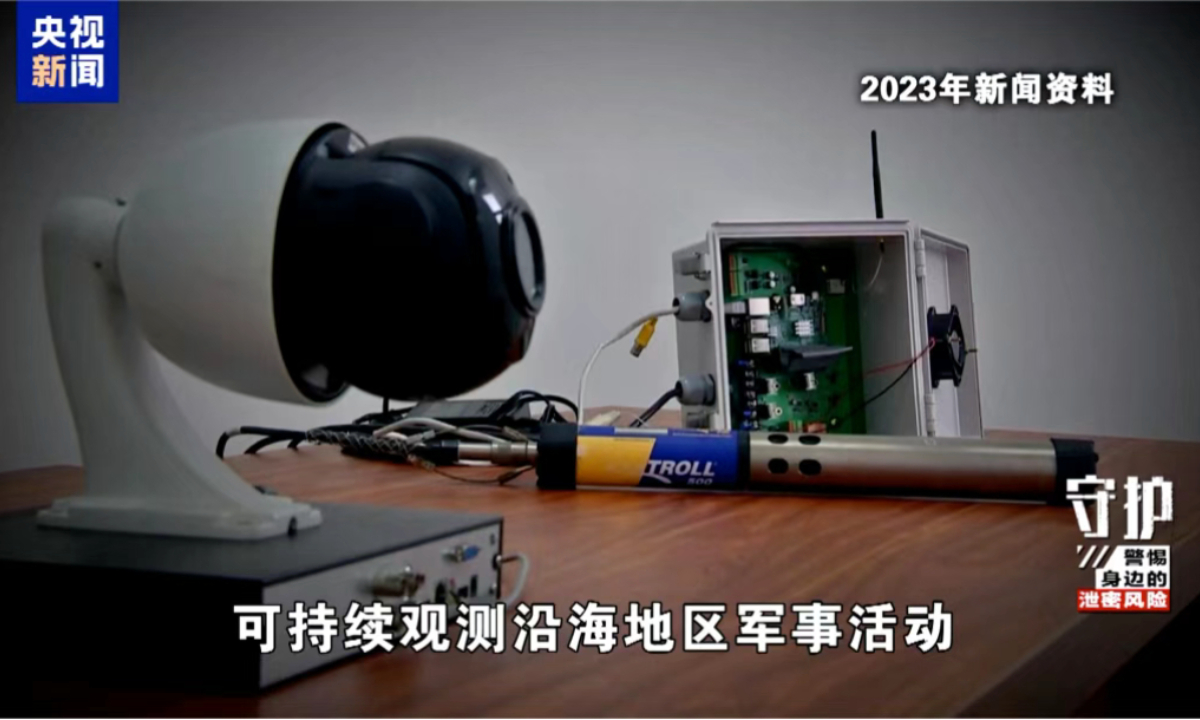
Photo: Screenshot from CCTV
China Central Television (CCTV) is broadcasting a five-episode documentary series on confidentiality and information security awareness from Tuesday to Saturday, with the first episode highlighting the risks posed by micro-sized cameras capable of secretly capturing sensitive and classified state secrets and detailing a case where spies were disguised as wedding photographers to secretly film military ports.
Pinhole-sized hidden cameras capable of real-time network transmission have become increasingly widespread and they are easy to obtain, carry, install, and be concealed. Such devices could pose serious risks if used to target state secrets, CCTV reported.
If such smart cameras are installed near sensitive government sites or military facilities, they could expose classified state and military secrets if compromised by hackers.
The CCTV documentary outlined a range of advanced surveillance and hacking technologies, including infrared night-vision devices; through-wall radar systems using AI and 3D sensing technology to locate, track, and even identify moving targets on the other side of walls; analytical technologies capable of determining precise locations from reflections in a person’s pupils in publicly available photos, and hacking techniques capable of remotely infiltrating phones and computers to steal data.
The documentary revealed a case in 2023 in which a sea cucumber farmer surnamed Zhang in Dalian, Northeast China’s Liaoning Province, was given by someone “monitoring equipment” for aquaculture. Yet Zhang found the data collected was not for aquaculture purposes and sent overseas. It turns out that the equipment contained a 360-degree panoramic camera which kept monitoring military activities, marine economic operations, and technological activities in coastal areas.
The documentary also revealed that spies have posed as wedding photographers, setting up professional telephoto lenses near military ports to secretly capture details of naval deployments and port operations. In other cases, they use “autonomous driving research” as a cover, installing high-precision radar systems, GPS devices, and optical cameras on vehicles to collect large volumes of surveying and mapping data and transmit it overseas in real time.
The documentary exposed how spies, under the guise of “meteorological observation,” establish so-called monitoring stations near military facilities, defense enterprises, or around major grain-producing regions. Sometimes hackers infiltrate computers of the Chinese side during foreign-related negotiations, active the cameras and microphones to secretly monitor internal discussions.
According to Lü Yongqiang, an associate research fellow at Tsinghua University, social media posts and online technical discussions by young internet users can also be exploited by malicious actors through phishing and other tactics to obtain sensitive materials and cause data leaks.
The CCTV documentary revealed a case involving a Chinese military enthusiast who leaked military secrets after photographing a newly discovered military airbase while on an outdoor expedition. Ye uploaded images of fighter jets and runways to an online map platform with location attached, resulting in the disclosure of military secrets.
Global Times
RELATED ARTICLES