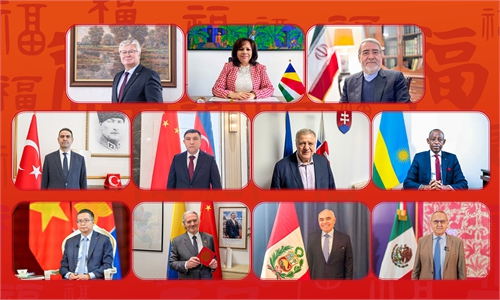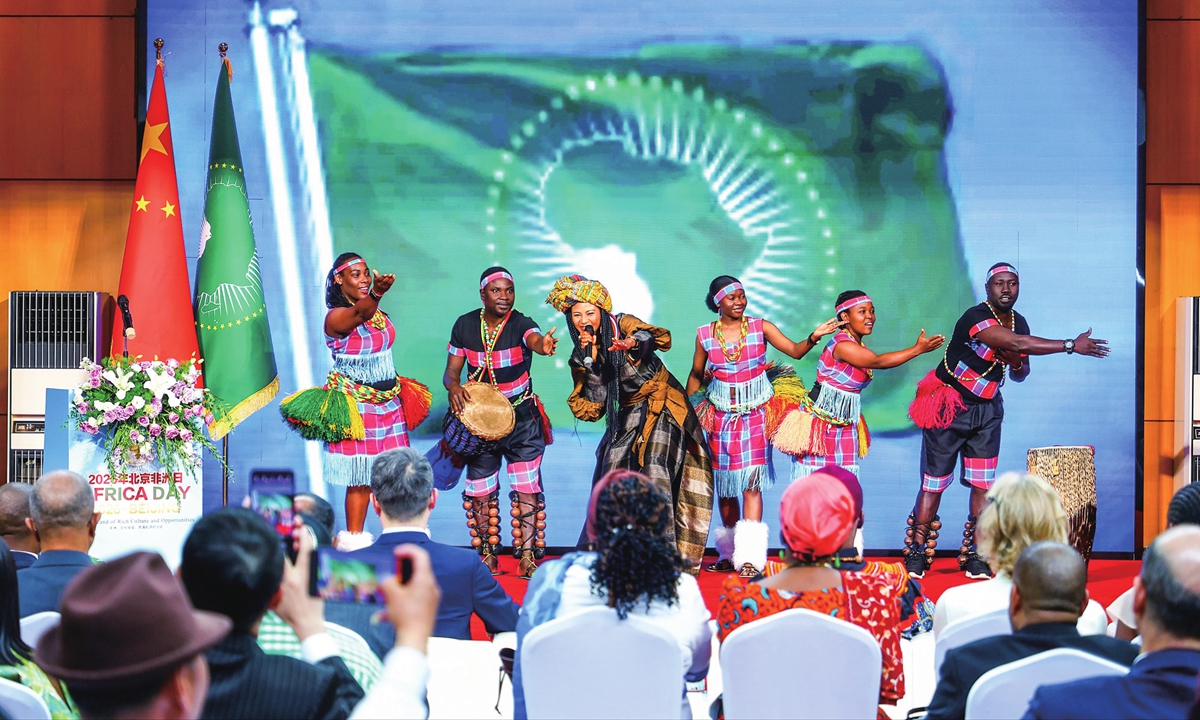
Opening performance of the 2026 Africa Day Cultural Festival is staged in Beijing on May 23, 2026. Photo: Courtesy of the Africa Day 2026 Organizing Committee
This year marks both the 63rd anniversary of the founding of the Organization of African Unity, now the African Union, which was established on May 25, 1963, as well as the 70th anniversary of diplomatic relations between African countries and the People's Republic of China. The Group of African Ambassadors in China (GAAC) hosted a high-level diplomatic reception in Beijing on Monday to mark the Africa Day.Delivering remarks on behalf of the GAAC, Martin Mpana, Ambassador of the Republic of Cameroon and Dean of the African Diplomatic Corps in China, described Africa Day as "a celebration of our African identity, our resilience, and our creativity," noting that the occasion remains "a vivid reminder of past struggles, of victories achieved, and of the immense hopes that animate all the countries and diverse peoples of the African continent."
Chinese Vice Foreign Minister Miao Deyu, in his remarks, congratulated African countries on the successful commemoration of Africa Day in Beijing, noting the special significance of 2026 as the China-Africa Year of People-to-People Exchanges and the 70th anniversary of diplomatic relations between China and Africa.
Miao hailed the longstanding friendship and solidarity between China and Africa and reaffirmed China's commitment to strengthening practical cooperation under the framework of the Forum on China-Africa Cooperation (FOCAC). He added that China and Africa have consistently supported one another throughout their respective development journeys.
"On May 1, 2025, China started the full implementation of zero-tariff treatment for 53 African countries that have diplomatic relations with China, and further expanded the access of African products to China by upgrading the 'green lanes,' enabling more specialty and high-quality African goods to enter the Chinese market. Facing rising trade protectionism, the zero-tariff policy provides 'golden wings' for China and Africa to pursue modernization together," Miao stressed.
African diplomats told the Global Times that China's zero-tariff policy helps increase exports and attract Chinese investment, setting a role model for cooperation of the Global South.
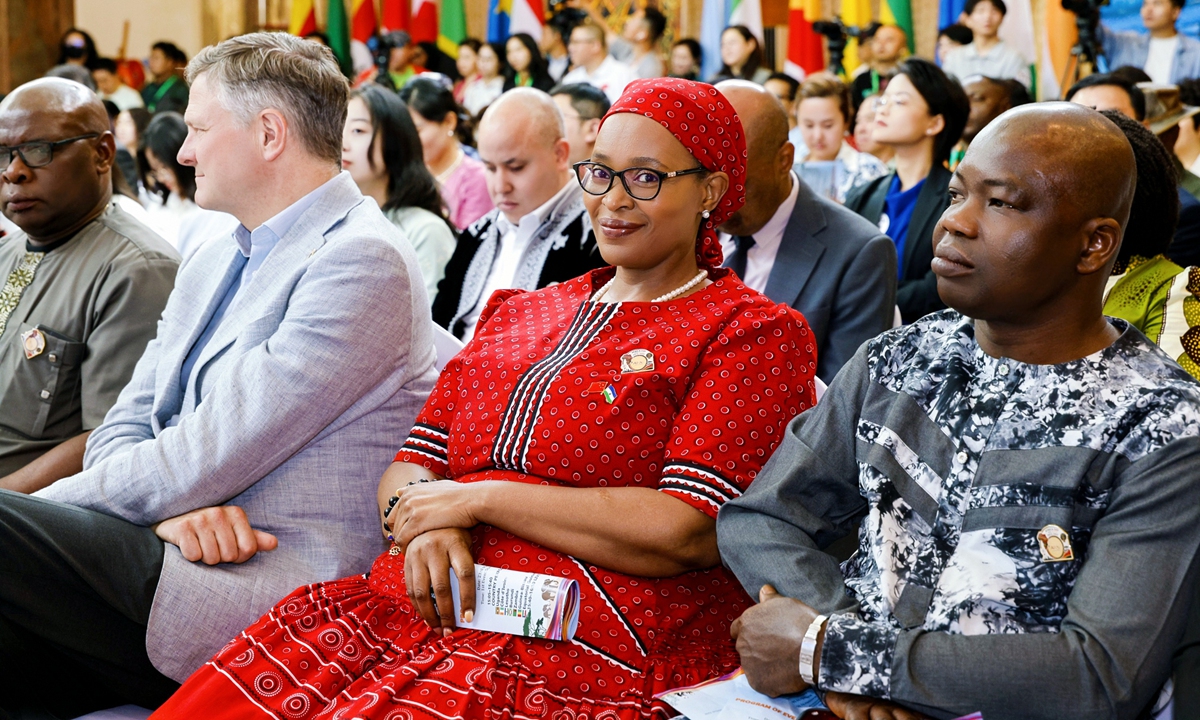
Ambassador of Lesotho to China Mapaballo Lydia Mile Photo: Courtesy of the Africa Day 2026 Organizing Committee
Ambassador of Lesotho to China Mapaballo Lydia Mile told the Global Times that "It [zero-tariff policy] grants us the platform to trade with our distinct Lesotho identity and dignity, empowering us to forge a resilient economy rather than settling for the export of unprocessed, vulnerable commodities."Mile said that in Lesotho, comparative advantage has historically rested in agriculture and textiles. The wool and mohair sectors, which currently dominate the country's exports to China, stand to gain immensely.
Crucially, this tariff-free access provides the necessary incentive to transition these industries from exporting raw materials to establishing domestic processing and value-addition operations, she said.
China's unilateral and unconditional implementation of this zero-tariff treatment demonstrates that South-South cooperation remains deeply committed to multilateralism, inclusive growth, and shared development, Mile said.
"It proves that developing nations can create viable, non-zero-sum alternative pathways for economic integration that focus on expanding the scope of openness and elevating the productive capacities of all partners involved," the ambassador added.
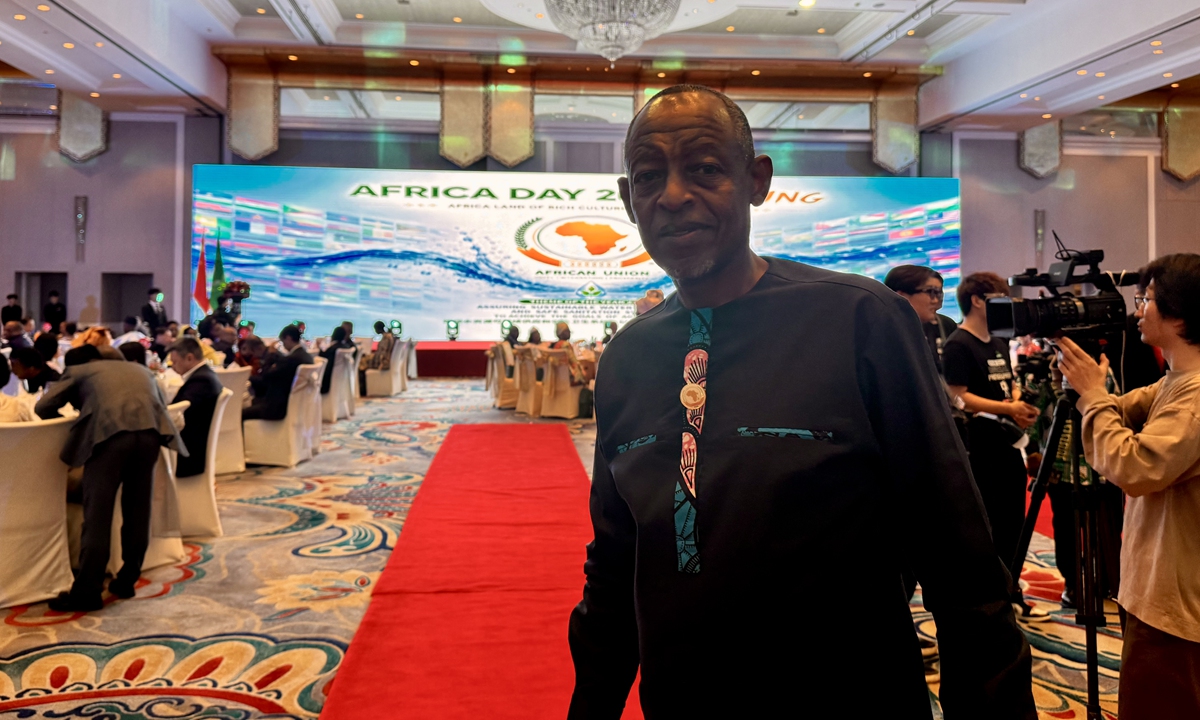
Rwandan Ambassador to China James Kimonyo Photo: Dong Feng/GT
Rwandan Ambassador to China James Kimonyo told the Global Times that Africa is seeing "a lot of benefits in terms of increasing exports." From his view, the lifted tariff functions as a trigger, which is "very, very significant for us, very important."He elaborated that the policy means to increase productivity and get more products to China. "I have to emphasize the fact that China is not opening the market for African countries to just buy raw materials. China is also open even [to] the finished products from Africa."
Kimonyo said China is also investing in infrastructure connectivity to deal with the challenges in logistics. "We work together, so we can grow together," he said.
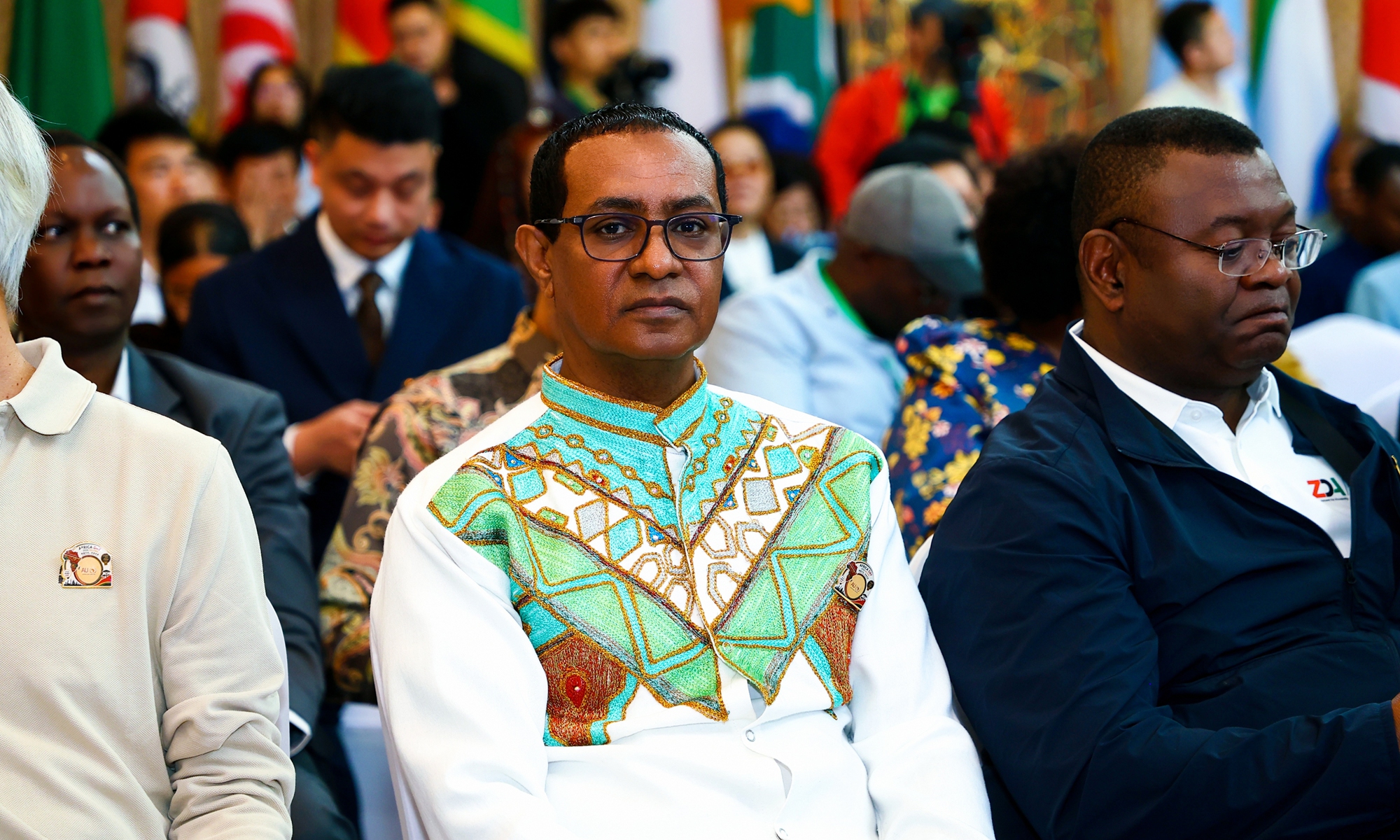
Ethiopian Ambassador to China Tefera Derbew Yimam Photo: Courtesy of the Africa Day 2026 Organizing Committee
Ethiopian Ambassador to China Tefera Derbew Yimam told the Global Times that FOCAC emphasizes mutual benefit, industrialization, infrastructure development, agricultural modernization, and trade expansion. The zero-tariff policy directly supports these priorities by creating real market opportunities for African exports and encouraging deeper industrial cooperation.For Ethiopia, this initiative complements ongoing cooperation with China in industrial parks, infrastructure connectivity, manufacturing, and agricultural development.
Closer trade relations strengthen people-to-people and business-to-business cooperation by encouraging investment partnerships, technology transfer, and knowledge sharing. It demonstrates that China-Africa cooperation is evolving toward higher-quality and more sustainable economic integration, said Yimam.
Held under the theme of "Assuring Sustainable Water Availability and Safe Sanitation Systems to Achieve the Goals of Agenda 2063," the Africa Day event highlighted the importance of sustainable development, environmental stewardship, food security, public health, and regional cooperation in advancing Africa's long-term development priorities.
Prior to the Monday event, the 2026 Africa Day Cultural Festival was held in Beijing on May 23. Countries were grouped into four batches to perform dances, instrumental music, live bands and fashion shows during the all-day event.
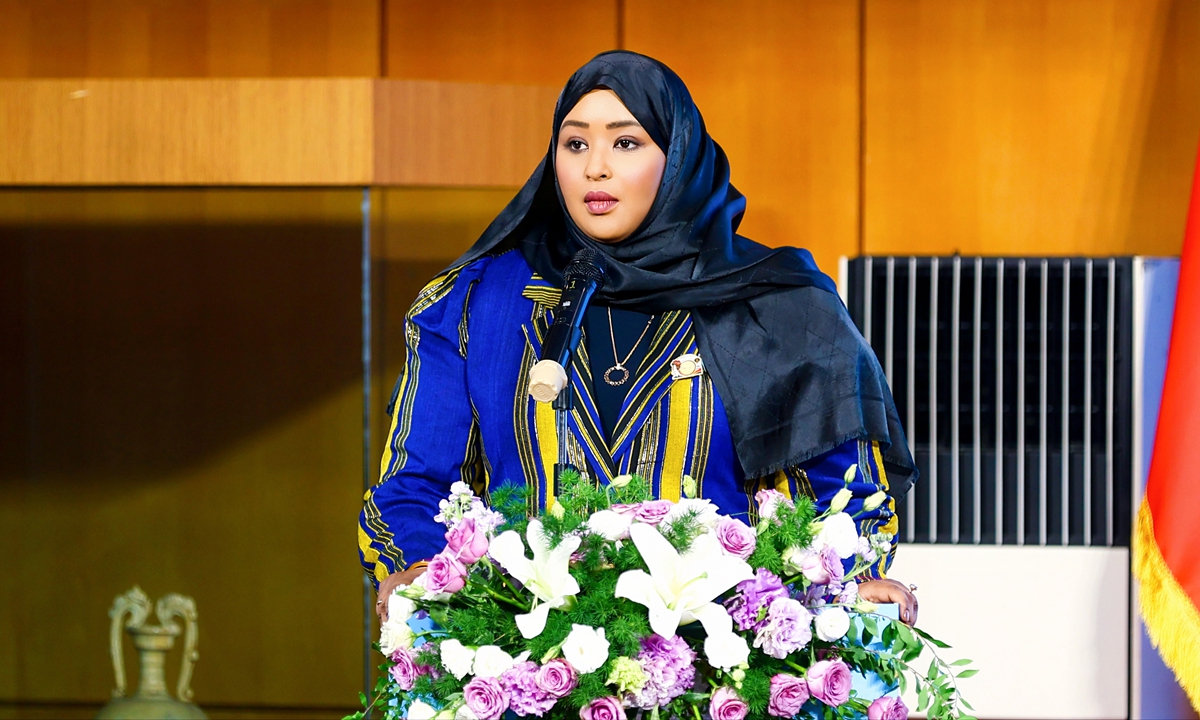
Somalia's Ambassador to China, Hodan Osman Abdi giving her speech. Photo: Courtesy of the Africa Day 2026 Organizing Committee
Somalia's Ambassador to China, Hodan Osman Abdi, who is also coordinator of the Cultural Festival, said in her address that "This year, we expect to celebrate Africa Day in a different way - not just to commemorate a date on the calendar, but to create a space that truly allows people to connect with Africa through hands-on experiences, interactive exchanges, and genuine connections between people. This is precisely the significance of this year's festival."Ambassador of Burundi to China Telesphore Irambona, who is also chair of the Africa Day 2026 Organizing Committee, said in his speech that "We sincerely appreciate the efforts and initiatives made by the Chinese government, especially the Global Civilization Initiative. The initiative aims to respect cultural differences and promote the exchange and dissemination of various civilizations."
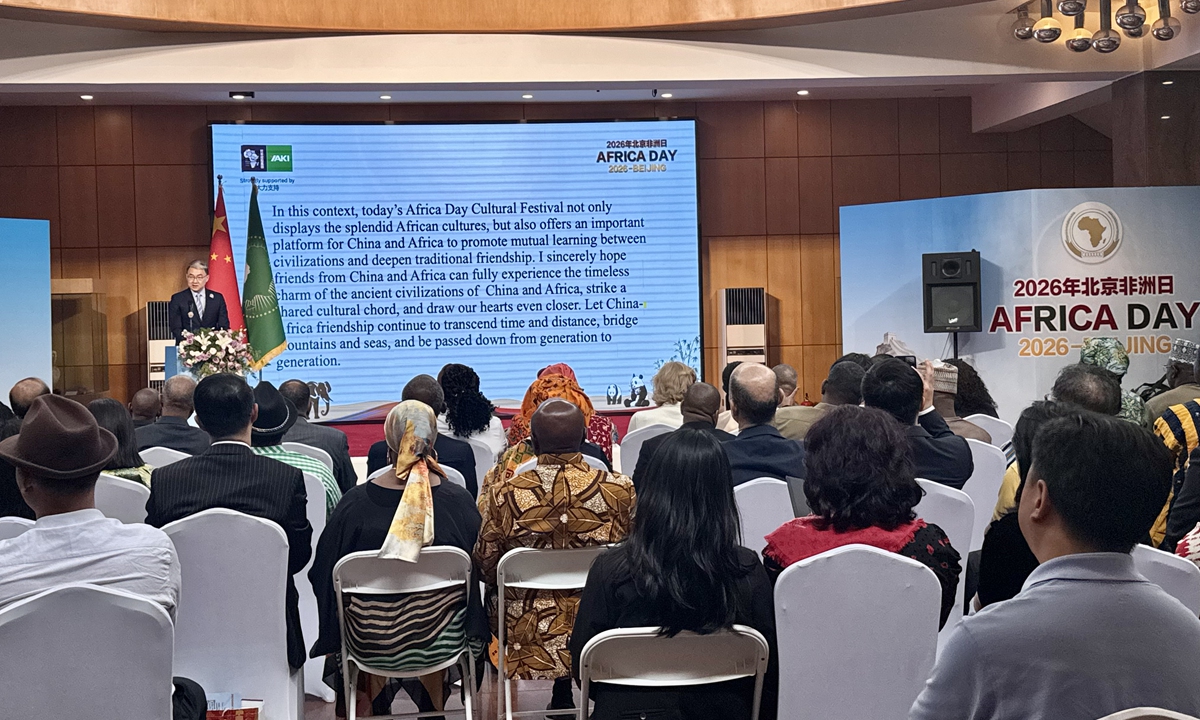
Li Bin, deputy director-general of the Department of African Affairs of the Chinese Ministry of Foreign Affairs, gives speech at the 2026 Africa Day Cultural Festival in Beijing on May 23, 2026. Photo: Dong Feng/GT
Li Bin, deputy director-general of the Department of African Affairs of the Chinese Ministry of Foreign Affairs, said in his speech that the Africa Day Cultural Festival "not only displays the splendid African cultures, but also offers an important platform for China and Africa to promote mutual learning between civilizations and deepen traditional friendship."