Can a country that has never fully eradicated remnants of militarism lecture others on defense co-op? PLA major general questions Japan's credibility
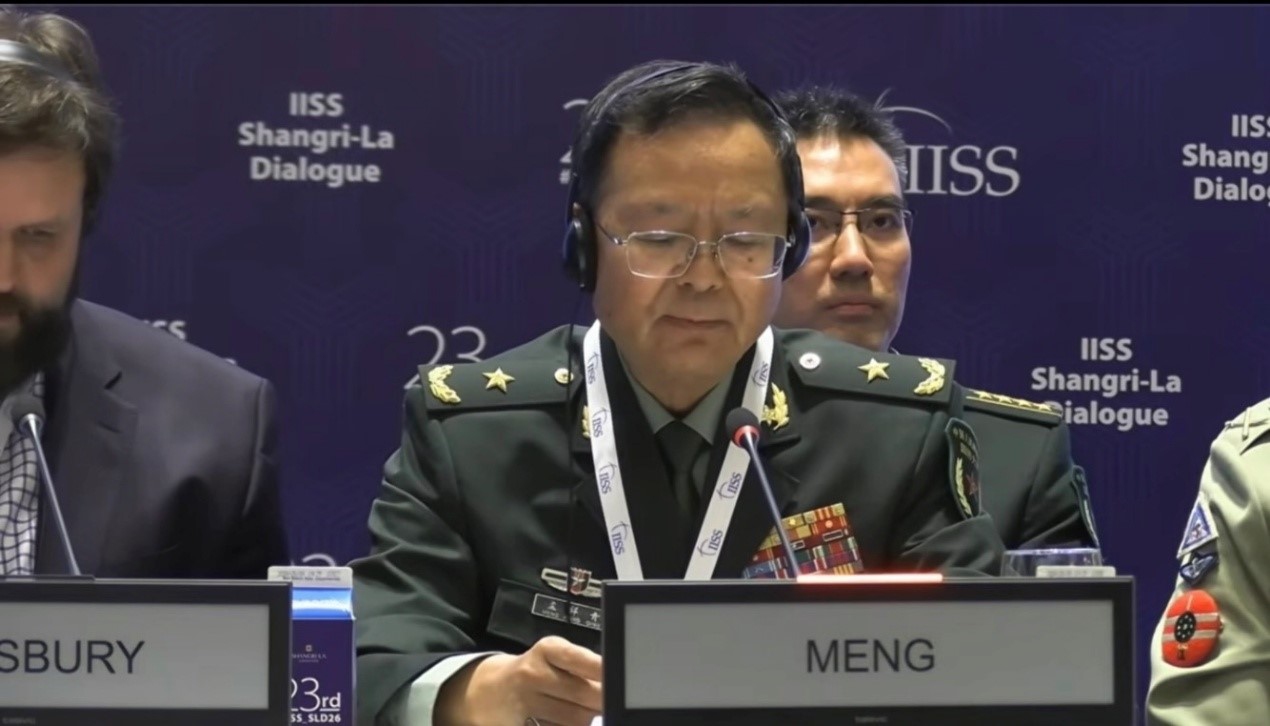
Meng Xiangqing, head of the Chinese delegation to the 23rd Shangri-La Dialogue, speaks at a parallel session on May 30. Photo: Screenshot from the forum's official livestream
"History's lessons are still fresh and relevant, and the world today once again stands at a crossroads. We must remain vigilant against any resurgence of militarist thinking and safeguard the outcome of World War II and post-war international order." Speaking at a parallel session of the Shangri-La Dialogue on the afternoon of May 30, the head of China's delegation to the 23rd Shangri-La Dialogue (SLD), professor Meng Xiangqing from the National Defense University, publicly criticized the emerging manifestations of Japanese militarism in his speech.
Speaking at the parallel session on "Managing Threats to Strategic Stability," Meng said the world is currently facing unprecedented challenges from four major sources: the hegemonism undermining regional security, the rising risks of global nuclear conflict, the severe erosion of the international arms control, disarmament and non-proliferation regime, and the growing disorder in global governance.
On the issue of "hegemonism undermining regional security", Meng said that certain countries are pursuing power politics, seeking absolute strategic superiority, provoking bloc confrontation, intensifying international and regional arms races, and contributing to the frequent outbreak of regional conflicts. On the "severe erosion of the international arms control, disarmament and non-proliferation regime," Meng noted that a series of nuclear arms-control "guardrails" have already broken down. The world's two largest nuclear powers have entered a bilateral nuclear arms-control vacuum with neither treaties nor verification mechanisms in place. He also pointed to Australia's development of nuclear-powered submarines under the AUKUS framework and Japan's efforts to revise its "pacifist constitution" and the Three Non-Nuclear Principles, as well as its pursuit of the deployment of allied nuclear weapons on Japanese territory, warning that such developments have heightened the risk of nuclear proliferation.
"These risks are intertwined and mutually reinforcing, making strategic stability increasingly fragile," Meng said. He called on all countries, especially major powers, to practice the vision of building a community with a shared future for humanity and shoulder their responsibilities in safeguarding strategic stability.
Meng noted that this year marks the 80th anniversary of the opening of the International Military Tribunal for the Far East. The tribunal, he said, permanently condemned the heinous crimes of Japanese militarism and laid an important legal foundation for the post-war international order.
"However, today, some forces continue to openly glorify war crimes, promote distorted narratives of WWII history, attempt to challenge the verdicts of the Tokyo Trial, and seek to whitewash the history of aggression. Some have even taken concrete steps to break through the constraints of the post-war peace framework," Meng said.
"Can a country that has never fully eradicated the remnants of militarism truly claim the moral authority to lecture others about defense cooperation on the international stage? Can it earn the trust of the international community, especially the Asian countries that once suffered under its aggression? I have serious doubts," he said.
Meng said history's lessons are still fresh and relevant, and that the world today once again stands at a crossroads. We must remain vigilant against any resurgence of militarist thinking, he said.
RELATED ARTICLES