USFK commander's 'dagger' remarks draw criticism in Seoul, reflect US view of allies as tools to contain China: Chinese expert
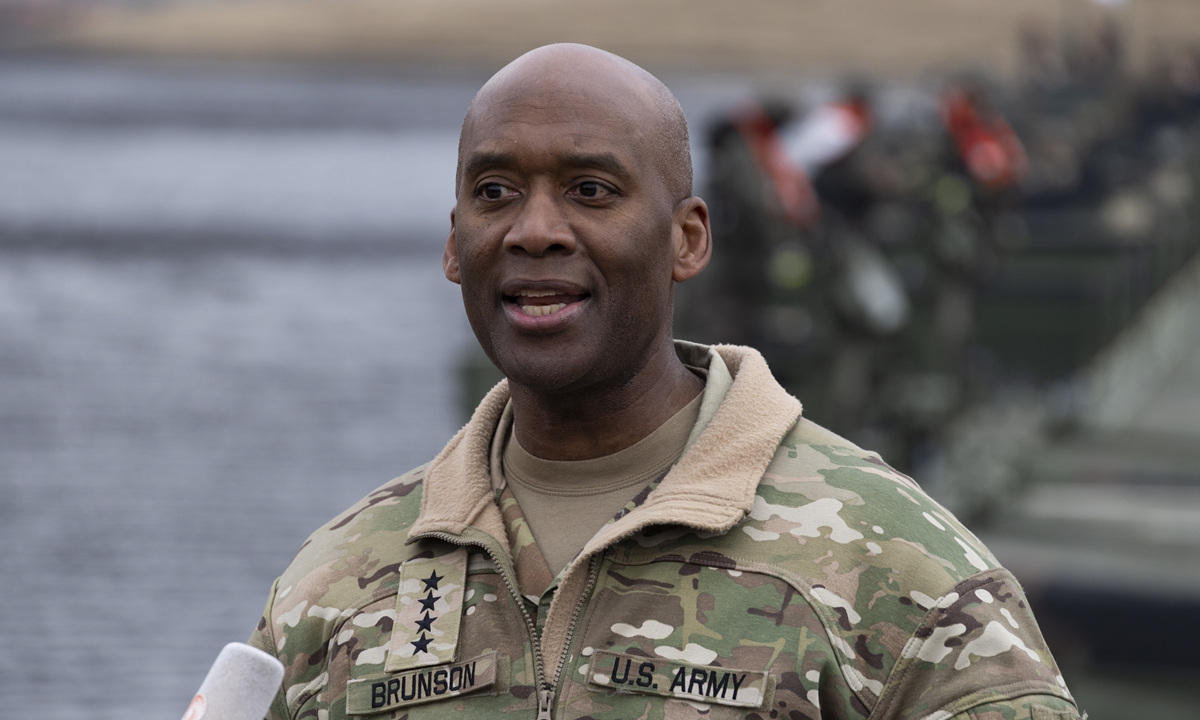
File photo of US Forces Korea (USFK) Commander Xavier Brunson Photo: VCG
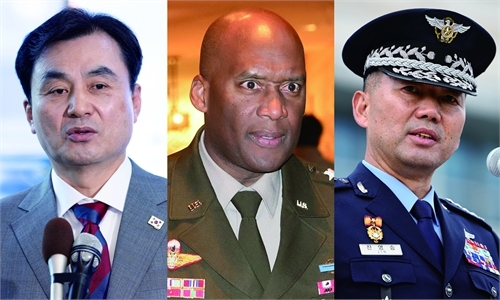
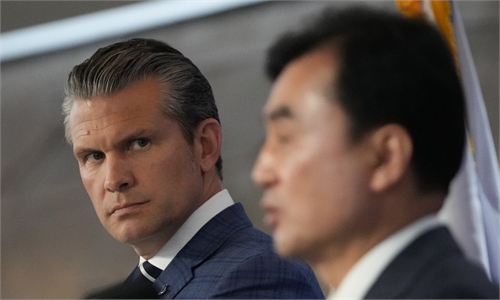
South Korean relevant departments have conveyed Seoul's position to the US through various channels after US Forces Korea (USFK) Commander Xavier Brunson described South Korea as a "dagger in the heart of Asia" regarding Seoul's geostrategic value, and the South Korean government is believed to have expressed regret and concern over the remarks while asking Washington to exercise restraint, Yonhap News Agency reported on Sunday, citing South Korea's presidential office.According to Yonhap, South Korea's National Security Adviser Wi Sung-lac and officials from the defense ministry, foreign ministry and other departments delivered Seoul's message to Washington through diplomatic and security channels.
The Blue House said that it was unable to disclose the specific details of the discussions held through diplomatic and security channels between South Korea and the US, but noted that it was aware of Brunson's recent series of public remarks and that Seoul and Washington have been maintaining communication at various levels regarding all relevant issues, Yonhap reported.
"When they (the Chinese) look out from the east coast of China, what they see is there's Korea, the dagger in the heart of Asia," Brunson said in a recent podcast interview, according to a transcript posted on the website of the Strategic Studies Institute at the Army War College.
"(Then) there's Japan again, sort of that shield that's sort of a backstop, if you will, for them trying and their ambitions beyond that into the South China Sea and then down to their southeast is the Philippines," he added.
Brunson's remarks exposed a mindset of treating allies such as South Korea as subordinates and as tools to contain China, Lü Chao, a research fellow at the Liaoning Academy of Social Sciences, told the Global Times on Sunday. He noted that the remarks were full of arrogance toward South Korea and provocation against China, ignoring the fact that South Korea is a sovereign country.
Brunson's rhetoric has also drawn attention from South Korean media. The Korea Herald said that although a Cheong Wa Dae official declined to elaborate on the government's position regarding Brunson's remarks, security watchers say the message was likely that of regret.
South Korea's local media outlet News1 said the presidential office complained to the US over the remarks, while broadcaster JTBC reported that such concerns had been raised 10 times previously.
According to JTBC, the South Korean government told Brunson that the commander of US Forces Korea should act in accordance with agreements reached by the leaders of South Korea and the US, and should not make remarks that could cause misunderstanding or undermine regional peace.
The report said Brunson's latest remarks not only provoked China but also made South Korea, a US ally, uncomfortable. Despite Seoul repeatedly conveying its concerns, Brunson has continued to make unexpected remarks, and the government attaches great importance to this situation, JTBC reported.
Brunson's latest rhetoric was not the first of its kind. According to a Chosun Daily report in May 2025, the US commander had described South Korea as a "fixed aircraft carrier" in the region.
In response to Brunson's recent remarks, a spokesperson for the Chinese Embassy in South Korea questioned on Thursday whether Brunson's hostile and aggressive anti-China comments were authorized or he intended to challenge the consensus reached during the meeting between Chinese and US heads of state in Beijing. The spokesperson asked whether referring to the host country as military weapons such as an "aircraft carrier" or a "dagger" reflects his belligerence or an attempt to use other countries as pawns.
The responsibilities of USFK are clear, and China's position toward US Forces Korea is also clear, the spokesperson said, adding that China hopes the commander of US Forces Korea will respect countries in the region and do more to promote regional peace and stability.
"We have noticed that some South Korean media outlets published commentaries cautioning Mr Brunson that 'you crossed the line.' We would also like to tell the US Forces Korea commander that 'your rhetoric has indeed crossed the line,'" the spokesperson said.
Chinese analysts said Brunson's remarks also reflect South Korea's awkward position within the US-South Korea alliance, suggesting that Washington and Seoul may face deeper contradictions in their regional strategic goals, which appears to be not fully aligned.
In addition to media coverage and criticisms, some South Korean netizens also expressed strong dissatisfaction over Brunson's remarks.
On social media platform X, a South Korean netizen wrote that the remarks laid bare Washington's view of South Korea as little more than a military base or colony, noting that a defeatist mentality within South Korea that the country cannot defend itself without the US had also contributed to Washington's misperception.
Another netizen said the South Korean government had reportedly warned Brunson 10 times to be careful with his words, but he ignored all of them, exposing how the US treats South Korea as a Pacific outpost and calling the episode a "diplomatic disaster."
A netizen said in Korean on Gasengi.com that in the long run, US forces in South Korea should be further reduced and eventually leave, and that South Korea should safeguard its own security with its own hands.
Discussions within South Korea over Brunson's remarks indicate that regional countries are now paying more attention to strategic autonomy and are increasingly unwilling to simply follow the strategic arrangements of major powers. Instead, they are placing greater emphasis on making decisions based on their own national interests, Lü said.
RELATED ARTICLES