Reader’s Reflections: China’s poverty reduction and rural revitalization experience shows inclusive growth is ‘essential and feasible’: Ethiopian economist

Arkebe Oqubay Photo: Courtesy of Arkebe Oqubay
Editor’s Note:
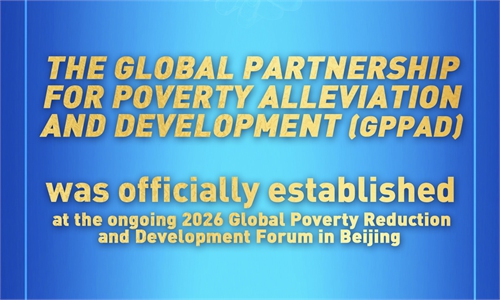
On May 27, the 2026 Global Poverty Reduction and Development Forum was held in Beijing. At the forum's opening ceremony, the Global Partnership for Poverty Alleviation and Development was officially launched. The partnership, jointly initiated by China, 53 other countries and nine international organizations, marks a milestone in global poverty reduction endeavors.
This year marks the first year that China has transited to regular assistance programs following the conclusion of the transition period from poverty-alleviation campaigns to a longer-term strategy aimed at consolidating gains and advancing rural revitalization across the board.
The 2026 Government Work Report emphasizes we will continue to consolidate and expand our poverty alleviation gains and carry out regular assistance programs under the rural revitalization strategy in conjunction with relevant initiatives, so as to guard against any large-scale lapse or relapse into poverty.
The outline of the 15th Five-Year Plan (2026-30) for national economic and social development also calls for coordinated efforts to establish regular mechanisms for preventing rural residents from lapsing or relapsing into poverty, providing well-targeted assistance, strengthening support to help those most in need, ramping up development-based assistance, and boosting internal impetus for development.
From the poverty elimination to the comprehensive rural revitalization, China's “development-based assistance” approach has provided an innovative solution to a common challenge faced by countries around the world.
President Xi Jinping, also general secretary of the Communist Party of China (CPC) Central Committee, attached great importance to consolidating and expanding poverty alleviation gains. Xi Jinping: The Governance of China incorporated General Secretary Xi’s important remarks in this regard.
In “Speech at the National Conference to Review the Fight Against Poverty and Commend Outstanding Individuals and Groups” in Volume IV, Xi noted “targeted poverty alleviation has proved to be the 'magic weapon' for winning the battle against poverty, while the development-driven approach has emerged as the distinctive feature of China's path to poverty reduction.” He also emphasized “we must take concrete steps to consolidate and expand upon the outcomes of the fight against poverty as part of our effort to promote rural revitalization, so that the foundations of poverty eradication are more solid and the effects are more sustainable.”
With eight years of anti-poverty campaign, five years of transition period, the valuable experience China has gained in poverty reduction and prevention of people’s lapse or relapse to poverty belongs not only to China but also to the world, offering new perspectives for global anti-poverty endeavors.
In the 24th installment of the special series "Decoding the Book Xi Jinping: The Governance of China," the Global Times, along with the People's Daily Overseas Edition, continues to invite Chinese and foreign scholars, translators of Xi's works, practitioners with firsthand experience, and international readers to conduct in-depth discussions on the practical value of China's poverty alleviation practices and rural revitalization strategy, as well as their implications for the world.
In the 24th article of the "Readers' Reflections" column, Global Times (GT) talked to Arkebe Oqubay, a British Academy Global Professor at SOAS University of London and former Senior Minister and Special Adviser to the Prime Minister of Ethiopia, to get his insight on China’s historic poverty reduction achievement, its rural revitalization strategy, and what this experience means for other developing countries.
GT: After many years of sustained efforts, China has eradicated absolute poverty in a historic achievement. In Volume IV of Xi Jinping: The Governance of China, President Xi Jinping said that “shaking off poverty is not the finish line, but rather the starting point of a new quest and a new endeavor.” China then set a five-year transition period for poverty-alleviated counties to consolidate poverty alleviation achievements and prevent large-scale relapse into poverty. From a development economics perspective, how do you assess China’s progress in eliminating absolute poverty and preventing a return to poverty? What has enabled the country to maintain policy continuity and development resilience in the shift from poverty alleviation to rural revitalization?
Arkebe Oqubay: China’s complete eradication of absolute poverty is historic and unprecedented, not only in terms of China’s own development trajectory, but also from the perspective of global development. No other country, whether advanced or emerging, has achieved poverty reduction on such a scale in human history. This has generated new interest in how absolute poverty can be eradicated, while reshaping the existing development paradigm in which poverty is often treated as a given.
This achievement is even more significant because it was made under a severe and complex external environment. The 2008 global financial crisis and the COVID-19 pandemic and related economic disruptions in 2020-2022 weakened the development capacity of many emerging economies and pushed poverty higher in parts of the world.
China’s experience shows that eradicating absolute poverty requires sustained economic growth, long-term structural transformation and highly targeted policies, particularly in rural areas. It also shows that growth and poverty reduction are not separate or competing agendas, but require an integrated development strategy and coordinated policy support. The experience further demonstrates that people-oriented, inclusive and equitable growth is both essential and feasible.
In development economics, agricultural modernization and rural development are seen as integral to broader economic transformation. The Chinese leadership has never seen the eradication of absolute poverty as the end of the road, but rather as part of an ongoing process leading toward rural revitalization. This policy continuity has been sustained because poverty reduction was embedded in a broader development agenda centered on sustained growth and agricultural modernization. Through policies such as targeted assistance, China has continued to consolidate hard-won development gains.
By carrying this logic into rural revitalization, China has been able to advance rural areas toward stronger industries, better public services and more sustainable growth. The Xi Jinping: The Governance of China series includes important expositions by President Xi on this development strategy, offering important lessons for policymakers, researchers and practitioners around the world.
GT: At the Central Rural Work Conference in late 2025, President Xi Jinping stressed that the year 2026 marks the beginning of the 15th Five-Year Plan period, and it is of vital importance to do a good job in the work related to agriculture, rural areas and farmers. The draft outline of the 15th Five-Year Plan sets out measures to establish a comprehensive, normalized mechanism to prevent people from falling back into poverty, adhere to targeted assistance, improve basic social security, and strengthen development-oriented assistance in areas such as industry and employment. How do you view China’s policy arrangement of moving from concentrated input to more regular and targeted assistance? Where do you see the potential for China’s agricultural and rural modernization during the 15th Five-Year Plan period?
Arkebe Oqubay: After the elimination of absolute poverty, the real challenge is not only to prevent people from falling back into poverty, but also to create conditions for sustained income growth and sustainable rural development. The shift toward more regular and targeted policy measures shows that China’s poverty reduction efforts have entered a more mature stage. Tailored support in industry, employment, education and infrastructure will help strengthen rural areas’ own development capacity.
Meanwhile, China’s efforts to comprehensively advance agricultural and rural modernization will help the country further ensure food security and promote sustainable farming practices, while making economic growth more resilient and efficient. Continued efforts to narrow the urban-rural gap are also central to this process.
By improving public services and welfare systems in rural and less-developed areas, raising incomes and strengthening elderly-care support, China is creating better institutional conditions for more balanced and inclusive development. It is also helping unlock the full potential of agricultural sci-tech innovation, rural industrial upgrading and other fields during the 15th Five-Year Plan period.
GT: In Volume V of Xi Jinping: The Governance of China, President Xi emphasized that “we must make steady progress in pursuing common prosperity. We should work to achieve integrated urban-rural development, make basic public services equally available to both urban and rural residents, and ensure modern standards of living in rural areas, in order to facilitate the well-rounded development of our rural residents and enable them to lead happier and more prosperous lives.” In your view, what development philosophy underpins China’s emphasis on common prosperity in rural revitalization, especially as a large developing economy? How can China’s push to accelerate agricultural and rural modernization contribute to global poverty reduction and food security?
Arkebe Oqubay: Since the start of reform and opening-up in 1978, China has lifted 770 million rural people living below its poverty line out of poverty by the end of 2020, accounting for more than 70 percent of the global total over the same period. This unprecedented achievement now carries wider significance as China brings rural development more fully into its modernization drive. This progress is rooted in a people-centered approach to governance, under which projects without immediate financial returns can still move ahead if they improve people’s lives.
As China advances modernization, it is placing greater emphasis on making growth benefit society more widely and more evenly. This is reflected in the draft outline of the 15th Five-Year Plan, which calls for solid progress toward common prosperity for all – a goal seen as a major distinction from some developed-country models.
In a broader global context, academic research and reports by international organizations show that China met the poverty reduction target of the UN 2030 Agenda for Sustainable Development 10 years ahead of schedule, making a major contribution to the global implementation of the Sustainable Development Goals. For a country as large as China, such an achievement is itself a major contribution to global economic stability and development. China’s accelerated push for agricultural and rural modernization will inject new impetus into global poverty reduction and sustainable development.
GT: President Xi Jinping has on many occasions elaborated on China’s approach to poverty reduction and shared its experience, noting that “eliminating poverty is a global challenge and also a common goal for all countries in the world,” and that “If China can make it, other developing countries can make it too.” Today, global development is being tested by overlapping challenges, including poverty, food insecurity, debt pressures, climate change and conflicts. What lessons can China’s experience in poverty reduction and rural development offer to other developing countries? How do you assess China-Africa cooperation in these fields?
Arkebe Oqubay: China’s approach of pursuing practical exploration, launching pilot programs first and then turning mature experience into a broader development framework is timely and offers useful policy lessons for Global South countries. It highlights the value of consistent policies, coordination across different levels of government, and measures adapted to local conditions. As far as I know, many African scholars and policymakers are already studying this process, and the experience is equally relevant for economies in Asia, Latin America and the Caribbean.
For Africa, agriculture is a core development issue, closely tied to food security and long-term economic resilience. The continent’s population is projected to rise from about 1.5 billion today to 2.5 billion by 2050. Advancing agricultural development and modernization can further unlock the potential of industrialization by raising productivity, expanding value-added processing and increasing farm exports. This process could be a game changer for Africa’s development landscape. This is where China’s experience and strengths in technology, infrastructure development, capacity building and policy coordination can provide useful lessons and cooperation opportunities.
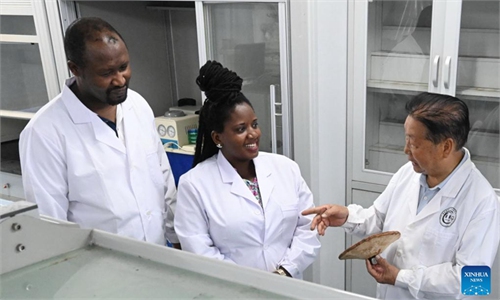
In recent years, China has actively supported African countries in advancing agricultural modernization. Through cooperation platforms such as the Belt and Road Initiative, projects in infrastructure, education and healthcare have helped create jobs, improve connectivity and foster inclusive growth, contributing to poverty reduction across the continent.
GT: Volume V of Xi Jinping: The Governance of China includes the main part of President Xi’s speech on the fight against hunger and poverty at Session I of the 19th G20 Summit in 2024. President Xi said that “I pointed out at a previous G20 Summit that prosperity and stability would not be possible in a world where the rich become richer while the poor are made poorer, and countries should make global development more inclusive, more resilient, and beneficial to all.” President Xi also outlined China’s eight actions to support global development, including pursuing high-quality Belt and Road cooperation, implementing the Global Development Initiative, and supporting the development in Africa. Amid growing global uncertainties, how do you see the outlook for China’s cooperation with Global South countries in poverty reduction, agricultural and rural development, and capacity building?
Arkebe Oqubay: The progress China and the Global South have made in cooperation is remarkable. Several factors now create opportunities to deepen and broaden this cooperation. Green development is one important area. For many Global South countries, this type of cooperation can connect climate action with industrialization, job creation and capacity building.
Stronger cooperation in development financing is also vital. Investment in sectors such as agriculture, manufacturing, mining and services also holds immense potential and can further boost trade among Global South countries. Technology cooperation is another promising area. Cooperation in fields such as open-source AI can help support start-ups, facilitate technology transfer and help developing countries cultivate local technological capabilities. This is important for capacity building and sustained growth.
Although the challenges remain immense, recent developments show that China and the Global South are jointly advancing and implementing the Global Development Initiative proposed by President Xi. Protecting multilateralism, upholding the rules-based international trading system, safeguarding global and regional peace, and improving global governance are all critical to poverty alleviation and development. Within this framework, deeper China-Africa exchanges can further strengthen South-South cooperation and reflect the Global South’s firm commitment to sustainable development, peace and common prosperity.
RELATED ARTICLES