IN-DEPTH / IN-DEPTH
Practitioners’ Insights: Stitch by stitch, Shibadong village in Hunan ‘embroiders’ a new picture of rural revitalization
By and Xue Ke in Xiangxi Published: May 31, 2026 11:36 PM

Editor's note:
On May 27, the 2026 Global Poverty Reduction and Development Forum was held in Beijing. At the forum's opening ceremony, the Global Partnership for Poverty Alleviation and Development was officially launched. The partnership, jointly initiated by China, 53 other countries and nine international organizations, marks a milestone in global poverty reduction endeavors.
This year marks the first year that China has transited to regular assistance programs following the conclusion of the transition period from poverty-alleviation campaigns to a longer-term strategy aimed at consolidating gains and advancing rural revitalization across the board.
The 2026 Government Work Report emphasizes we will continue to consolidate and expand our poverty alleviation gains and carry out regular assistance programs under the rural revitalization strategy in conjunction with relevant initiatives, so as to guard against any large-scale lapse or relapse into poverty.
The outline of the 15th Five-Year Plan (2026-30) for national economic and social development also calls for coordinated efforts to establish regular mechanisms for preventing rural residents from lapsing or relapsing into poverty, providing well-targeted assistance, strengthening support to help those most in need, ramping up development-based assistance, and boosting internal impetus for development.
From the poverty elimination to the comprehensive rural revitalization, China's "development-based assistance" approach has provided an innovative solution to a common challenge faced by countries around the world.
President Xi Jinping, also general secretary of the Communist Party of China (CPC) Central Committee, attached great importance to consolidating and expanding poverty alleviation gains. Xi Jinping: The Governance of China incorporated General Secretary Xi's important remarks in this regard.
In "Speech at the National Conference to Review the Fight Against Poverty and Commend Outstanding Individuals and Groups" in Volume IV, Xi noted "targeted poverty alleviation has proved to be the 'magic weapon' for winning the battle against poverty, while the development-driven approach has emerged as the distinctive feature of China's path to poverty reduction." He also emphasized "we must take concrete steps to consolidate and expand upon the outcomes of the fight against poverty as part of our effort to promote rural revitalization, so that the foundations of poverty eradication are more solid and the effects are more sustainable."
With eight years of anti-poverty campaign, five years of transition period, the valuable experience China has gained in poverty reduction and prevention of people's lapse or relapse to poverty belongs not only to China but also to the world, offering new perspectives for global anti-poverty endeavors.
In the 24th installment of the special series "Decoding the Book Xi Jinping: The Governance of China," the Global Times, along with the People's Daily Overseas Edition, continues to invite Chinese and foreign scholars, translators of Xi's works, practitioners with firsthand experience, and international readers to conduct in-depth discussions on the practical value of China's poverty alleviation practices and rural revitalization strategy, as well as their implications for the world.
This is the 22nd installment of "Practitioners' Insights." We visited Shibadong village in Huayuan county, Xiangxi Tujia and Miao Autonomous Prefecture, Central China's Hunan Province, where the concept of "targeted poverty alleviation" was first put forward, to hear villagers and industrial leaders who personally experienced the fight against poverty and the exploration of rural revitalization tell their stories. In recent years, building on consolidated poverty alleviation achievements, Shibadong village has relied on distinctive industries such as Miao embroidery, beekeeping and rural tourism. It has also continuously advanced rural revitalization through industrial upgrading, ecological improvement and cultural inheritance. This journey shows how the concept of rural revitalization has taken root in a remote mountain village, while also revealing the broad significance of this grassroots practice as it reaches the whole country and connects with the world.

After the rain cleared, a damp freshness still lingered under the wooden eaves of the houses in Lizizhai hamlet, Shibadong village.
At the Miao embroidery cooperative center on the upper part of the hamlet, rows of Miao embroidery crafts were displayed on wooden shelves, with traditional patterns spreading bright colors across the fabric. Several tourists talked quietly, gently running their fingers over the embroidery as they picked out souvenirs.
The bustle of the May Day holidays had just faded, and the mountain village was gradually returning to tranquility. Yet today, that tranquility no longer means isolation and poverty, but rather a new atmosphere in Shibadong village reflected in its industries, culture and way of life.
In November 2013, during an inspection tour of Hunan, President Xi Jinping visited Shibadong village, where he first put forward the concept of "targeted poverty alleviation." This concept of tailoring relief policies to different local conditions has become a guiding principle in China's fight against poverty, the Xinhua News Agency reported.
Guided by the targeted poverty alleviation strategy, Shibadong village has lifted itself out of poverty as a whole in 2016, and from there embarked on a new path toward rural revitalization, Xinhua reported.
"Rural revitalization is a major strategy for bringing about our national rejuvenation," Xi stressed in his speech at the National Conference to Review the Fight Against Poverty and Commend Outstanding Individuals and Groups on February 25, 2021. "Comprehensively implementing the rural revitalization strategy will be no less of a challenge than the fight against poverty in terms of depth, breadth and difficulty. We must therefore improve our policies, working mechanisms, and systems. We will adopt more forceful measures and pool more formidable strength to accelerate agricultural and rural modernization, promote quality and efficiency in agriculture, make rural areas attractive places to live and work in, and see that rural residents become more prosperous."
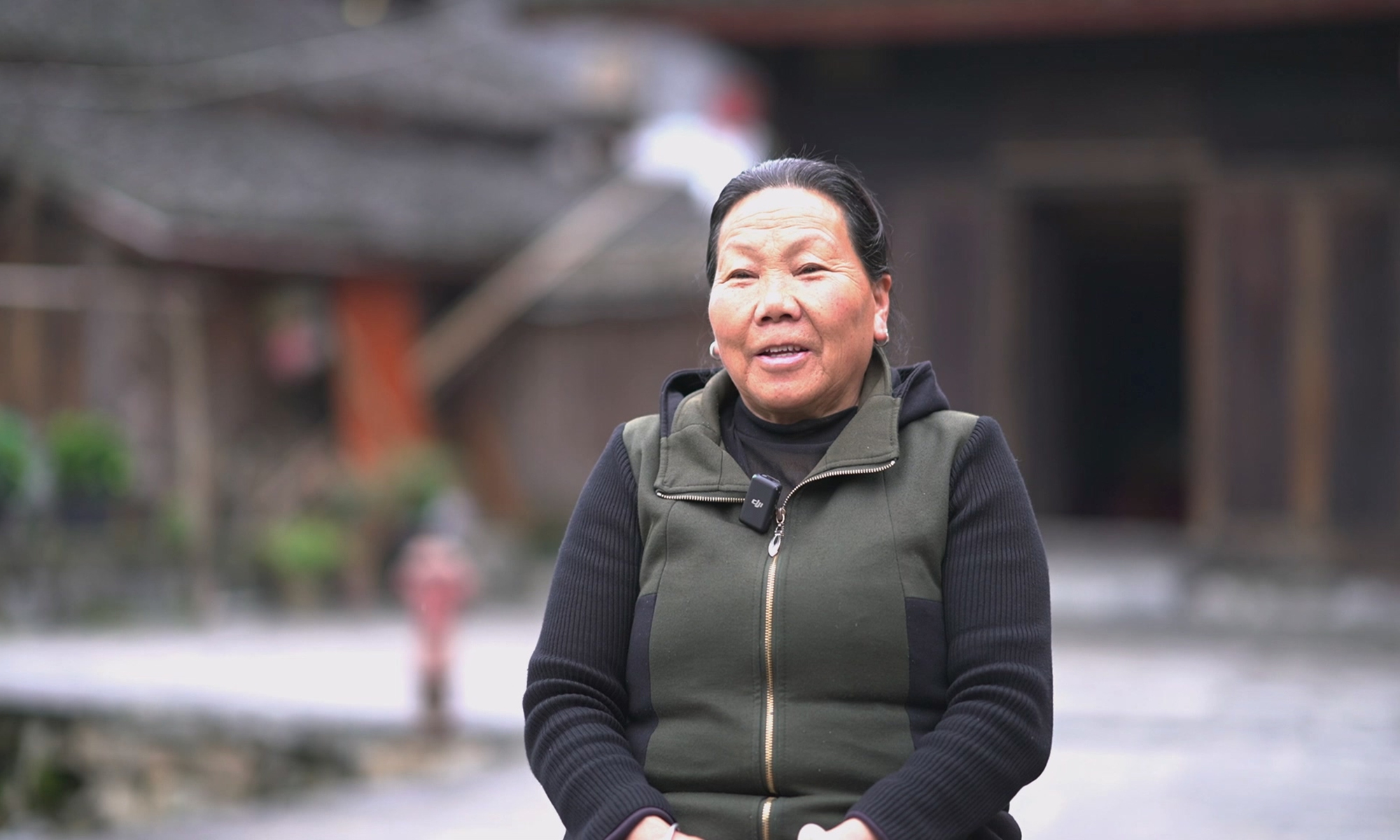
Recently, Shi Shunlian, former Party branch secretary of Shibadong village and a participant, witness and practitioner of the village's transformation, told the Global Times how targeted poverty alleviation changed the fate of this remote Miao village deep in the mountains.
'Dream weavers' in the mountains
Shi still remembers that in the past, "poverty" in Shibadong village was not an abstract word, but a reality people faced every day. "Sometimes, even to buy some salt or cooking oil, we had to go up the mountain to collect firewood and then carry it out to exchange for money," she recalled.
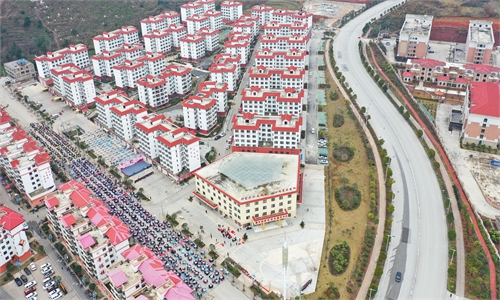
Located in the hinterland of the Wuling Mountains, Shibadong village is surrounded by overlapping ridges and crisscrossed gullies. It is a typical Miao village, and was once a deeply impoverished village in the contiguous poverty-stricken area of the Wuling Mountains.
At that time, a local rhyme circulated in the village: "Three gullies and two forks, a poor little corner; sweet potatoes, potatoes and corn cakes; if you want a meal of rice, you had better be sick or have a baby." This bitter expression of rural life recorded the real hardship of material scarcity in those years.
In 2013, the concept of "targeted poverty alleviation" was first put forward in Shibadong village. Shi said that in the beginning, villagers did not fully understand what exactly should be done. Later, work teams at different levels came to the village one after another, working with village officials and residents to assess the situation and find a path forward. The village also gradually moved away from the old mindset of "waiting for, relying on and asking for help," and began to think seriously: What industries were truly suitable for Shibadong village?
Shi told the Global Times that the village successively developed projects including kiwifruit planting, breeding, Miao embroidery, mountain spring water and rural tourism. Through step-by-step exploration, distinctive industries started from scratch, laying the foundation for later rural revitalization.
After retiring in 2014, she joined the work of the Miao embroidery cooperative. At first, more than 50 embroiderers took part in the cooperative. In the past, Miao embroidery was mainly sewn onto clothes, trousers, shoes and hats, and was a craft embedded in the daily lives of Miao women. After entering the cooperative, the craft began to be redesigned and reorganized, gradually becoming an industry that boosted employment and incomes.
In Shibadong village, Global Times reporters visited a digital workshop that was put into use last year, where some procedures that once belonged to the fingertips of embroiderers are now completed by rows of machines operating with precision. Patterns drawn on computers are entered into the equipment, and mechanical needles jump rapidly. Staff at the base said that one machine can now embroider thousands of products a day, something unimaginable in the past when all work depended entirely on hand embroidery.
But machines have not replaced craftsmanship. In another workshop, embroiderers sat in rows, chatting and laughing as they skillfully sewed Miao embroidery pieces produced by machines into finished products. Traditional butterfly patterns and Miao silver ornaments were combined into delicate pendants; earrings resembling peacock tail feathers swayed gently in the light; and products such as shawls, round fans, brooches, bags and mugwort pillows have brought Miao embroidery, once mainly "worn on the body," into a broader range of daily life.
As Shi introduced these products one by one, her voice was full of enthusiasm. She said the Miao embroidery industry is now operated by a company, supported by university design teams, and still completed in part by village embroiderers stitch by stitch. Old patterns have been turned into new products and, as a result, the traditional craft has found new markets.
This is a microcosm of Shibadong village's transition from poverty alleviation to rural revitalization. Based on its distinctive resources and ecological advantages, Shibadong village has cultivated specialty planting and breeding industries such as kiwifruit planting and beekeeping, established a Miao embroidery cooperative and developed projects including mountain spring water, rural tourism and study tours, realizing a transformation from "zero industry" to the start of distinctive industries, and then to integrated development across multiple business forms. Global Times reporters learned that villagers' incomes have steadily increased, while the village collective economy has continued to grow. By 2025, Shibadong village's per capita disposable income had reached 30,755 yuan ($4,260), and the village collective economic income had reached 7.04 million yuan.
"For the future, we want to maintain this development and prevent people from falling back into poverty," Shi said. On the road to rural revitalization, industries must continue to develop, technology must keep improving, and above all the craftsmanship embodied in Miao embroidery must be passed on to the next generation.
Returning to the countryside
In Shibadong village, rural revitalization is written not only in income figures, but also in the stories of villagers who have reconnected with their roots.
Long Xianlan used to work away from home when he was young. In 2013, after hearing that his hometown had begun implementing targeted poverty alleviation, he decided to return to Shibadong village.
But the poverty alleviation work team did not simply give him money or goods. Instead, it sent him and other young people to learn agricultural skills. After being exposed to planting, breeding and other projects, he eventually chose beekeeping.
At first, Long went up and down the mountain every day, observing bee colonies and managing beehives, while also worrying that the honey might not sell. Later, his teacher gave him 10 kilograms of honey to sell. To his surprise, it sold out in just two days. "People saw that Shibadong has such a good environment, and therefore the honey harvested here must be of the highest quality," he told the Global Times.
Sitting in front of his home, holding his daughter's hand who had just come back from school, Long spoke of the experience with pride. Now a beekeeping leader in the village, he is planning to further expand the honey industry. After the honey factory is built, the previous model of pressing, filtering and packaging by himself will shift toward more standardized and scaled production.
For Shibadong village, this means development after poverty alleviation did not stop at the moment when it shook off poverty, but continued to grow through industry, culture, the environment and people's outlook.
Such changes have also taken place among more villagers. At Shi's Miao embroidery cooperative, some young mothers can work near home, earning an income while taking care of elderly family members and children. Some older residents can also participate through simple sewing work. Shi Yunü, 78, told the Global Times that working at the cooperative not only brings her a steady income, but the finished products can also be sold to tourists, bringing in some extra money. And she also enjoys chatting with her old friends while she sews.
The changes in the village are equally clear. Global Times reporters noticed that, in the past, villagers relied on muddy roads and mountain paths to enter the village. Today, hardened roads reach doorsteps, the lanes in the hamlet are clean and orderly and wooden houses stretch along the slopes, shaded by green trees. An expressway now reaches near the village entrance, the magnificent Aizhai Bridge spans a deep gorge, and Xiangxi Biancheng Airport is only about a 20-minute drive from Shibadong village. The Miao village once hidden deep in the mountains is being connected to broader markets and the world through a more convenient transport network.
Long told the Global Times that, in his view, rural revitalization can "allow more young people to return to their hometowns to start businesses, earn money near home and take care of their families." For Shi, rural revitalization is not a temporary trend. It is about "ensuring that villagers all have a job and an income, and that everyone works together to make life better and better."
A grassroots model for the world
The story of Shibadong village has not stopped deep in the mountains.
In 2018, the concept of "targeted poverty alleviation" was written into a United Nations resolution, and the practice of Shibadong village allowed the world to see a grassroots model of China's poverty reduction experience.
According to Xinhua, in 2023, Shibadong village and Thinsom village in Luang Prabang Province, Laos, became "international sister villages." In November the following year, Shi Jintong, Party branch secretary of Shibadong village, was invited to Thinsom village to share Shibadong's poverty reduction and development experience with local officials. Seeing that the village had difficulty accessing water during the dry season, he helped coordinate with Chinese-funded enterprises in Laos to dredge an irrigation canal for the local community.
Today, water from the canal has flowed to the fields. In the past, villagers had to carry water from ponds to irrigate their land during the dry season. Now, water can flow directly into the fields, benefiting not only Thinsom village but also villages along the canal.
In June 2018, Bounnhang Vorachit, then general secretary of the Lao People's Revolutionary Party Central Committee and President of Laos, made a special visit to Shibadong village to explore the practical secrets behind China's targeted poverty alleviation. This was also the first time Shibadong village had received a foreign head of state, according to Xinhua.
According to Xinhua, so far, foreign guests from more than 100 countries around the world have visited this small mountain village for on-site study.
Shi told the Global Times that whenever foreign friends visit the Miao embroidery cooperative, she tells them the stories behind Miao embroidery: The Miao people did not have a written language, and much of their history, migration and blessings are hidden in patterns sewn stitch by stitch.
Today, what Shi and the embroiderers create in their hands is not only traditional Miao patterns, but also a vivid story of a remote Miao village moving from poverty alleviation to revitalization, and from the Chinese countryside to the world stage.
On May 27, the 2026 Global Poverty Reduction and Development Forum was held in Beijing. At the forum's opening ceremony, the Global Partnership for Poverty Alleviation and Development was officially launched. The partnership, jointly initiated by China, 53 other countries and nine international organizations, marks a milestone in global poverty reduction endeavors.
This year marks the first year that China has transited to regular assistance programs following the conclusion of the transition period from poverty-alleviation campaigns to a longer-term strategy aimed at consolidating gains and advancing rural revitalization across the board.
The 2026 Government Work Report emphasizes we will continue to consolidate and expand our poverty alleviation gains and carry out regular assistance programs under the rural revitalization strategy in conjunction with relevant initiatives, so as to guard against any large-scale lapse or relapse into poverty.
The outline of the 15th Five-Year Plan (2026-30) for national economic and social development also calls for coordinated efforts to establish regular mechanisms for preventing rural residents from lapsing or relapsing into poverty, providing well-targeted assistance, strengthening support to help those most in need, ramping up development-based assistance, and boosting internal impetus for development.
From the poverty elimination to the comprehensive rural revitalization, China's "development-based assistance" approach has provided an innovative solution to a common challenge faced by countries around the world.
President Xi Jinping, also general secretary of the Communist Party of China (CPC) Central Committee, attached great importance to consolidating and expanding poverty alleviation gains. Xi Jinping: The Governance of China incorporated General Secretary Xi's important remarks in this regard.
In "Speech at the National Conference to Review the Fight Against Poverty and Commend Outstanding Individuals and Groups" in Volume IV, Xi noted "targeted poverty alleviation has proved to be the 'magic weapon' for winning the battle against poverty, while the development-driven approach has emerged as the distinctive feature of China's path to poverty reduction." He also emphasized "we must take concrete steps to consolidate and expand upon the outcomes of the fight against poverty as part of our effort to promote rural revitalization, so that the foundations of poverty eradication are more solid and the effects are more sustainable."
With eight years of anti-poverty campaign, five years of transition period, the valuable experience China has gained in poverty reduction and prevention of people's lapse or relapse to poverty belongs not only to China but also to the world, offering new perspectives for global anti-poverty endeavors.
In the 24th installment of the special series "Decoding the Book Xi Jinping: The Governance of China," the Global Times, along with the People's Daily Overseas Edition, continues to invite Chinese and foreign scholars, translators of Xi's works, practitioners with firsthand experience, and international readers to conduct in-depth discussions on the practical value of China's poverty alleviation practices and rural revitalization strategy, as well as their implications for the world.
This is the 22nd installment of "Practitioners' Insights." We visited Shibadong village in Huayuan county, Xiangxi Tujia and Miao Autonomous Prefecture, Central China's Hunan Province, where the concept of "targeted poverty alleviation" was first put forward, to hear villagers and industrial leaders who personally experienced the fight against poverty and the exploration of rural revitalization tell their stories. In recent years, building on consolidated poverty alleviation achievements, Shibadong village has relied on distinctive industries such as Miao embroidery, beekeeping and rural tourism. It has also continuously advanced rural revitalization through industrial upgrading, ecological improvement and cultural inheritance. This journey shows how the concept of rural revitalization has taken root in a remote mountain village, while also revealing the broad significance of this grassroots practice as it reaches the whole country and connects with the world.
Shibadong village, located deep in China's Wuling Mountains in Central China's Hunan Province, is widely known as the birthplace of "targeted poverty alleviation." Photo: Shan Jie/GT
After the rain cleared, a damp freshness still lingered under the wooden eaves of the houses in Lizizhai hamlet, Shibadong village.
At the Miao embroidery cooperative center on the upper part of the hamlet, rows of Miao embroidery crafts were displayed on wooden shelves, with traditional patterns spreading bright colors across the fabric. Several tourists talked quietly, gently running their fingers over the embroidery as they picked out souvenirs.
The bustle of the May Day holidays had just faded, and the mountain village was gradually returning to tranquility. Yet today, that tranquility no longer means isolation and poverty, but rather a new atmosphere in Shibadong village reflected in its industries, culture and way of life.
In November 2013, during an inspection tour of Hunan, President Xi Jinping visited Shibadong village, where he first put forward the concept of "targeted poverty alleviation." This concept of tailoring relief policies to different local conditions has become a guiding principle in China's fight against poverty, the Xinhua News Agency reported.
Guided by the targeted poverty alleviation strategy, Shibadong village has lifted itself out of poverty as a whole in 2016, and from there embarked on a new path toward rural revitalization, Xinhua reported.
"Rural revitalization is a major strategy for bringing about our national rejuvenation," Xi stressed in his speech at the National Conference to Review the Fight Against Poverty and Commend Outstanding Individuals and Groups on February 25, 2021. "Comprehensively implementing the rural revitalization strategy will be no less of a challenge than the fight against poverty in terms of depth, breadth and difficulty. We must therefore improve our policies, working mechanisms, and systems. We will adopt more forceful measures and pool more formidable strength to accelerate agricultural and rural modernization, promote quality and efficiency in agriculture, make rural areas attractive places to live and work in, and see that rural residents become more prosperous."
Recently, Shi Shunlian, former Party branch secretary of Shibadong village and a participant, witness and practitioner of the village's transformation, told the Global Times how targeted poverty alleviation changed the fate of this remote Miao village deep in the mountains.
'Dream weavers' in the mountains
Shi still remembers that in the past, "poverty" in Shibadong village was not an abstract word, but a reality people faced every day. "Sometimes, even to buy some salt or cooking oil, we had to go up the mountain to collect firewood and then carry it out to exchange for money," she recalled.
Located in the hinterland of the Wuling Mountains, Shibadong village is surrounded by overlapping ridges and crisscrossed gullies. It is a typical Miao village, and was once a deeply impoverished village in the contiguous poverty-stricken area of the Wuling Mountains.
At that time, a local rhyme circulated in the village: "Three gullies and two forks, a poor little corner; sweet potatoes, potatoes and corn cakes; if you want a meal of rice, you had better be sick or have a baby." This bitter expression of rural life recorded the real hardship of material scarcity in those years.
In 2013, the concept of "targeted poverty alleviation" was first put forward in Shibadong village. Shi said that in the beginning, villagers did not fully understand what exactly should be done. Later, work teams at different levels came to the village one after another, working with village officials and residents to assess the situation and find a path forward. The village also gradually moved away from the old mindset of "waiting for, relying on and asking for help," and began to think seriously: What industries were truly suitable for Shibadong village?
Shi told the Global Times that the village successively developed projects including kiwifruit planting, breeding, Miao embroidery, mountain spring water and rural tourism. Through step-by-step exploration, distinctive industries started from scratch, laying the foundation for later rural revitalization.
After retiring in 2014, she joined the work of the Miao embroidery cooperative. At first, more than 50 embroiderers took part in the cooperative. In the past, Miao embroidery was mainly sewn onto clothes, trousers, shoes and hats, and was a craft embedded in the daily lives of Miao women. After entering the cooperative, the craft began to be redesigned and reorganized, gradually becoming an industry that boosted employment and incomes.
In Shibadong village, Global Times reporters visited a digital workshop that was put into use last year, where some procedures that once belonged to the fingertips of embroiderers are now completed by rows of machines operating with precision. Patterns drawn on computers are entered into the equipment, and mechanical needles jump rapidly. Staff at the base said that one machine can now embroider thousands of products a day, something unimaginable in the past when all work depended entirely on hand embroidery.
Shi Jinlian Photo: Xue ke/GT
But machines have not replaced craftsmanship. In another workshop, embroiderers sat in rows, chatting and laughing as they skillfully sewed Miao embroidery pieces produced by machines into finished products. Traditional butterfly patterns and Miao silver ornaments were combined into delicate pendants; earrings resembling peacock tail feathers swayed gently in the light; and products such as shawls, round fans, brooches, bags and mugwort pillows have brought Miao embroidery, once mainly "worn on the body," into a broader range of daily life.
As Shi introduced these products one by one, her voice was full of enthusiasm. She said the Miao embroidery industry is now operated by a company, supported by university design teams, and still completed in part by village embroiderers stitch by stitch. Old patterns have been turned into new products and, as a result, the traditional craft has found new markets.
This is a microcosm of Shibadong village's transition from poverty alleviation to rural revitalization. Based on its distinctive resources and ecological advantages, Shibadong village has cultivated specialty planting and breeding industries such as kiwifruit planting and beekeeping, established a Miao embroidery cooperative and developed projects including mountain spring water, rural tourism and study tours, realizing a transformation from "zero industry" to the start of distinctive industries, and then to integrated development across multiple business forms. Global Times reporters learned that villagers' incomes have steadily increased, while the village collective economy has continued to grow. By 2025, Shibadong village's per capita disposable income had reached 30,755 yuan ($4,260), and the village collective economic income had reached 7.04 million yuan.
"For the future, we want to maintain this development and prevent people from falling back into poverty," Shi said. On the road to rural revitalization, industries must continue to develop, technology must keep improving, and above all the craftsmanship embodied in Miao embroidery must be passed on to the next generation.
Returning to the countryside
In Shibadong village, rural revitalization is written not only in income figures, but also in the stories of villagers who have reconnected with their roots.
Long Xianlan used to work away from home when he was young. In 2013, after hearing that his hometown had begun implementing targeted poverty alleviation, he decided to return to Shibadong village.
But the poverty alleviation work team did not simply give him money or goods. Instead, it sent him and other young people to learn agricultural skills. After being exposed to planting, breeding and other projects, he eventually chose beekeeping.
At first, Long went up and down the mountain every day, observing bee colonies and managing beehives, while also worrying that the honey might not sell. Later, his teacher gave him 10 kilograms of honey to sell. To his surprise, it sold out in just two days. "People saw that Shibadong has such a good environment, and therefore the honey harvested here must be of the highest quality," he told the Global Times.
Sitting in front of his home, holding his daughter's hand who had just come back from school, Long spoke of the experience with pride. Now a beekeeping leader in the village, he is planning to further expand the honey industry. After the honey factory is built, the previous model of pressing, filtering and packaging by himself will shift toward more standardized and scaled production.
For Shibadong village, this means development after poverty alleviation did not stop at the moment when it shook off poverty, but continued to grow through industry, culture, the environment and people's outlook.
Such changes have also taken place among more villagers. At Shi's Miao embroidery cooperative, some young mothers can work near home, earning an income while taking care of elderly family members and children. Some older residents can also participate through simple sewing work. Shi Yunü, 78, told the Global Times that working at the cooperative not only brings her a steady income, but the finished products can also be sold to tourists, bringing in some extra money. And she also enjoys chatting with her old friends while she sews.
The changes in the village are equally clear. Global Times reporters noticed that, in the past, villagers relied on muddy roads and mountain paths to enter the village. Today, hardened roads reach doorsteps, the lanes in the hamlet are clean and orderly and wooden houses stretch along the slopes, shaded by green trees. An expressway now reaches near the village entrance, the magnificent Aizhai Bridge spans a deep gorge, and Xiangxi Biancheng Airport is only about a 20-minute drive from Shibadong village. The Miao village once hidden deep in the mountains is being connected to broader markets and the world through a more convenient transport network.
Long told the Global Times that, in his view, rural revitalization can "allow more young people to return to their hometowns to start businesses, earn money near home and take care of their families." For Shi, rural revitalization is not a temporary trend. It is about "ensuring that villagers all have a job and an income, and that everyone works together to make life better and better."
A grassroots model for the world
The story of Shibadong village has not stopped deep in the mountains.
In 2018, the concept of "targeted poverty alleviation" was written into a United Nations resolution, and the practice of Shibadong village allowed the world to see a grassroots model of China's poverty reduction experience.
According to Xinhua, in 2023, Shibadong village and Thinsom village in Luang Prabang Province, Laos, became "international sister villages." In November the following year, Shi Jintong, Party branch secretary of Shibadong village, was invited to Thinsom village to share Shibadong's poverty reduction and development experience with local officials. Seeing that the village had difficulty accessing water during the dry season, he helped coordinate with Chinese-funded enterprises in Laos to dredge an irrigation canal for the local community.
Today, water from the canal has flowed to the fields. In the past, villagers had to carry water from ponds to irrigate their land during the dry season. Now, water can flow directly into the fields, benefiting not only Thinsom village but also villages along the canal.
In June 2018, Bounnhang Vorachit, then general secretary of the Lao People's Revolutionary Party Central Committee and President of Laos, made a special visit to Shibadong village to explore the practical secrets behind China's targeted poverty alleviation. This was also the first time Shibadong village had received a foreign head of state, according to Xinhua.
According to Xinhua, so far, foreign guests from more than 100 countries around the world have visited this small mountain village for on-site study.
Shi told the Global Times that whenever foreign friends visit the Miao embroidery cooperative, she tells them the stories behind Miao embroidery: The Miao people did not have a written language, and much of their history, migration and blessings are hidden in patterns sewn stitch by stitch.
Today, what Shi and the embroiderers create in their hands is not only traditional Miao patterns, but also a vivid story of a remote Miao village moving from poverty alleviation to revitalization, and from the Chinese countryside to the world stage.
RELATED ARTICLES