ARTS / CULTURE & LEISURE
Young Chinese artists start shifting to their own culture and times
By Published: Jun 02, 2026 10:27 PM
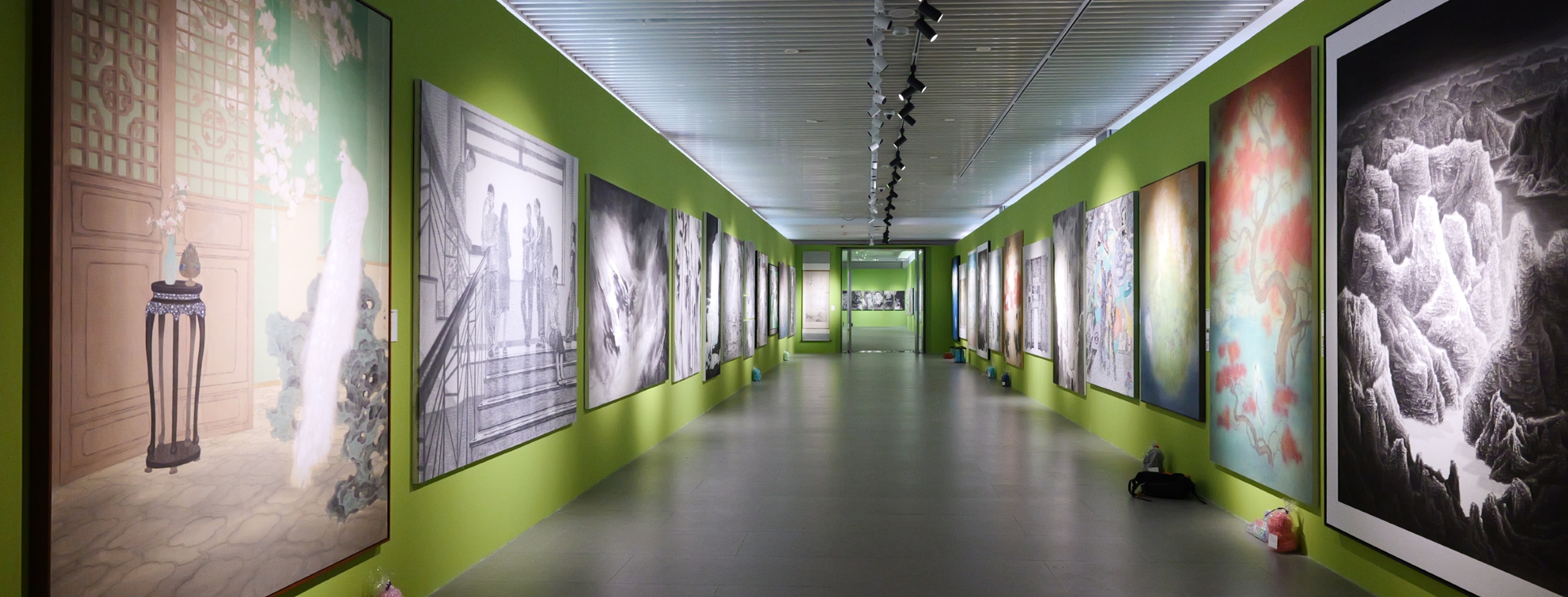
Photo: Courtesy of China Academy of Art
In late May in Southwest China's Chongqing Municipality, something unusual filled the halls of the Sichuan Fine Arts Institute during its "Open June" graduation show. Visitors did not smell oil paint or chemicals, instead, they breathed in the fresh scent of earth, vegetables, and ripe fruit.In the center of the exhibition hall sat Wan Qing, a Master's student in watercolor painting who had invited local farmers inside. Baskets of cucumbers, green beans, spring onions, and jasmine flowers with morning dew sat proudly beside traditional artworks.
In just two days, 170 jin (85 kilograms) of plums sold out, bought up by eager visitors. This was not a market stall or a side business. It formed part of Wan Qing's graduation project, titled Chongqing Metro Backpack Line.
For months, he had followed farmers who carried heavy baskets on their backs as they rode the metro into the city to sell their goods. He painted their daily journeys, their tired but determined faces, and the contrast between fast-developing urban life and those who keep it fed. In the end, he chose the simplest way to share his art: letting people take home real plums and feel the connection between art and everyday life. This small but meaningful event points to a deeper change happening in Chinese art schools today. Young artists are moving away from floating ideas and foreign templates. They are choosing to grow downward, putting roots firmly into Chinese soil and real people's lives.
For a long time, many art students felt they needed to prove themselves by taking on Western masters. Names like Duchamp and his famous urinal or Joseph Beuys and his "social sculpture" became passwords to show they understood "real" art. Too often, the taste of Western curators seemed like the final judge of whether a work was good or not. Chinese art sometimes looked like it was trying to copy someone else's dream.
Now the wind is changing, as can be seen by the graduation exhibitions across major academies this year.
At the China Academy of Art in Hangzhou, East China's Zhejiang Province, the "Grand Tour 2026" show featured nearly 3,000 sets of works. To create these works, students used artificial intelligence, virtual production, and interactive systems as easily as older artists used brushes. However, they are not copying Western cyberpunk styles full of dark ruins and emptiness, instead they used algorithms to recreate the misty clouds and flowing mountains of traditional Chinese landscape paintings. They bring new life to the rich colors of Dunhuang cave murals through digital tools. This is a confident "hardcore national trend." Technology has no borders, but the beauty and spirit come from China's own culture. These young creators treat modern tools as servants to express Chinese feelings and stories.
This turn from "floating above" to "sinking down" brings a new kind of realism. It feels close to life, with all its hardship and kindness mixed together.
A clear trend is visible: Young Chinese artists are shifting from one-way "looking West" to "looking inward" and "looking upward" at their own culture and the times.
This change matters for several reasons. First, it shows growing confidence. These graduates no longer seem desperate for approval from Western judges or big international exhibitions. They want to speak in their own language about the country they live in. Second, it connects art back to ordinary people. When visitors buy and eat those plums, art stops being something distant or mysterious. It becomes part of daily life, something shared and remembered. Third, it proves that tradition and modernity can work together beautifully. Young artists respect the past-the smoke and fire of real life, the poetry of mountains and rivers, the colors of ancient caves-while using today's strongest tools. They are not trapped by the past or blindly chasing the future. They stand firmly in the present, with Chinese roots.
The 170 jin of plums sold in that Chongqing gallery carry more meaning than many long theories. They show that good art must grow in the soil. It needs to touch real earth, real work, real emotions. When art drifts too far from life, it becomes empty. When it returns to the ground, it gains strength and freshness.
Across China, this new generation is quietly redefining what Chinese art means in our time. They study global techniques but refuse to become copies. They honor tradition but do not repeat old forms without life. They face real challenges in society - the gaps between city and countryside, the struggles of common workers - with honesty and care. The smell of fresh plums in an art museum may seem small, but it signals something big: Chinese art is coming home. These young creators are learning to trust their own eyes, their own stories, and their own culture. In doing so, they are not only making stronger works, they are helping build a more confident and rooted artistic future for China.
As more exhibitions like these open across the country, one thing becomes clear. The most powerful art often grows not from grand theories, but from simple things - a farmer's basket, morning dew on flowers, and the warmth of shared fruit. This is where the next chapter of Chinese art is taking root.
The author is a reporter with the Global Times. life@globaltimes.com.cn
RELATED ARTICLES