Ministry of State Security article warns researchers about unintentional leaks of sensitive scientific data
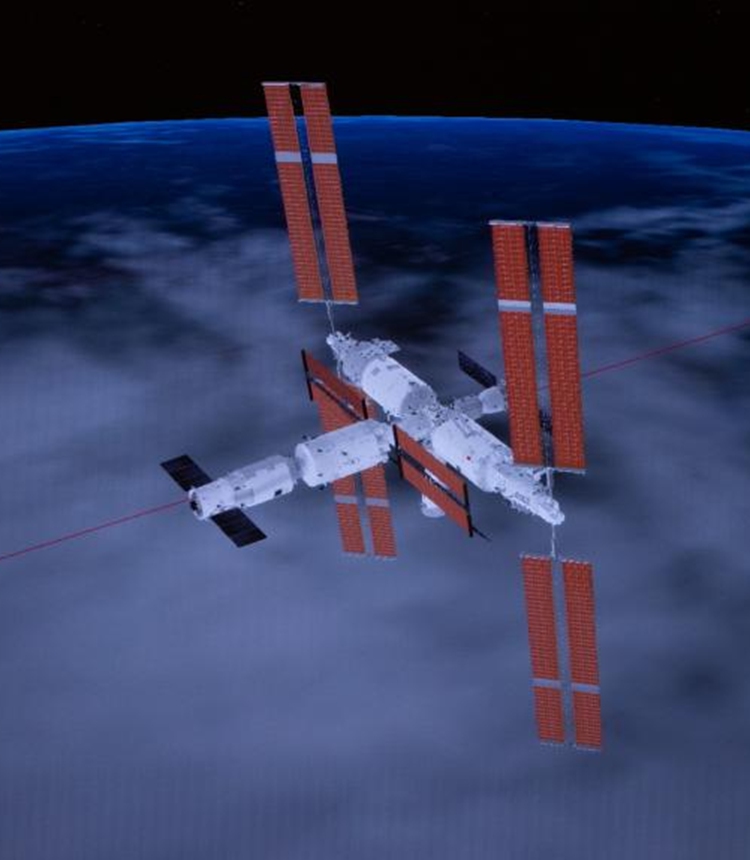
This simulated image captured at Beijing Aerospace Control Center on Oct. 26, 2023 shows China's Shenzhou-17 manned spaceship and the space station combination.(Photo: Xinhua)
As technological competition grows increasingly intense, technological security has become an important area of national security. Once sensitive scientific research data is leaked, it may not only affect the future prospects of researchers themselves, but also potentially endanger national security, read an article by the Chinese Ministry of State Security (MSS) on Wednesday.
A casually disclosed update on research progress, or the upload of unauthorized materials — such "unintentional mistakes" may well lead to the leakage of scientific research information, therefore requiring serious attention and prevention, the article warned.
The article cited one case as an example. In order to increase the chances of acceptance when submitting papers to international journals and academic conferences, a researcher, without undergoing the required confidentiality review by his or her institution, included detailed information in the appendix and supplementary materials, such as the core structure of equipment, key technical parameters, and distinctive experimental sample data. This resulted in the leakage of important technical details, and the individual concerned as well as relevant responsible personnel were held accountable, according to the article.
Another case showed that a staff member from a domestic university, while conducting a visiting study overseas, stored sensitive data including unpublished raw experimental data and interim research parameters, on an overseas cloud drive and in a personal overseas email account for research convenience, without completing the required confidentiality approval procedures for the cross-border transfer of research data.
A foreign partner institution obtained core scientific research information through backend extraction and published related academic findings ahead of others, resulting in the loss of value of domestic research achievements. The individual concerned and relevant responsible personnel were held accountable, the MSS article wrote.
The MSS article also warned of photo-sharing leaks. In one case it provided, some university students and researchers casually took photos of experimental scenes, instruments and equipment, and new devices while conducting experiments in laboratories, operating precision equipment, or testing experimental platforms, and then post them on online social media platforms.
These seemingly ordinary daily-life posts may be captured by foreign espionage and intelligence agencies or relevant research institutions, which may analyze them to identify sensitive information such as equipment performance, technical shortcomings, experimental conditions, and research progress, creating risks of leaks and disclosure.
Another case showed that some researchers, when attending overseas academic forums or online seminars, lack sufficient vigilance against targeted technical questions, data inquiries, and probing into research topics raised by foreign participants, and casually disclose key details such as technical principles and process flows. Such remarks, made in passing, may become high-value intelligence for foreign espionage and intelligence agencies or relevant research institutions.
Strictly observing confidentiality requirements in scientific research and building a strong line of defense are essential, the MSS article underscored.
Global Times
RELATED ARTICLES