US seeks comments on possible China tariff adjustments; expert calls move ‘positive’ but urges further action
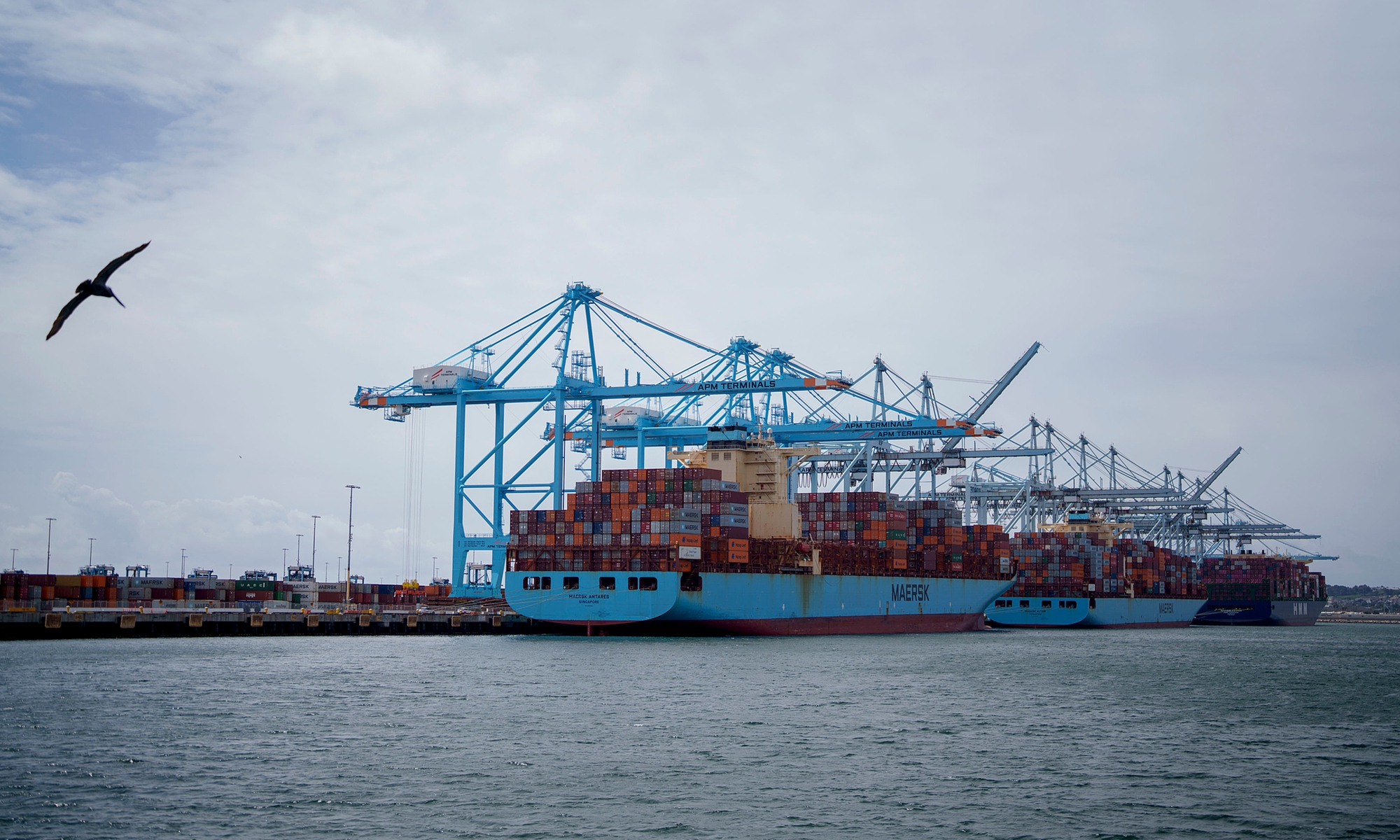
Cranes load containers onto ships at the Port of Los Angeles in Los Angeles, California, US, on Thursday, March 6, 2025.Photo:VCG
The Office of the US Trade Representative (USTR) has launched a public comment process on a proposed mechanism for managing bilateral trade with China, seeking views on which "non-sensitive products" from both sides could be eligible for tariff cutting.
Chinese analysts described the US move as a "positive" first step toward moving tariff discussions back onto a more open and rational track. They said Washington should go further, removing unreasonable unilateral tariffs to create a stable, predictable environment for bilateral trade.
USTR said in a statement on Tuesday that it had launched a public comment process for a new government-to-government framework - a US-China Board of Trade - intended to manage bilateral trade between the two countries on an ongoing basis.
The consultation covers "specific types of non-sensitive products" that could potentially benefit from tariff adjustments on both sides, with the goal of promoting balance and reciprocity in the trade relationship. Comments will be accepted until July 10, 2026, according to USTR.
A Federal Register notice released by USTR said the US-China Board of Trade, announced as part of a package of outcomes from President Donald Trump's visit to China, will serve as a government-to-government channel for discussions on optimizing trade in non-sensitive products.
"The public comment process could be seen as a positive step by the US toward easing tariff frictions after the leaders' meeting in May," Xin Qiang, deputy director of the Center for American Studies at Fudan University, told the Global Times on Wednesday.
Such a move, if translated into actual tariff cuts, could help further stabilize current bilateral economic and trade ties, Xin said. "Since the existing trade dispute was primarily triggered by US tariff actions, any substantive reduction in US duties could help ease long-standing tensions and create space for more constructive engagement in bilateral trade," he added.
US President Donald Trump visited China from May 13 to 15. On May 16, China's Ministry of Commerce (MOFCOM) announced a series of preliminary economic and trade outcomes from the visit, including the establishment of trade and investment councils to address each side's concerns in trade and investment cooperation.
Through the Trade Council, the two sides will discuss issues such as tariff reductions on specific products, and they have agreed in principle to lower tariffs on products of respective concern on an equivalent scale, according to MOFCOM.
The two sides' economic and trade teams would stay in close contact and work out detailed arrangements for the councils' structure, functions and operating model as soon as possible, a MOFCOM official said in May, stressing that the platforms will help move China-US economic and trade consultations from "crisis response" toward "institutionalized management."
According to USTR's notice, the latest process asks US stakeholders to identify Chinese products or sectors that could be considered non-sensitive, meaning they raise little or no concern for economic security, national security or supply chain risks.
It also seeks input on which Chinese products currently subject to additional US tariffs could be imported at lower rates, such as most-favored-nation (MFN) rates, and which consumers would benefit or be negatively affected by such adjustments.
The agency is seeking similar information on US exports to China now subject to additional tariffs, including agricultural products, according to the notice.
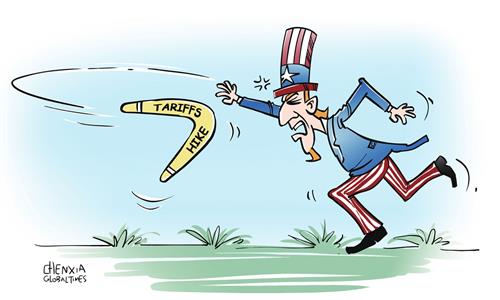
In recent years, the US has maintained broad tariffs and other restrictive measures on Chinese goods and companies, citing various trade, technology and security concerns. Xin said that high tariffs on Chinese goods have not brought real gains to the US economy.
"A large part of the tariff cost has ultimately been borne by US consumers, adding to inflationary pressure and hurting the US itself. That is why Washington has had to look for ways to cool down trade tensions," he said.
A Federal Reserve study released in April found that tariffs implemented through November 2025 had raised US core goods prices in the Personal Consumption Expenditures (PCE) index by 3.1 percent through February 2026 and added 0.8 percentage points to overall core PCE prices, suggesting that tariff costs had largely been passed through to prices.
However, the possible adjustments do not indicate a fundamental shift in Washington's tariff-based approach, analysts noted. The USTR notice said the US will likely continue to rely on tariffs and other tools to manage trade with China under certain conditions.
The key test lies in whether the US can go beyond limited and selective adjustments, remove unreasonable unilateral tariffs and restrictive measures, and work with China to put bilateral economic and trade relations back on a stable, mutually beneficial and predictable track, according to Xin.
RELATED ARTICLES