Ministry releases 4 typical crime cases, including fraudulent vehicle chips that cheat tail-gas emissions

A drone photo taken on Oct. 20, 2025 shows a view of Yellow River Estuary in Dongying, east China's Shandong Province. (Photo: Xinhua)
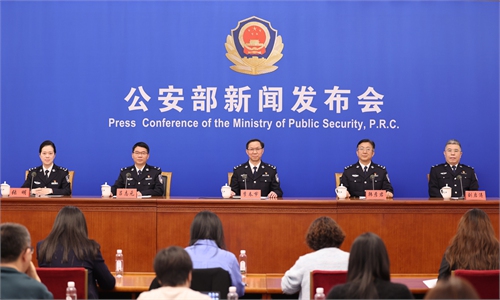
China's Ministry of Public Security announced four typical cases of environmental pollution crimes on Wednesday, involving the manufacturing and sale of chips to interfere with vehicle exhaust testing and illegal disposal of hazardous waste.
The release came ahead of World Environment Day on Friday, as the ministry vowed to crack down on environmental pollution crimes and protect ecological security and people's legitimate rights.
The ministry mentioned a case investigated by the public security authorities in Shaoxing, East China's Zhejiang Province in November 2024, involving a suspect surnamed Shan and others who manufactured and sold chips to interfere with vehicle exhaust testing. The suspects used technical means to conceal the actual emission levels of vehicles. As a result, pollutants such as nitrogen oxides and particulate matter from vehicle emissions directly exacerbated compound pollution in the region, including smog and ozone.
After the case came to light, the public security authorities, relying on police-civilian collaboration mechanisms, worked together with environmental protection and market regulation departments to carry out cross-regional tracing and investigation. They quickly located the chip production sites, sales networks, and end-user facilities, thereby cutting off the criminal chain.
The ministry also mentioned that in May 2025, public security authorities in Hechi, South China's Guangxi Zhuang Autonomous Region, solved a case of environmental pollution involving the illegal disposal of hazardous waste, detaining 10 suspects.
The investigation found that a metallurgical chemical company and an environmental technology company, in an effort to reduce hazardous waste disposal costs, illegally transported industrial filter press sludge to Hechi for disposal. During transportation and disposal, no pollution prevention measures were taken, posing a serious threat to environmental safety and public health.
The remaining two cases involved the illegal discharge of excessively polluted industrial wastewater in Southwest China's Chongqing Municipality. The investigation revealed that the head of a pharmaceutical factory's wastewater station, with tacit approval from company officials, interfered with automatic monitors and secretly discharged untreated wastewater. Chemical oxygen demand levels at the outlet exceeded the standard by nearly 12 times.
In a case in Luzhou, Southwest China's Sichuan Province, the illegal transfer, dumping, and landfilling of industrial solid waste directly damaged soil structure, contaminated surface and groundwater systems, and posed a serious threat to the safety of surrounding water sources as well as the stability of the local ecosystem.
Global Times
RELATED ARTICLES