IN-DEPTH / IN-DEPTH
From orchard to table: how a kiwifruit helps advance healthy China through ‘grown for good’
In May, Beijing's Longtan Central Park was full of fresh vitality. The trees had turned lush green, and a light breeze rippled across the lake. Early-morning exercisers moved slowly through their Tai Chi routines, while joggers circled the path at an easy rhythm, blending into the lush spring scene. On an island in the lake, the main event of the 2026 National Nutrition Week was underway, this year centered on the theme "Nutrition at the Family Table." The goal was to bring healthy eating into everyday homes, with crowds drifting between booths to pick up practical tips on improving their diets.
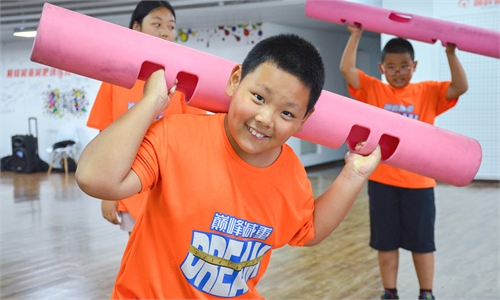
Among the exhibits, Zespri, the New Zealand-based kiwifruit marketer, drew some of the liveliest activity. Children, eyes wide, tossed small balls representing vitamin C, dietary fiber, and potassium into bowls, turning the concept of "high nutrient density" into a game. Nearby, younger visitors scanned QR codes for the brand's "Diet for Good" AI-powered diet mini-program, uploading photos of recent meals and receiving instant analyses of calories, nutritional gaps, and suggestions for better combinations.
A spirited 64-year-old retiree worked her way through every interactive station, laughing as she described her own daily routine: breakfast at her house was more likely to be coarse grains and fresh fruit than fried dough sticks or steamed buns, supplemented with protein powder and vitamins when needed. She said this kind of game-like education felt far more approachable than flipping through dense textbooks.
After finishing the fun, knowledge-filled experiences, each participant received a plump, fresh SunGold kiwifruit. The retiree posed happily for a selfie, the fruit held up like a trophy. Against the backdrop of China's deepening Healthy China Initiative, public awareness of health is rising fast. Consumers are moving beyond simply wanting more choices toward demanding higher quality, paying closer attention to nutritional content, sourcing, safety, and overall health value.
So what can a kiwifruit from New Zealand - with its natural nutritional strengths and Zespri's long-term commitment to the Chinese market - contribute to better-balanced meals for Chinese families, and to a healthier nation as a whole?
Refreshed global platform
At the Zespri booth, a robot named "Kiwi Brothers" stopped pedestrians in their tracks. The interaction was simple: visitors listed what they had eaten for their previous meal, and the robot analyzed it against the "Balanced Meal Plate," a model promoted by the Chinese Nutrition Society based on The Chinese Dietary Guidelines. A scientifically sound plate, the guidelines state, should contain four parts: grains and tubers, animal-based foods or soy products, vegetables, and fruits. Based on the input, the robot offered straightforward feedback.
Light as the game seemed, it turned an otherwise abstract question into something concrete: What did I actually eat last meal? Was my plate all grains and meat? Did I get enough fruit, vegetables and fiber?
A parent confessed, "The hardest part is dealing with a picky eater who won't touch fruit. I worry she's not getting enough vitamins." A group of young adults, by contrast, focused on sugar control, calorie management and lighter eating. Fitness enthusiasts naturally wondered which fruit delivers efficient energy with high nutritional density.
This rising public awareness is mirrored at the national policy level. In recent years, China's National Health Commission and other authorities have rolled out landmark frameworks including the Healthy China Action and the National Nutrition Plan (2017-30). The policies aim to widely spread dietary nutrition knowledge, issue tailored dietary guidelines for different age and social groups, guide the public toward scientific eating habits, and foster a broader culture of balanced nutrition. From top-level national strategy to everyday family dining tables, balanced eating has evolved into a core priority in China's public health agenda.
Yet, a significant gap remains between policy frameworks and daily reality. Data released by the Chinese Nutrition Society reveals a stark paradox: more than half of the population faces nutritional imbalance, marked by energy excess alongside micronutrient deficiencies. Some 63.6 percent of residents exceed the recommended fat-to-energy ratio of 30 percent. Meanwhile, 76.4 percent and 81.9 percent fall short of recommended vitamin C and potassium intake, respectively, with dietary fiber, calcium, and B vitamins consistently below recommended levels.
"Currently, consumers are far more involved than ever," Kok Hwee Ng, Chief Marketing Officer of Zespri International, told the Global Times. "They see health and nutrition not as a solution when you fall sick, but as something they want to integrate into their everyday life."
That expectation arrives as 2026 marks the official launch of Zespri's decade-long strategic roadmap: its 2035 ambition to become the world's healthiest fruit brand. Central to this vision is the rollout of its refreshed global platform, Grown for Good.
At its core, Grown for Good places natural nutrition at the center of every decision, from orchard cultivation to marketing initiatives and value creation.
Ng believes Zespri is uniquely positioned to lead this charge. "As the world's leading fruit brand, built around one of the most nutrient-dense fruits in the produce aisle, we have both the right and the responsibility to help societies become healthier," she said.
The mission extends beyond the fruit itself. By promoting nutritional literacy and championing the value of natural nutrition, Ng sees a path to unlocking shared value. "It's about creating a cycle where consumers gain health, society gains knowledge, and our growers gain the stability to continue producing high-quality fruit," she added. "That is the essence of Grown for Good - delivering lasting value for people and the planet."
From orchard to table
The SunGold kiwifruit handed to visitors at the end of the interactive games in Longtan Central Park looked simple enough - fresh, plump and ready to eat. For many participants, it was a small reward after a round of nutrition games.
Behind that small reward was a much longer journey.
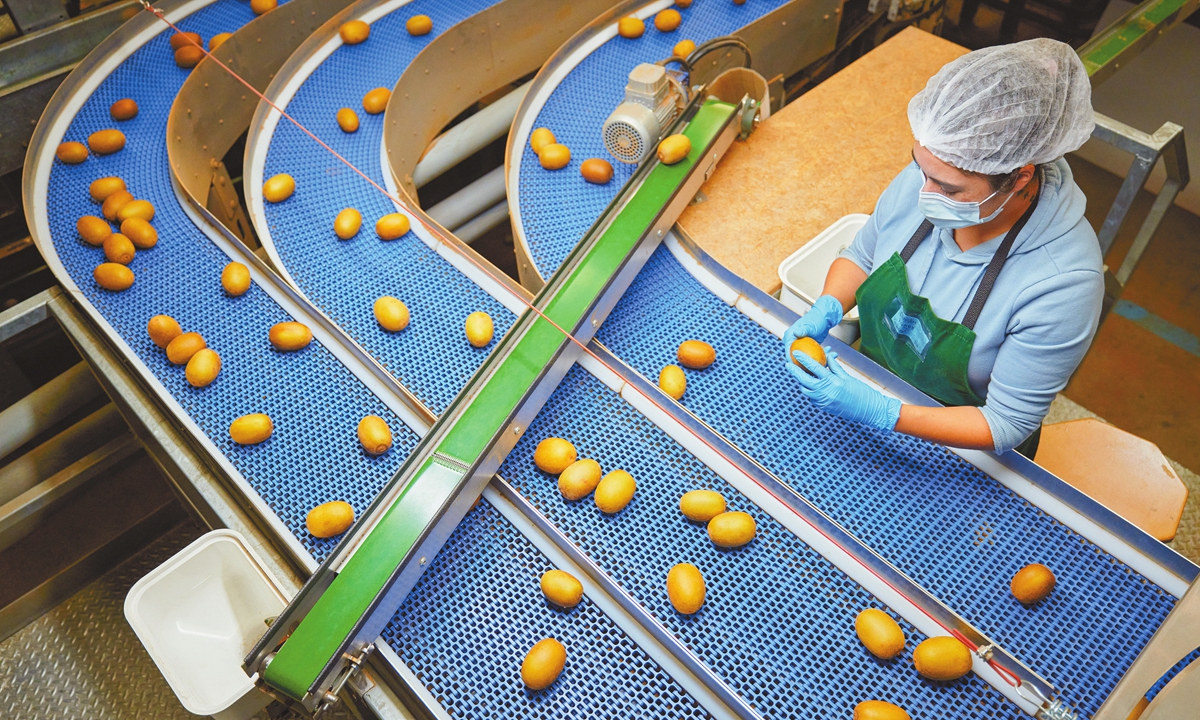
Before it appeared at the booth, it had already traveled through a chain of growers, standards, cold-chain transport and digital tools linking New Zealand orchards with Chinese dining tables.
Ng said the complete industrial chain is one of the features that makes the brand special. "What makes Zespri even more special is its complete industrial chain layout. The brand is jointly owned by nearly 3,000 local growers in New Zealand, and we take natural nutrition as the core driving force of the whole industrial chain operation," she said.
The emphasis on standards is also connected with the way nutrient density was presented during the event. The report released at the National Nutrition Week advocated high-quality diets and greater intake of high-nutrient-dense foods. Event materials described kiwifruit as a representative high-nutrient-density fruit rich in vitamin C, potassium and dietary fiber; 100 grams of SunGold kiwifruit provides 171 milligrams of vitamin C, meeting the adult daily requirement of 100 milligrams.
The other end of the "orchard to table" route was not a supermarket shelf, but a phone screen. The "Diet for Good" mini-program, which had already drawn visitors to scan and test their own meals at the booth, uses AI image recognition to analyze meals and show users their structure, calorie level and key nutrient information.
The mini-program is supported by professional content from the "National Nutrition Literacy Promotion Program " under the Nutrition Literacy Branch of the Chinese Association of Health Promotion and Education , and combines that content with technologies including Volcano Engine and the Doubao large model. The platform also supports continued meal records and trend tracking, helping users move from a single meal check to a longer-term view of their diet structure.
"It's not that people don't want to keep a healthy diet, it's just hard to carry it out in busy daily life. So we're finding simple ways to make healthy eating easier, guide subtle behavior changes and remind consumers to make conscious dietary choices," she said.
"The AI-powered platforms we newly launched this year make it easier for people to stick to healthy eating habits in the long run, because balanced nutrition intake needs long-term persistence, and progress comes from small daily changes," Ng said.
Zespri's partnership with the Chinese Nutrition Society dates back to 2021, when the two sides jointly released their first white paper focusing on working women's diet and health.
The Global Times learned that cooperation has since extended to reports on food nutrient density, visualized food-selection tools and participation in national nutrition events. Ng said the company sees its work in China not merely as selling products, but as contributing to the well-being of Chinese communities.
Toward a healthy China
The family table is also where long-term eating habits begin. That is why Zespri's work in China has extended beyond product promotion into children's food education, parent guidance and hospital-based nutrition programs.
One example is the "Nutrition & Dietary Knowledge Standard Course Program," a children's food education standardization program, supported by Zespri China and launched by the China Association for Student Nutrition and Health Promotion in 2023.
Research from the Chinese Center for Disease Control and Prevention shows that 76.21 percent of children consume less than 60 percent of the recommended daily intake of fresh vegetables, while 85.21 percent consume less than 60 percent of the recommended intake of fresh fruit.
The Global Times learned that, over the past three years, the "Nutrition & Dietary Knowledge Standard Course Program" has covered 35 cities, nearly 2,000 schools and more than 300 communities, benefiting 1.5 million students and families.
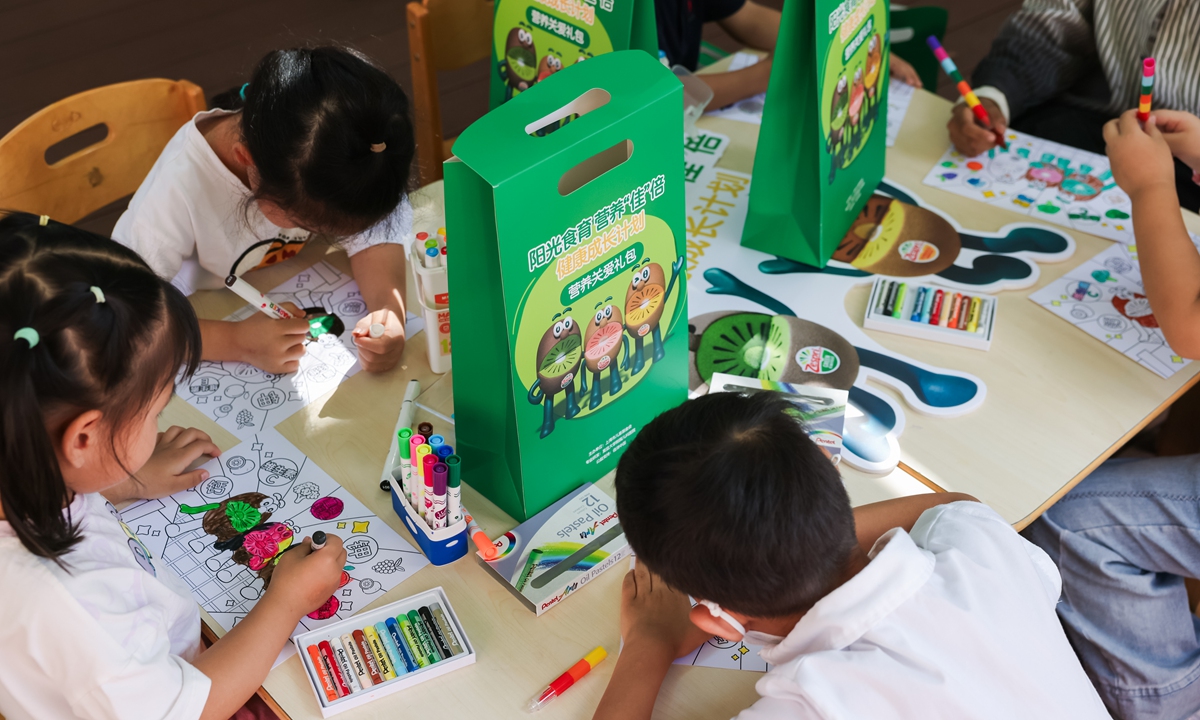
Hospitals are another setting for nutrition education. The "Sunshine Education & Healthy Growth Program," supported by professional partners including the Children's Hospital of Fudan University, extends nutrition guidance into medical settings and provides scientific support for children and families.
Ng said hospital cooperation helps guide children to develop good eating habits and gather scientific evidence on balanced diets and fresh fruit intake, especially nutrient-dense fruits. She also said cooperation with industry experts can support the building of scientific guidance systems for dietary nutrition.
Looking ahead, Ng said Zespri will continue to deepen cooperation with institutions including the Chinese Nutrition Society and the China Association for Student Nutrition and Health Promotion, bringing nutrition education to more cities and more scenarios.
In that sense, the small kiwifruit becomes part of a bigger story - not only about what people buy, but about how healthier habits take root, one household at a time. At the family table, even one more piece of fruit can quietly echo China's broader pursuit of better health for all.
Global Times
Among the exhibits, Zespri, the New Zealand-based kiwifruit marketer, drew some of the liveliest activity. Children, eyes wide, tossed small balls representing vitamin C, dietary fiber, and potassium into bowls, turning the concept of "high nutrient density" into a game. Nearby, younger visitors scanned QR codes for the brand's "Diet for Good" AI-powered diet mini-program, uploading photos of recent meals and receiving instant analyses of calories, nutritional gaps, and suggestions for better combinations.
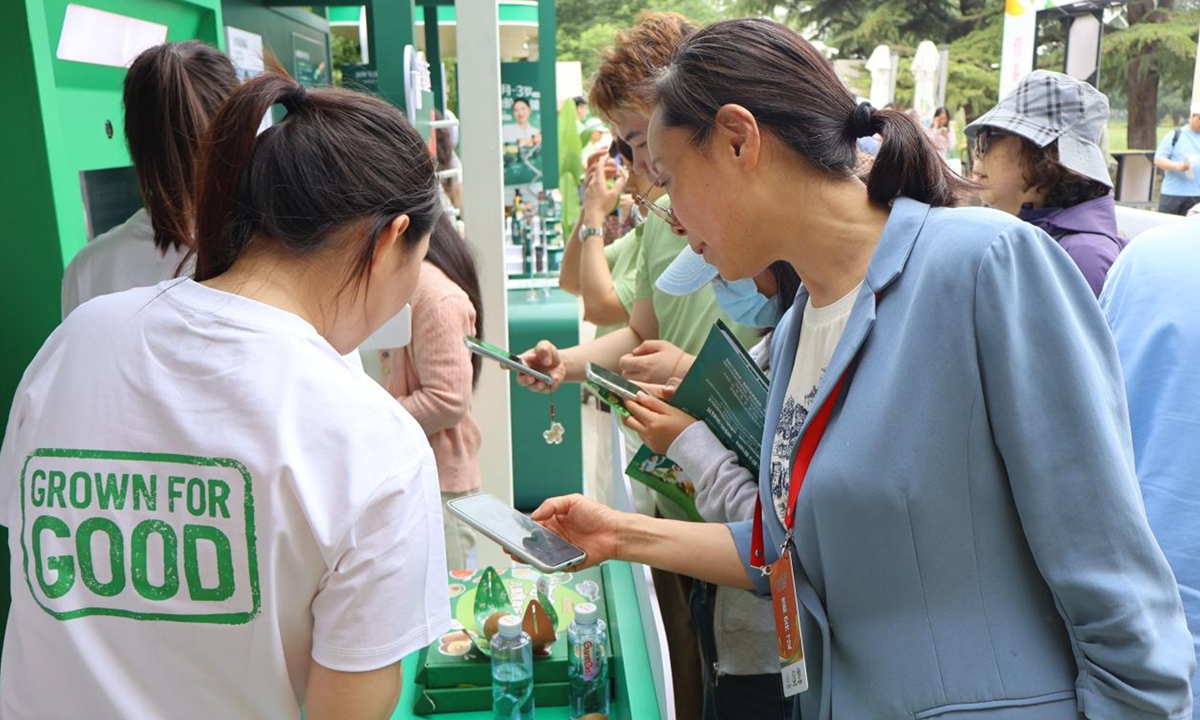
Visitors interact at the Zespri booth during the 2026 National Nutrition Week in Beijing's Longtan Central Park on May 16, 2026. Photo: Lin Xiaoyi/GT
Zhao Boya, a young nutrition professional, had just tried all the interactive stations. "People used to focus on whether they were full," she told Global Times. "Now they want to know exactly what's in their food and how to balance it. It's a shift from eating enough to eating well."A spirited 64-year-old retiree worked her way through every interactive station, laughing as she described her own daily routine: breakfast at her house was more likely to be coarse grains and fresh fruit than fried dough sticks or steamed buns, supplemented with protein powder and vitamins when needed. She said this kind of game-like education felt far more approachable than flipping through dense textbooks.
After finishing the fun, knowledge-filled experiences, each participant received a plump, fresh SunGold kiwifruit. The retiree posed happily for a selfie, the fruit held up like a trophy. Against the backdrop of China's deepening Healthy China Initiative, public awareness of health is rising fast. Consumers are moving beyond simply wanting more choices toward demanding higher quality, paying closer attention to nutritional content, sourcing, safety, and overall health value.
So what can a kiwifruit from New Zealand - with its natural nutritional strengths and Zespri's long-term commitment to the Chinese market - contribute to better-balanced meals for Chinese families, and to a healthier nation as a whole?
Refreshed global platform
At the Zespri booth, a robot named "Kiwi Brothers" stopped pedestrians in their tracks. The interaction was simple: visitors listed what they had eaten for their previous meal, and the robot analyzed it against the "Balanced Meal Plate," a model promoted by the Chinese Nutrition Society based on The Chinese Dietary Guidelines. A scientifically sound plate, the guidelines state, should contain four parts: grains and tubers, animal-based foods or soy products, vegetables, and fruits. Based on the input, the robot offered straightforward feedback.
Light as the game seemed, it turned an otherwise abstract question into something concrete: What did I actually eat last meal? Was my plate all grains and meat? Did I get enough fruit, vegetables and fiber?
A parent confessed, "The hardest part is dealing with a picky eater who won't touch fruit. I worry she's not getting enough vitamins." A group of young adults, by contrast, focused on sugar control, calorie management and lighter eating. Fitness enthusiasts naturally wondered which fruit delivers efficient energy with high nutritional density.
This rising public awareness is mirrored at the national policy level. In recent years, China's National Health Commission and other authorities have rolled out landmark frameworks including the Healthy China Action and the National Nutrition Plan (2017-30). The policies aim to widely spread dietary nutrition knowledge, issue tailored dietary guidelines for different age and social groups, guide the public toward scientific eating habits, and foster a broader culture of balanced nutrition. From top-level national strategy to everyday family dining tables, balanced eating has evolved into a core priority in China's public health agenda.
Yet, a significant gap remains between policy frameworks and daily reality. Data released by the Chinese Nutrition Society reveals a stark paradox: more than half of the population faces nutritional imbalance, marked by energy excess alongside micronutrient deficiencies. Some 63.6 percent of residents exceed the recommended fat-to-energy ratio of 30 percent. Meanwhile, 76.4 percent and 81.9 percent fall short of recommended vitamin C and potassium intake, respectively, with dietary fiber, calcium, and B vitamins consistently below recommended levels.
"Currently, consumers are far more involved than ever," Kok Hwee Ng, Chief Marketing Officer of Zespri International, told the Global Times. "They see health and nutrition not as a solution when you fall sick, but as something they want to integrate into their everyday life."
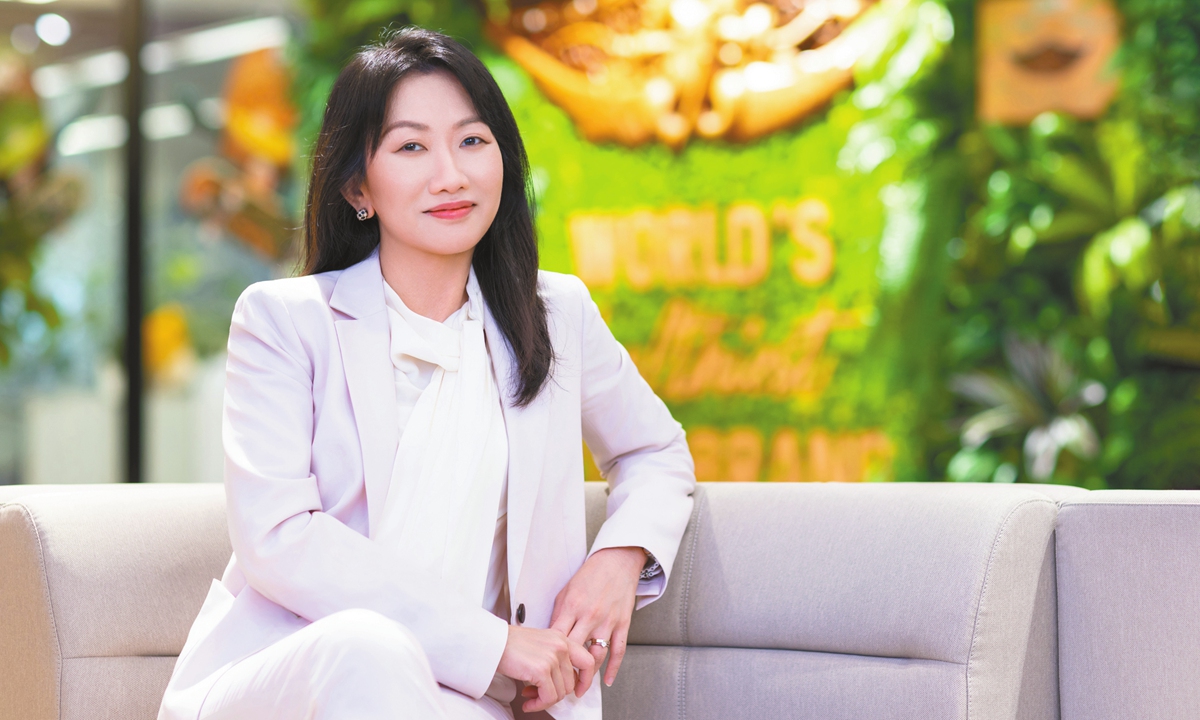
Kok Hwee Ng, Chief Marketing Officer of Zespri International Photo: Zespri
This shift, Ng noted, has reshaped expectations of premium brands. "When consumers choose a premium product, they naturally expect superior quality, taste, and nutritional value," she said. "But in an increasingly volatile world, they are asking for more. They want brands to play a bigger role in improving their lives, the well-being of their families, their communities, and their future."That expectation arrives as 2026 marks the official launch of Zespri's decade-long strategic roadmap: its 2035 ambition to become the world's healthiest fruit brand. Central to this vision is the rollout of its refreshed global platform, Grown for Good.
At its core, Grown for Good places natural nutrition at the center of every decision, from orchard cultivation to marketing initiatives and value creation.
Ng believes Zespri is uniquely positioned to lead this charge. "As the world's leading fruit brand, built around one of the most nutrient-dense fruits in the produce aisle, we have both the right and the responsibility to help societies become healthier," she said.
The mission extends beyond the fruit itself. By promoting nutritional literacy and championing the value of natural nutrition, Ng sees a path to unlocking shared value. "It's about creating a cycle where consumers gain health, society gains knowledge, and our growers gain the stability to continue producing high-quality fruit," she added. "That is the essence of Grown for Good - delivering lasting value for people and the planet."
From orchard to table
The SunGold kiwifruit handed to visitors at the end of the interactive games in Longtan Central Park looked simple enough - fresh, plump and ready to eat. For many participants, it was a small reward after a round of nutrition games.
Behind that small reward was a much longer journey.
Before it appeared at the booth, it had already traveled through a chain of growers, standards, cold-chain transport and digital tools linking New Zealand orchards with Chinese dining tables.
Ng said the complete industrial chain is one of the features that makes the brand special. "What makes Zespri even more special is its complete industrial chain layout. The brand is jointly owned by nearly 3,000 local growers in New Zealand, and we take natural nutrition as the core driving force of the whole industrial chain operation," she said.
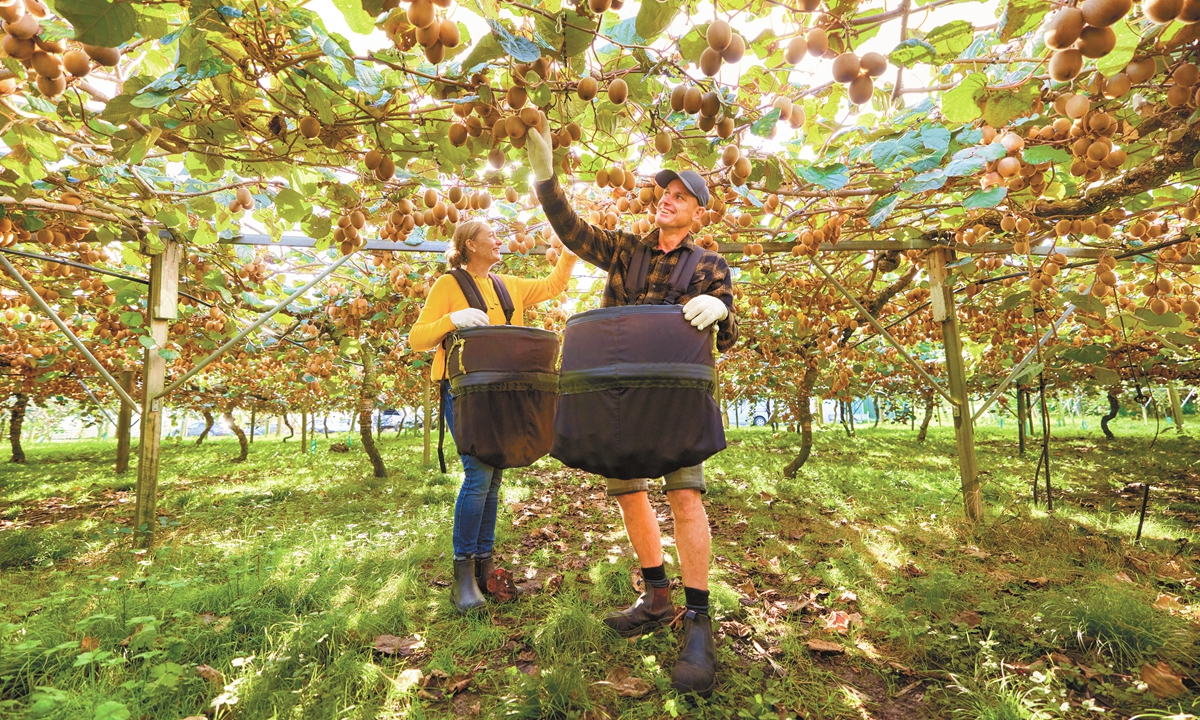
Workers pick kiwifruits in an orchard. Photo: Zespri
This chain includes dry matter testing in New Zealand orchards, scientific maturity control, cross-border temperature-controlled cold-chain logistics and digital traceability. These steps support the fruit's journey from orchard to dining table, before it appears in the everyday scenes already visible at the booth: in a child's hand, in a family's breakfast, or as part of a balanced plate.The emphasis on standards is also connected with the way nutrient density was presented during the event. The report released at the National Nutrition Week advocated high-quality diets and greater intake of high-nutrient-dense foods. Event materials described kiwifruit as a representative high-nutrient-density fruit rich in vitamin C, potassium and dietary fiber; 100 grams of SunGold kiwifruit provides 171 milligrams of vitamin C, meeting the adult daily requirement of 100 milligrams.
The other end of the "orchard to table" route was not a supermarket shelf, but a phone screen. The "Diet for Good" mini-program, which had already drawn visitors to scan and test their own meals at the booth, uses AI image recognition to analyze meals and show users their structure, calorie level and key nutrient information.
The mini-program is supported by professional content from the "National Nutrition Literacy Promotion Program " under the Nutrition Literacy Branch of the Chinese Association of Health Promotion and Education , and combines that content with technologies including Volcano Engine and the Doubao large model. The platform also supports continued meal records and trend tracking, helping users move from a single meal check to a longer-term view of their diet structure.
A packhouse for Zespri kiwifruit Photo: Zespri
Ng linked the AI-powered balanced plate activity to a gap between willingness and daily action."It's not that people don't want to keep a healthy diet, it's just hard to carry it out in busy daily life. So we're finding simple ways to make healthy eating easier, guide subtle behavior changes and remind consumers to make conscious dietary choices," she said.
"The AI-powered platforms we newly launched this year make it easier for people to stick to healthy eating habits in the long run, because balanced nutrition intake needs long-term persistence, and progress comes from small daily changes," Ng said.
Zespri's partnership with the Chinese Nutrition Society dates back to 2021, when the two sides jointly released their first white paper focusing on working women's diet and health.
The Global Times learned that cooperation has since extended to reports on food nutrient density, visualized food-selection tools and participation in national nutrition events. Ng said the company sees its work in China not merely as selling products, but as contributing to the well-being of Chinese communities.
Toward a healthy China
The family table is also where long-term eating habits begin. That is why Zespri's work in China has extended beyond product promotion into children's food education, parent guidance and hospital-based nutrition programs.
One example is the "Nutrition & Dietary Knowledge Standard Course Program," a children's food education standardization program, supported by Zespri China and launched by the China Association for Student Nutrition and Health Promotion in 2023.
Research from the Chinese Center for Disease Control and Prevention shows that 76.21 percent of children consume less than 60 percent of the recommended daily intake of fresh vegetables, while 85.21 percent consume less than 60 percent of the recommended intake of fresh fruit.
The Global Times learned that, over the past three years, the "Nutrition & Dietary Knowledge Standard Course Program" has covered 35 cities, nearly 2,000 schools and more than 300 communities, benefiting 1.5 million students and families.
Children participate in a coloring game while families at the hospital receive Zespri nutrition packs at the Children's Hospital of Fudan University in Shanghai. Photo: Zespri
Ng said the focus on schools is linked to the importance of forming eating habits early. She noted that good eating behaviors, nutritional knowledge and dietary habits take shape from a young age, while changing dietary habits in adulthood is much more difficult.Hospitals are another setting for nutrition education. The "Sunshine Education & Healthy Growth Program," supported by professional partners including the Children's Hospital of Fudan University, extends nutrition guidance into medical settings and provides scientific support for children and families.
Ng said hospital cooperation helps guide children to develop good eating habits and gather scientific evidence on balanced diets and fresh fruit intake, especially nutrient-dense fruits. She also said cooperation with industry experts can support the building of scientific guidance systems for dietary nutrition.
Looking ahead, Ng said Zespri will continue to deepen cooperation with institutions including the Chinese Nutrition Society and the China Association for Student Nutrition and Health Promotion, bringing nutrition education to more cities and more scenarios.
In that sense, the small kiwifruit becomes part of a bigger story - not only about what people buy, but about how healthier habits take root, one household at a time. At the family table, even one more piece of fruit can quietly echo China's broader pursuit of better health for all.
Global Times
RELATED ARTICLES