‘BRI of great significance’ for Timor-Leste: deputy PM
China provides one of best examples to learn from in pursuing rural development
By Published: Jun 04, 2026 08:34 PM

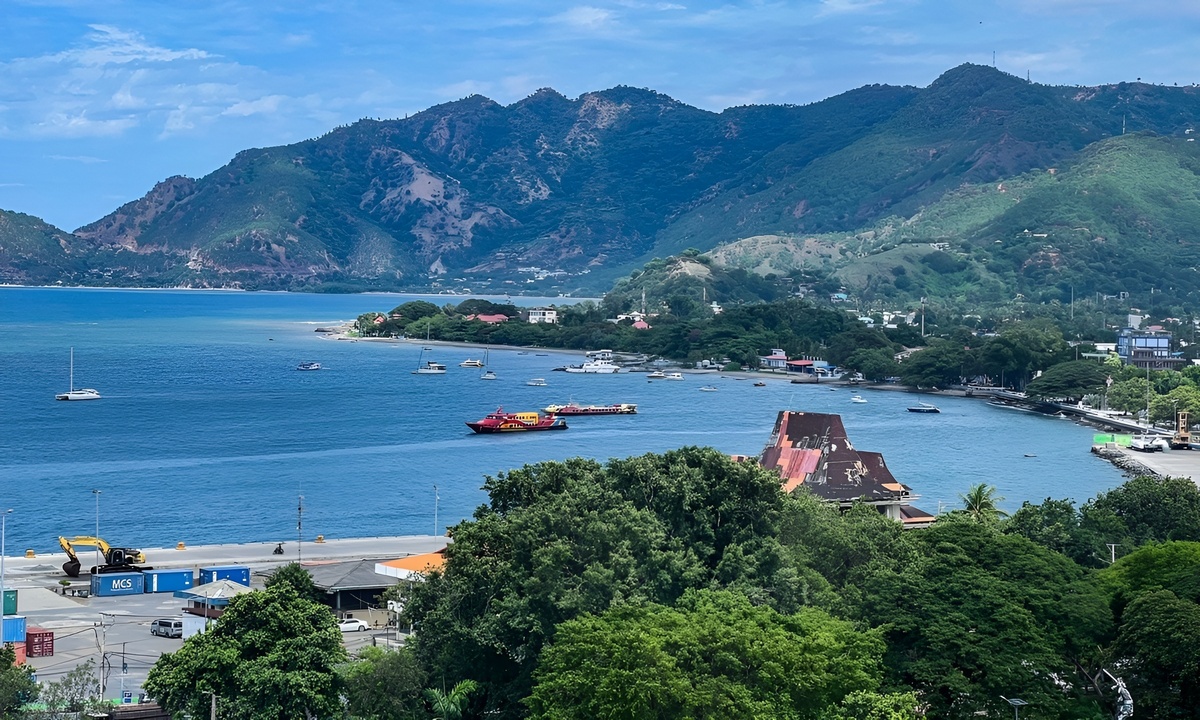
An aerial view of Dili, capital of Timor-Leste Photo: VCG
Editor's Note:China and Timor-Leste signed a Memorandum of Understanding for cooperation on the Belt and Road Initiative (BRI) during the first Belt and Road Forum for international cooperation in March 2017. Since then, BRI cooperation between China and Timor-Leste has entered a fast lane of development. Against this backdrop, Global Times reporter Li Xuanmin (GT) conducted an exclusive interview with Mariano Assanami Sabino (Sabino), deputy prime minister and coordinating minister for Social Affairs and Minister of Rural Development and Community Housing of the Democratic Republic of Timor-Leste. In the interview, Sabino spoke highly of the BRI's role in Timor-Leste's infrastructure development and economic growth. He elaborated on the fruitful outcomes of China-Timor-Leste agricultural cooperation, particularly in hybrid rice technology, and shared valuable insights on learning from China's experience in poverty reduction and rural revitalization.
GT: How do you assess the role of the Belt and Road Initiative (BRI) in Timor-Leste's infrastructure and economic development? Which areas should be strengthened in the future?
Sabino: The BRI serves as an important platform for international cooperation and development. For Timor-Leste, it is of great significance, particularly in the areas of infrastructure development and economic growth. Infrastructure plays a crucial role in supporting economic progress, trade, education, healthcare, and poverty reduction.
China has provided substantial assistance to Timor-Leste in infrastructure construction, agriculture, education, public services, and capacity building. What Timor-Leste appreciates most is China's sincerity, friendship, and long-term commitment to the development of developing countries.
China has achieved remarkable success in poverty reduction, lifting nearly 800 million people out of poverty — an accomplishment that serves as a model for the world. Timor-Leste hopes to further strengthen cooperation with China in rural development and agriculture. Many Timorese students are currently studying in Chinese universities, and we hope to learn from China's valuable experience in rural development. Looking ahead, we also wish to expand collaboration in the digital economy, renewable energy, tourism, and youth training. In addition, we look forward to continued cooperation with both the Chinese government and the private sector on future major projects such as oil refineries and chemical plants.
GT: Beyond hard infrastructure, agricultural cooperation has also become an important part of the BRI. Could you share your thoughts on the cooperation in hybrid rice between China and Timor-Leste? How significant is this cooperation for your country's food security and rural development?
Sabino: Hybrid rice is very important for Timor-Leste, as 80 percent of our population are farmers. It plays a crucial role in our national priority of ensuring food security. We are still working to transform traditional agriculture into modern agriculture, which requires support in investment, technical specifications, rehabilitation, and mechanization. In the process of agricultural intensification, high-quality seeds are essential to increase production, particularly rice output. That is why hybrid rice is so significant.
Cooperation with China in agricultural technology has been highly valuable. China has provided strong support, especially in training, infrastructure development, irrigation systems, water resource management, and new irrigation facilities. We also apply methods such as integrated crop management and the system of rice intensification. Hybrid rice not only boosts production but also contributes to farmer training, technical knowledge transfer, and overall rural development. Moreover, China's support extends beyond rice to livestock and other areas. The private sector is also actively investing to improve farmers' livelihoods.
We hope this cooperation will continue to expand in the future, including developing marine resources, promoting the blue economy, and reducing poverty, so as to bring greater benefits to our farmers and rural communities.
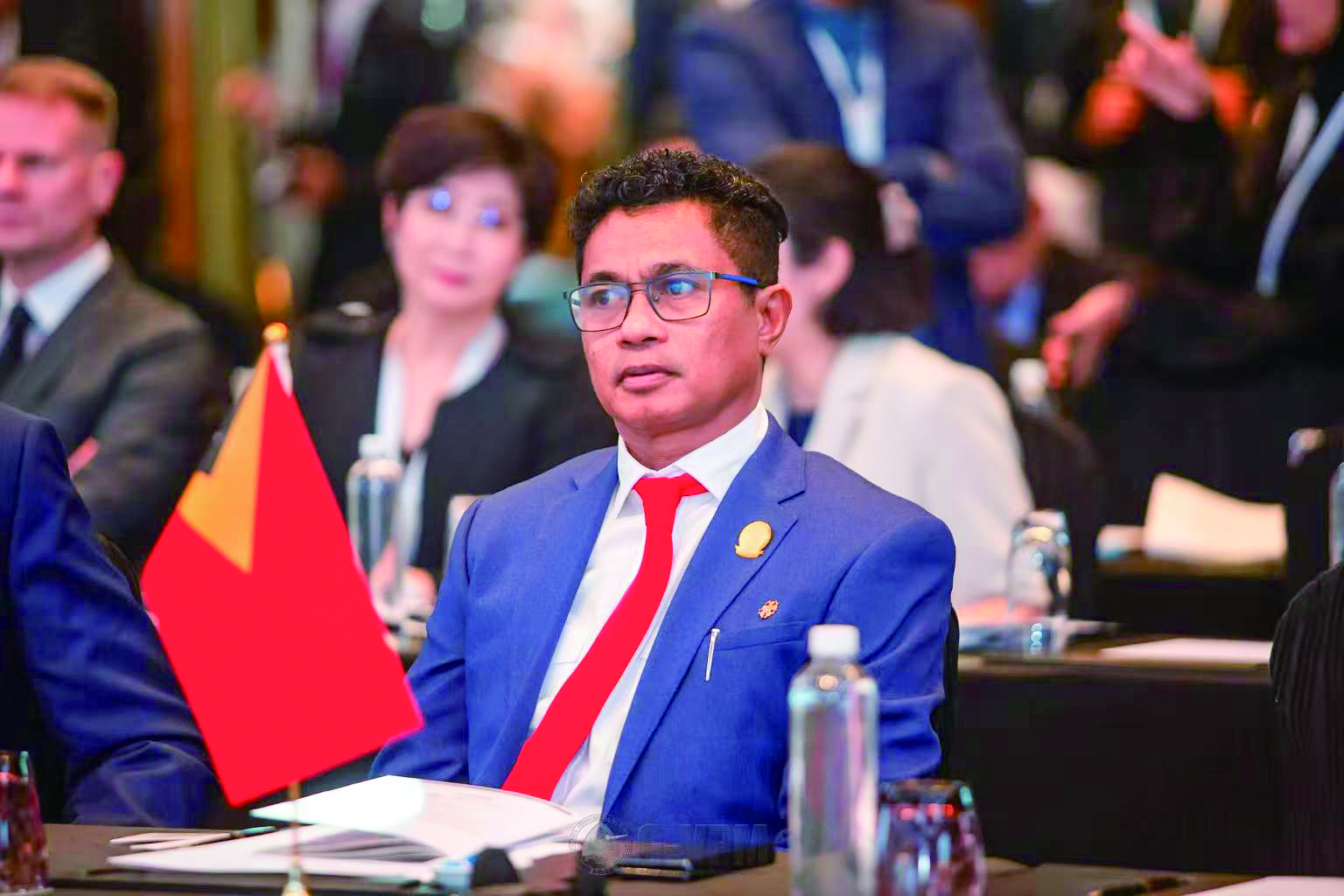
Mariano Assanami Sabino Photo: Courtesy of Mariano Assanami Sabino
GT: You talked about the prospect of strengthening cooperation in rural development and the agriculture sector under the BRI framework. Having visited China and its villages multiple times, which rural revitalization cases impressed you the most, and what lessons can Timor-Leste draw from them?
Sabino: One thing that impressed me most during my visits to China is that rural revitalization is not merely about building infrastructure, but more importantly about improving people's lives and creating hope for the younger generation. For example, during my official visit to Guilin in South China's Guangxi Zhuang Autonomous Region, I saw how villages effectively combined clean infrastructure, tourism, digital commerce, and modern agriculture to achieve sustainable development. I was also deeply impressed by the poverty reduction programs in East China's Fujian Province, which holds special significance for us since many members of the Chinese community in Timor-Leste originally come from Fujian.
I observed how infrastructure development, vocational training, and local agriculture were integrated to uplift rural communities. For countries like Timor-Leste, the most valuable lesson is not to copy China's model directly, but to learn the spirit behind its success: Long-term planning, strong implementation, investment in people, and ensuring that development truly benefits ordinary communities. China's experience clearly shows that poverty reduction is achievable through strong commitment and practical policies.
China's rural development model is highly valuable, covering education for farmers and rural children, as well as advancements across political, social, cultural, and other dimensions. Particularly impressive is China's approach to talent cultivation and engaging the younger generation in income-generating activities in rural areas. Overall, China provides one of the best examples for Timor-Leste to learn from in pursuing rural development.
GT: Drawing from your experiences, how do you assess China's achievements in poverty reduction and their importance for Global South countries?
Sabino: China's achievements in poverty reduction are truly historic. Lifting nearly 800 million people out of poverty is one of the greatest accomplishments in modern history. For many countries in the Global South, China's success provides valuable hope and inspiration, demonstrating that poverty can be effectively reduced through strong leadership, long-term planning, infrastructure development, education, and practical policy actions.
This remarkable progress fully reflects China's people-centered development philosophy, which places the improvement of people's lives at the core. By focusing on rural community development, job creation, infrastructure construction, and enhancement of living conditions, China has shown that true development extends far beyond economic growth. Timor-Leste highly appreciates China's positive role in the international community and its consistent support for developing countries.
The world widely recognizes the outstanding achievements of Chinese leadership in poverty reduction. We hope to learn from China's valuable experience. Poverty alleviation is not merely a program for one country — it is a global issue that requires nations to share information and experiences.
RELATED ARTICLES