ARTS / BOOKS
Reading as ‘grandma’ Wang Yuzhen’s window into ordinary lives
Life into memory
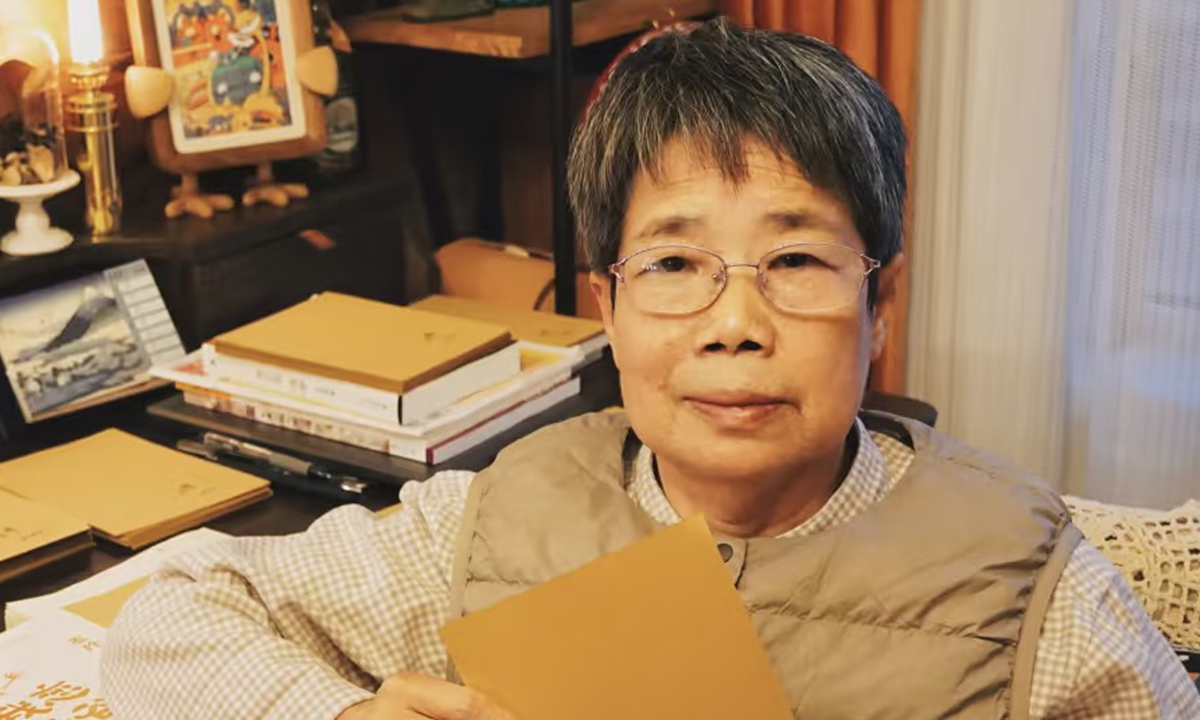
Writer Wang Yuzhen Photo: Courtesy of Wang Yuzhen
Editor's Note:In an age of information overload, reading remains a necessary channel to invigorate the mind, provide inspiration and cultivate virtue. Whether it is childhood enlightenment or the pursuits of adulthood, everyone's reading journey carries unique emotions and life experiences. The Global Times has specially launched the "100 Avid Readers" series, inviting guests from various fields to share their connections with books, stories of growth and sparks of thought.
In this installment, Wang Yuzhen, a 70-year-old writer, shares how reading and writing create literary depth in the stories of ordinary people.
In the afternoon, for three or four hours, Wang Yuzhen, a 70-year-old retired teacher, sits at a desk near the sofa and begins writing. Her phone rests beside her, and the screen lights up from time to time with comments, private messages, and words of encouragement from readers. In the quiet room, each notification flickers briefly before fading again.
On online platforms, the granny is better known by the name Wo Lian He Gu (meaning "I love grain fields" in English). At 70, she does not see herself as a "writer," but simply as someone who has long been used to recording the people around her and fragments of past days. Her writings about her mother, her aunt, her late husband, and village life are read and shared widely, gradually earning her more than 100,000 followers.
"My writing story did not begin with writing itself, but with reading," Wang told the Global Times.
Reading's legacy
According to Wang's recollection, reading accompanied her throughout her life - from novels, folk stories, and essays in her youth to works by contemporary Chinese writers such as Wang Zengqi, a prose writer known for his depictions of everyday life; Yu Hua and Mo Yan, both major novelists; Li Juan, who writes about pastoral and frontier life; and Liang Xiaosheng, a writer known for his portrayals of ordinary people in urban China.
Over time, she said, "these readings did not translate into a formal system of knowledge, but gradually shaped my way of observing and remembering life."
Before she started writing online, Wang had worked as a teacher, run a small shop, and taken on many other jobs. After closing the shop in 2023, she went through what she described as a long period of emptiness, "as if life suddenly had no direction."
It was during this period that her niece suggested she try using short-video platforms, initially just to watch everyday life such as cooking and crafts. Spending time on these platforms, she said, did not change her routine abruptly, but quietly reconnected her with ordinary scenes of daily life that she had long been familiar with.
Gradually, she began writing again. At first, she wrote on paper, then slowly moved her notes into digital form using voice input, and revised them sentence by sentence.
"It was not structured knowledge," she said, "but reading laid the foundation for how I later began to write about ordinary people's lives."
Wang once noted that many people read stories not simply to understand others, but to borrow someone else's life experience and quietly reflect on their own. In her view, what people call "ordinary life" is not a theme but a shared condition. Different generations may be dealing with different problems - family, work, aging - but the structure of experience is often similar.
"Like elderly people who devote themselves to their families, middle-aged people are busy making a living, and young people face different pressures," she said.
Building on this idea, reading also gave her a way of holding memory. Instead of isolated moments, she began to remember life as fragments connected by emotion: people, places, and details that could later be recalled together.
In her mind, she still sees her mother bending under dim light to mend clothes late at night; her aunt moving through life with quiet persistence despite hardship; and her late husband leaving behind a silence that never turned into words.
Kitchen smoke, footsteps in the fields, and the quiet restraint within families - over years of reading, these details were no longer background, but something that could be retrieved and shaped into languages.
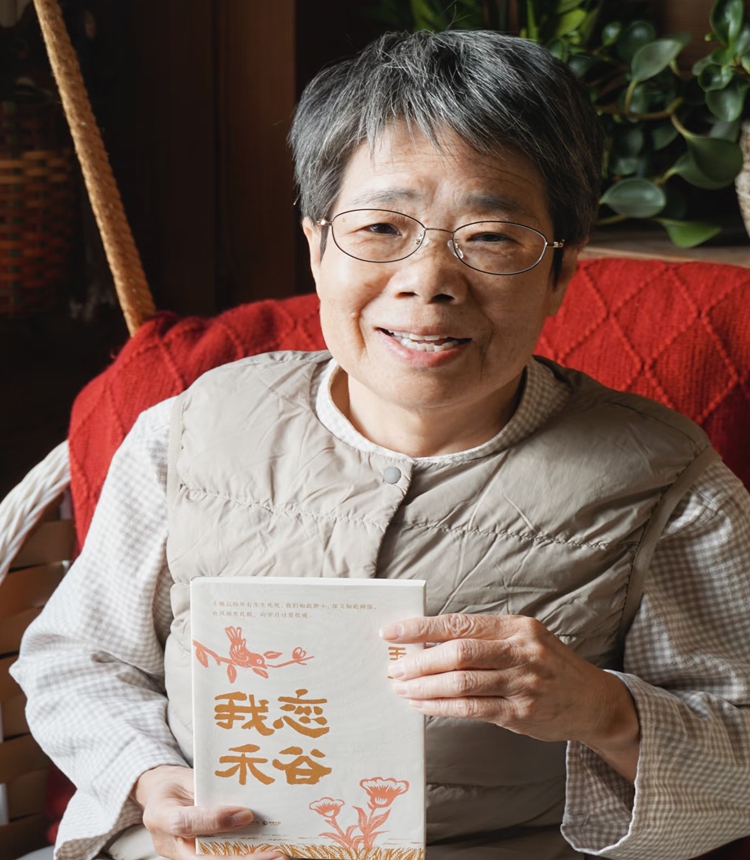
Writer Wang Yuzhen Photo: Courtesy of Wang Yuzhen
Being 'seen'From just a few hundred reads at the beginning to a now stable readership, her texts have been repeatedly opened and revisited. What remains with readers is often not a full story, but small fragments that feel familiar in unexpected ways.
In Wang's view, what sustains this attention is not plot, but recognition - moments where readers suddenly encounter something close to their own lives.
She noted that readers often pause at fragments rather than follow complete narratives: a mother's routine, a return to one's hometown, or a simple everyday detail that triggers a memory.
In those moments, reading is no longer about understanding someone else first. It becomes something more immediate, a brief pause in which personal memories begin to surface again.
"People at different stages are all dealing with family, time, and loss, yet few have the chance to put these experiences into words," she said.
That is why such ordinary fragments, once written down, can feel unexpectedly shared. They do not introduce unfamiliar lives, but reopen something already existing in memory.
For her, this is not nostalgia. It is a quiet return, when something unspoken becomes visible again through reading.
In this sense, her writing is no longer only about recording lives, but about allowing scattered memories to be briefly gathered through the act of reading.
"I am not writing about any single person," she said, "but about the lived memory of an entire generation of ordinary people."
And in reading, she believes, that memory does not remain fixed. It quietly returns to different lives - slowly, but repeatedly, like something long stored away being opened again.
Just as her readership grew, reactions from readers also began to appear more visibly in the comment sections. Some saw reflections of their own families in her writing, others simply left short messages of encouragement.
Among them was a reader under the username "Go Tidal-Fishing," who wrote: "Thank you, granny, for helping us feel the warmth hidden in ordinary days."
In such brief responses, what lingers is not only what is written, but also what is read - each reading becoming a quiet moment in which ordinary lives are briefly seen, recognized, and shared again.
RELATED ARTICLES