Chinese court accepts Wingtech lawsuit to restore control of Nexperia assets: company

A logo of Nexperia Photo: VCG
Chinese judicial authorities have formally accepted a lawsuit filed by Chinese semiconductor company Wingtech Technology against Nexperia's Dutch unit over what it described as improper interference linked to Dutch restrictive measures, according to a statement released by Nexperia's Chinese unit on Friday.
The lawsuit, filed with the Dongguan Intermediate People's Court on May 23 under China's anti-foreign sanctions law, was disclosed in an announcement on the Shanghai Stock Exchange. The defendants include three companies - among them Nexperia - and three foreign executives.
The move marks the company's latest effort to safeguard its legal rights and interests against perceived unfair treatment abroad.
The lawsuit seeks a court ruling to confirm the alleged unlawful conduct, restore Wingtech's control over core assets, and pursue compensation for damages.
According to a major litigation announcement disclosed by the Shanghai Stock Exchange on May 23, Nexperia had previously received an order issued by the Dutch Ministry of Economic Affairs and Climate Policy and a ruling from the Enterprise Chamber of the Amsterdam Court of Appeal.
Although the ministerial order has been suspended, the Enterprise Chamber's related rulings remain in effect, meaning that the company's control over Nexperia remains subject to restrictions, according to the announcement.
The defendants actively facilitated, implemented or assisted in implementing the aforementioned discriminatory restrictive measures, causing the plaintiffs massive and irreversible losses, the statement said.
Notably, Wingtech Technology also said Nexperia's Dutch unit had repeatedly obstructed its normal audit work.
Obstructions including Nexperia Dutch unit unilaterally shutting down relevant IT systems, refusing to grant access rights to the audit firm, and refusing to provide financial data after September 30, 2025 (including data related to Nexperia China stored in the original IT system), caused the audit firm to be unable to fully execute internal control and financial audit procedures for the fourth quarter of 2025, the statement said.
According to Nexperia, the root cause of this regrettable event lies in the improper intervention by the Ministry of Economic Affairs of the Netherlands in October 2025, during which Nexperia Dutch unit initiated improper litigation procedures with the Enterprise Chamber, illegally depriving Wingtech Technology of its control and legitimate shareholder rights as a shareholder of Nexperia.
Additionally, executives at the Dutch unit were alleged to have "actively facilitated", "implemented or assisted in implementing" discriminatory restrictive measures imposed by the Dutch side.
A Chinese expert noted that if the allegations are substantiated, actions by the Dutch unit's management to facilitate or implement restrictive measures, as well as to obstruct audits and information access, would go beyond the scope of normal corporate governance. Such actions could undermine shareholders' legitimate rights and the stability of corporate governance structures, while also weakening the predictability of the cross-border investment environment.
The semiconductor sector is inherently globalized, with deeply intertwined ownership structures, supply chains and industrial collaboration, making it difficult for any single market or company to operate in isolation, Ma Jihua, a veteran industry analyst, told the Global Times. Against this backdrop, administrative intervention layered on top of corporate governance disputes could disrupt industrial coordination, undermine business stability, and weigh in on future cross-border investment expectations, he said. "If the allegations are ultimately substantiated, the parties responsible should bear corresponding accountability."
Chinese authorities have repeatedly made their position clear on the Nexperia case through multiple official channels.
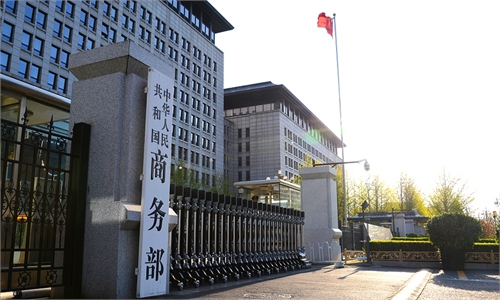
China's Ministry of Commerce reiterated that the root cause of the Nexperia issue lies in the Dutch side's improper administrative intervention in business operations, urging the Netherlands to act accordingly and, from the perspective of safeguarding the overall stability of the global semiconductor industry and supply chain, create favorable conditions for companies on both sides to resolve internal disputes in a constructive manner. The ministry also stressed continuing its support for Chinese companies in safeguarding their legitimate rights and interests.
RELATED ARTICLES