Chinese team achieves world's first combined pig liver and kidney transplant in human
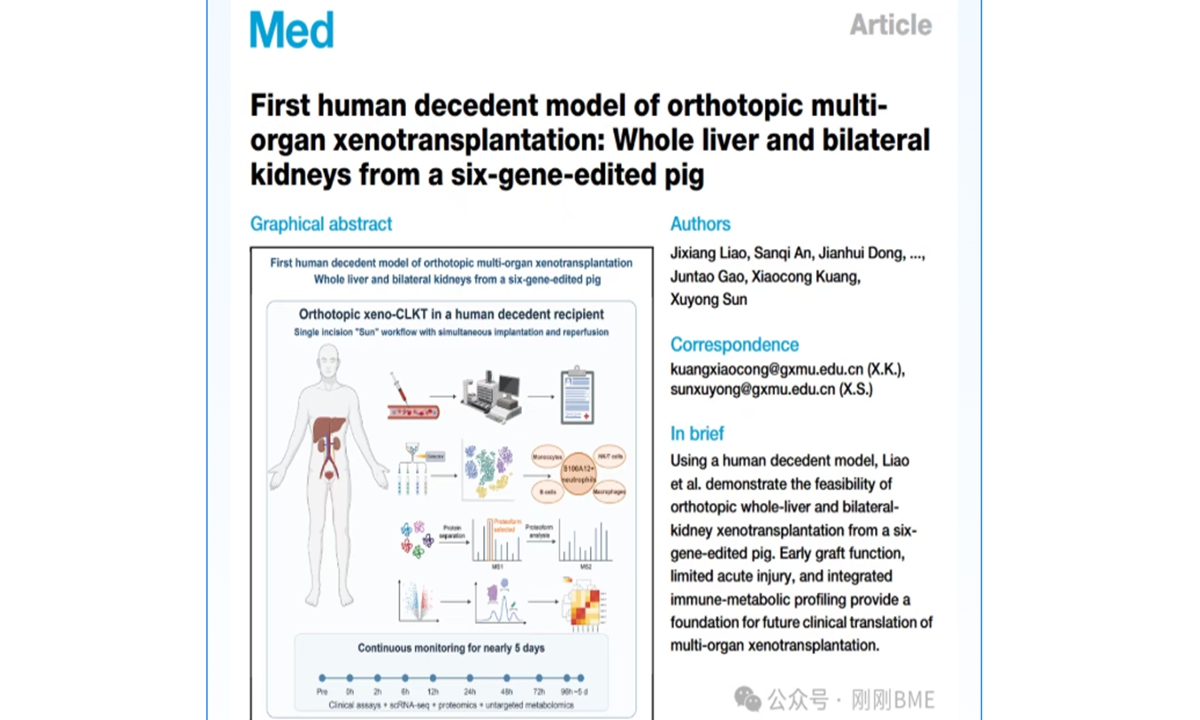
A screenshot of the paper by Professor Sun Xuyong's team published in the academic journal Med, a Cell Press journal. Photo: official WeChat account of the Second Affiliated Hospital of Guangxi Medical University
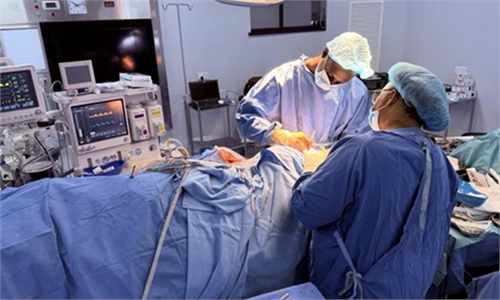
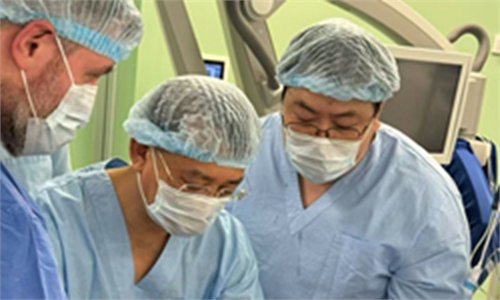
A Chinese medical team has reportedly performed the world's first combined xenotransplantation of a gene-edited pig liver and two pig kidneys into a human body, marking a huge milestone in the exploration of multi-organ xenotransplantation.According to a post on the official WeChat account of the Second Affiliated Hospital of Guangxi Medical University on Monday, the procedure was carried out by a medical team led by Professor Sun Xuyong from the hospital and involved an orthotopic transplant, meaning the organs were placed in their normal anatomical positions. The recipient was a 53-year-old brain-dead man, and the surgery was performed with the consent of his family.
The team used gene-edited Bama miniature pigs from Guangxi as the source of the donor organs. The donor pigs underwent six precise genetic edits, including the removal of key genes that can trigger hyperacute rejection in humans and the insertion of human genes related to blood clotting and immune compatibility, the Xinhua News Agency reported on Wednesday.
During five days of systematic monitoring, the transplanted organs showed encouraging physiological signs, with generally normal blood supply as well as observed bile secretion and urine production, according to the post.
The research was published in Med, a Cell Press journal, on May 29, 2026, and was later featured by Nature, drawing wider attention from the global academic community, media reported.
Leonardo Riella, a physician-scientist at Harvard University and Massachusetts General Hospital who led the team behind the world's first living-recipient pig kidney transplant in 2024, said multi-organ xenotransplantation is more complex than single-organ transplantation, but the study showed that it is technically feasible.
Global Times
RELATED ARTICLES