Photo of flight attendants taken with AI glasses found online, amplifying public concern over tech-aided covert filming
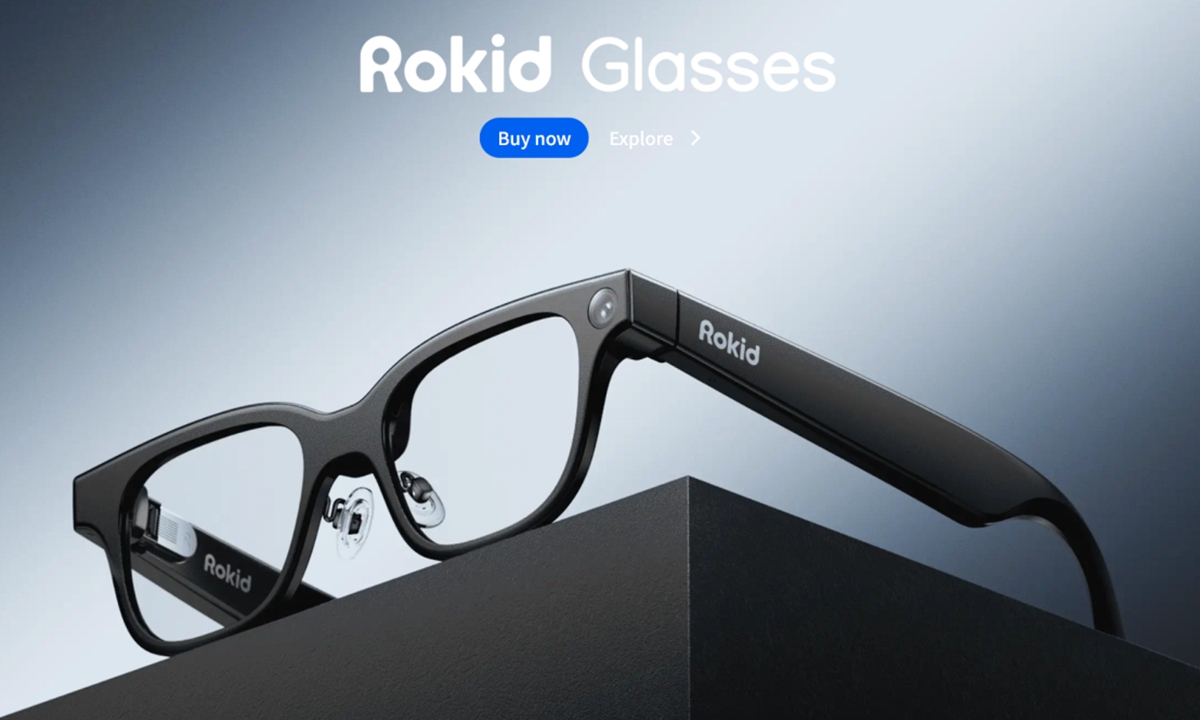
The Rokid Glasses Photo: Screenshot from the brand's official website
After the photo of Spring Airlines flight attendants was found to be shared on the users forum of Rokid smart glasses recently, discussions and public concerns have emerged over the potential misuse of AI-equippedp wearable devices for covert photography, multiple media including chinanews.com reported on Sunday.
The concern emerged after Xiaoxiang Morning Herald reported that a Rokid glasses user surnamed Yun discovered a post in the Rokid app's online community section dated on May 27 showing a photo of two flight attendants at work taken by the smart glasses, accompanied by the caption: "Spring Airlines flight attendants are pretty good." Yun subsequently filed a complaint through the app and made a post on social media platform cautioning covert photography of smart glasses, raising concerns that smart glasses could become a new tool for unauthorized recording, per Xiaoxiang Morning Herald.
The Global Times reporter did not locate the original post in the smart glasses' app community as of press time, and whether the post had been removed remained unverified. However, many other users have also uploaded first-person videos of various activities in the community section, including footage of strangers in public spaces such as beaches, parks and subway systems.
Yun noted that smart glasses are highly convenient in daily life, particularly for functions such as translation and meeting transcription, but she was surprised to learn that some users were purchasing light-blocking stickers designed to conceal the device's recording indicators, effectively disguising the glasses as ordinary eyewear, according to Xiaoxiang Morning Herald.
Yun discovered that several online retailers are selling stickers intended to block the recording indicator lights. The light was originally designed by the manufacturer of smart glasses to alert people when recording is taking place and help protect privacy, "yet some people are doing everything possible to bypass these safeguards," per report.
One online seller reportedly with more than 5,000 sales of such stickers, advertised that they "do not trigger alerts and do not affect photography." Customer reviews described the products as "amazing," noting that "there is no light when taking photos" and even charging indicator lights were hidden.
Tests conducted by Xiaoxiang Morning Herald reporters found that after applying the stickers, recording with the AI glasses became nearly impossible for bystanders to detect, while notification sounds could only be heard by the wearer.
The incident has prompted discussion among Chinese netizens. One netizen expressed concern that unauthorized photography would become even more difficult to detect, while another said that "although advanced technology offers greater convenience, it is also making personal privacy increasingly vulnerable."
Both Spring Airlines and Rokid later responded to the controversy, while legal experts warned that people who secretly record and upload images without consent could face multiple forms of legal liability, according to the report.
A Spring Airlines staff member told Xiaoxiang Morning Herald on June 4 that photographing cabin crew without permission, particularly when the content is posted publicly online, could infringe upon an individual's portrait rights and privacy rights.
Rokid customer service said the matter had been forwarded to relevant staff for investigation. The company stated that if violations are confirmed, it will take action against the account in accordance with its user agreement and further strengthen guidance on proper use of the devices, according to the report.
Wan Qi, a lawyer with Hunan Jinzhou Law Firm, warned that individuals who secretly photograph others and upload the content online without consent could face civil liability as well as potential administrative or criminal penalties.
According to Wan, photographing and publishing images of individuals without their knowledge may constitute infringement of portrait and privacy rights under China's Civil Code. Victims may seek remedies including cessation of the infringement, public apologies and compensation for emotional distress. In serious cases, offenders could also violate public security regulations or even face criminal prosecution.
Wan added that merchants selling light-blocking stickers designed to circumvent privacy protections could be found to have knowingly facilitated infringement and may face joint liability, per report.
Global Times
RELATED ARTICLES