China-Latin America cooperation has become increasingly dynamic in practical fields: Andean Community chief
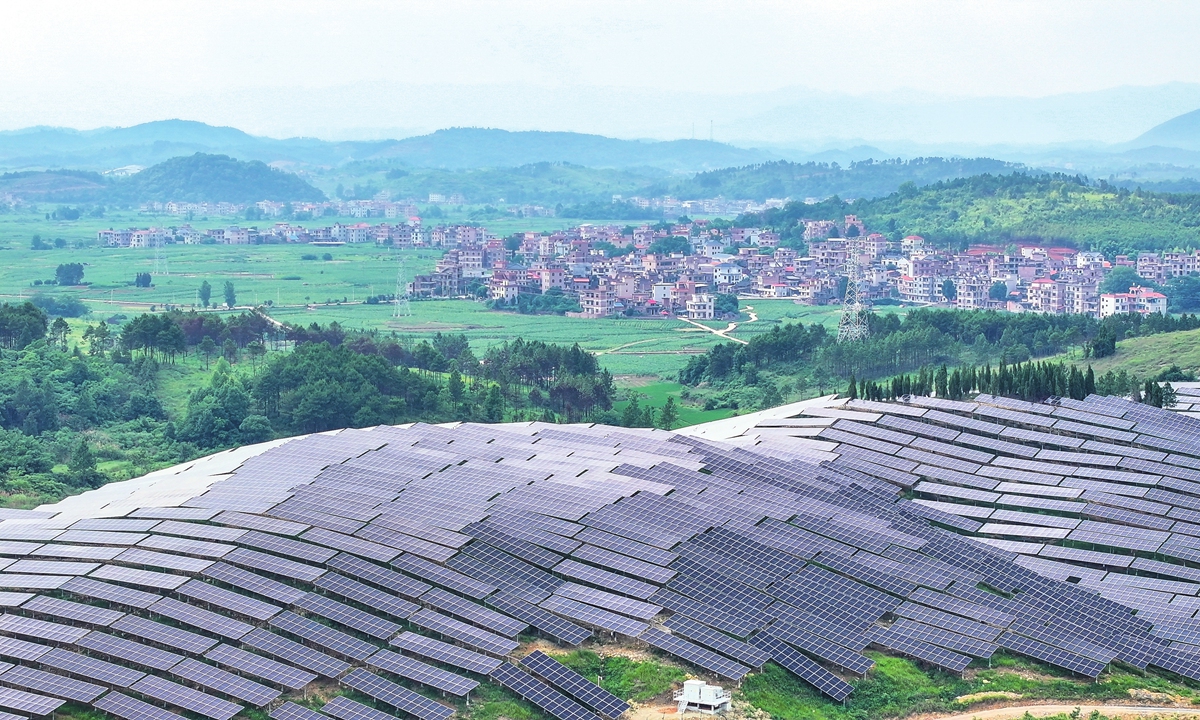
A view of a photovoltaic farm in a village in Yongzhou, Central China's Hunan Province, on June 1, 2026 Photo: VCG
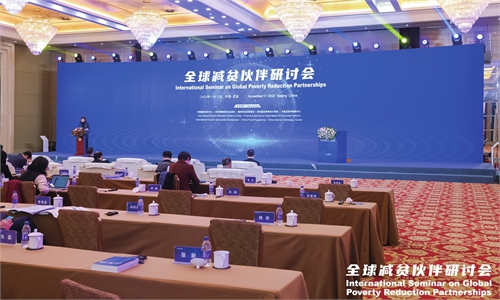
The 2026 Global Poverty Reduction and Development Forum, held in Beijing in late May, once again put China's poverty reduction path and experience in the global spotlight. Amid a turbulent international landscape, China's transition from eliminating absolute poverty to advancing rural vitalization has gained wider significance as a reference for inclusive growth and development resilience.
China's eradication of absolute poverty in 2021 represents a historic milestone in global development. In the years since, China has demonstrated remarkable effectiveness in consolidating these gains through sustained investment, precise monitoring systems and the seamless integration of poverty alleviation with rural vitalization. This has ensured that progress is not only preserved but continuously expanded, strengthening rural livelihoods and long-term economic resilience.
This success is rooted in strategic continuity, good governance and a clear long-term vision. As China moves from the transition period following the poverty-alleviation campaign to regular assistance programs, its focus is shifting toward a longer-term strategy aimed at consolidating gains and advancing rural vitalization across the board.
China's transition toward a more regular, targeted and development-oriented support system reflects a highly sophisticated evolution of its poverty reduction model. The move toward institutionalized mechanisms enhances both policy precision and long-term sustainability, ensuring that vulnerable populations remain protected while new economic opportunities continue to emerge.
This direction is also clear in China's planning for the next five years. The outline for the 15th Five-Year Plan (2026-30) sets out measures to establish a comprehensive, normalized mechanism to prevent people from falling back into poverty, adhere to targeted assistance, improve basic social security and strengthen development-oriented assistance. Looking ahead to the next five years, China's agricultural and rural modernization holds immense potential, particularly through technological innovation, digitalization and the upgrading of agricultural value chains.
At the heart of this process is China's emphasis on common prosperity and a people-centered approach. This approach reflects a development philosophy that prioritizes equity, inclusiveness and balanced growth. It underscores that modernization must translate into tangible improvements in quality of life, particularly for rural populations, through expanded access to services, infrastructure and opportunities.
This philosophy has helped drive China's progress by ensuring that agricultural modernization advances alongside social inclusion and long-term sustainability. It also gives China's rural development experience practical relevance for regions seeking to address regional inequality, improve public services and create opportunities beyond major urban centers.
For many developing countries, one of the most relevant aspects of China's experience is the way it treats poverty reduction as a multidimensional process. Targeted assistance, rural infrastructure, local industry, public services and market access are not separate tracks; they are mutually connected parts of a broader effort to build self-sustaining development capacity at the community level.

Gonzalo Gutiérrez Photo: Courtesy of Gonzalo Gutiérrez
Deeper cooperation
Rural development also depends on connectivity, trade and wider cooperation. The Belt and Road Initiative (BRI) is expected to play an important role in facilitating agricultural cooperation and promoting free and fair trade between China and other developing nations. This creates space for deeper cooperation with Latin America and the Andean region, where the two sides have complementary strengths in agriculture, infrastructure, supply chains and sustainable development.
China-Latin America cooperation has become increasingly dynamic in practical fields such as agricultural trade, transport infrastructure, food-supply chains and digital tools for rural services. These areas matter for rural development because they connect production, logistics, technology and markets, helping strengthen food security and support more stable growth.
The complementarity is clear. Latin America and the Andean region have strong agricultural capacity, strategic resources and a growing role in sustainable production. China, in turn, brings experience in poverty reduction, infrastructure, digitalization and agricultural modernization. Through platforms such as the BRI and the China-CELAC Forum, the two sides can improve transport links, upgrade agricultural value chains, expand rural opportunities and support more inclusive growth.
This relationship is not a one-way process, but rather mutually reinforcing cooperation between partners with complementary strengths. It shows how South-South cooperation can respond to concrete needs ― from food supply and infrastructure to technology application and rural livelihoods ― rather than remain at the level of abstract development rhetoric. At a time of global uncertainty, such cooperation can make development more practical, balanced and responsive to the priorities of the Global South.
This cooperation fits within a broader vision of development ― one that seeks to make global development more inclusive, beneficial to all, and more resilient. China has also announced eight actions to support global development, including high-quality Belt and Road cooperation and the implementation of the Global Development Initiative. These initiatives have had a tangible impact in promoting infrastructure, strengthening productive capacity and supporting food security across regions.
Compared with traditional development cooperation models, China's approach places greater emphasis on partnership, mutual benefit and long-term economic transformation. This aligns closely with the principles of South-South cooperation, where countries work together as equals to address shared challenges.
Amid growing global uncertainties, strengthening cooperation between China and Latin America will be critical to advancing a more inclusive, equitable and resilient global development framework. In this framework, both sides can act as partners in driving shared and peaceful prosperity, while contributing to a development path that is more balanced, more practical and more responsive to the needs of the Global South.
The article was compiled based on an interview with Gonzalo Gutiérrez, secretary-general of the Andean Community, a former foreign minister of Peru, and a former vice president of the United Nations Economic and Social Council. bizopinion@globaltimes.com.cn
RELATED ARTICLES