Japan reportedly begins deploying missile launchers on easternmost island Minamitorishima; Chinese experts warn move to escalate regional tensions
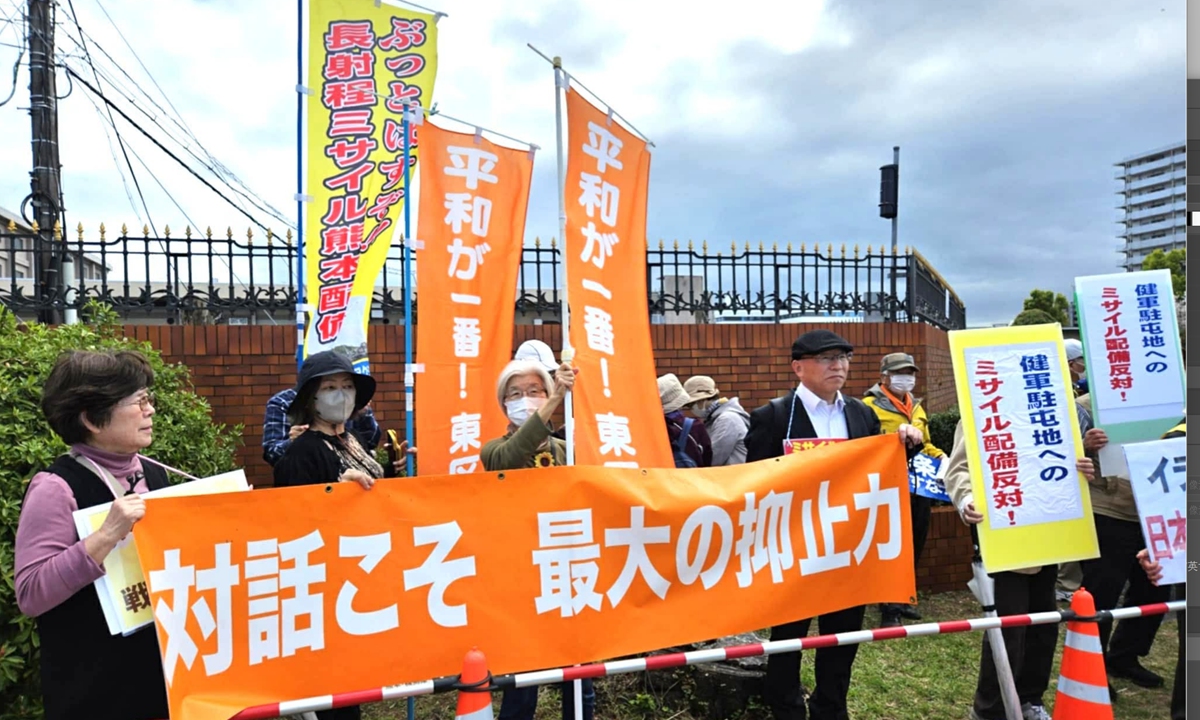
Local residents gather near Camp Kengun in Kumamoto, Japan, on March 31, 2026, to protest against the deployment of the Type-12 anti-ship guided missiles. Photo: Courtesy of Takabayashi
The Japanese Defense Ministry on Monday began transporting a missile launcher and other equipment to Minamitorishima, the country's easternmost island in the Pacific, ahead of plans to build a missile firing range and conduct live-fire exercises there, NHK reported. Chinese military affairs experts warned that Japan's deployment of Type 12 surface-to-ship missiles on Minamitorishima would pose threat to regional security.
According to NHK, the Japanese Defense Ministry began shipping a Ground Self-Defense Force (GSDF) Type 12 surface-to-ship missile launcher, along with medium-sized unmanned reconnaissance aircraft for target surveillance and positioning, by ferry from a port in Chiba Prefecture, near Tokyo, to the island on Monday morning.
This marks Japan's first deployment of GSDF surface-to-ship missiles to Minamitorishima, which belongs to Tokyo's Ogasawara Islands, according to the NHK.
The Japanese Defense Ministry planned to develop a firing range on Minamitorishima Island for missiles including the Type 12 surface-to-ship missile, which has a range of over 100 kilometers, and aimed to begin firing training in 2027, said the NHK.
The report claimed that this is part of an effort to strengthen the defense system on the Pacific side, and further steps are being taken to enhance this system.
The move has drawn wide concern and criticism, with observers warning it could heighten regional tensions, said the Xinhua News Agency on Tuesday.
"Minamitorishima is located in the Pacific Ocean, approximately 2,000 kilometers southeast of Tokyo, and currently serves as a base for Japan's Self-Defense Forces and the Japan Coast Guard," Zhang Junshe, a Chinese military affairs expert, told the Global Times on Tuesday.
Zhang said that the deployment of such missiles on the island marks Japan's establishment of a forward outpost for long-range strikes, posing a threat to foreign vessels navigating normally in the Western Pacific, particularly near the second island chain, and could even enable preemptive military strikes.
The expanded deployment of the Type 12 surface-to-ship missile could heighten regional tensions. Strategically, it saddles Japan with a heavy security burden, Wang Yunfei, another Chinese military affairs expert, told the Global Times.
Zhang further explained that Japan has already deployed seven surface-to-ship missile units stretching from Hokkaido to the Ryukyu Islands. Together with the long-range missiles on Minamitorishima, these form a long-range strike network in the Western Pacific, significantly enhancing Japan's long-range strike capabilities. This not only seriously threatens foreign ships operating lawfully at sea but also directly endangers the security of neighboring countries.
Wang said that these deployment actions go far beyond the scope of defense, amounting to offensive military expansion. Japan has already broken its pacifist constitution and exclusive defense-oriented principle that it had adhered to for long, revealing a growing ambition for military expansion.
Previously, the Camp Kengun of Japan's GSDF in Japan's southwestern Kumamoto Prefecture was set to be equipped with an upgraded version of the Type 12 long-range anti-ship missile in 2025, Japanese media outlet Yomiuri reported in August 2025.
On March 31, the Japanese Defense Ministry deployed long-range missiles with "enemy base strike capabilities" in Kumamoto and Shizuoka Prefectures. In response, residents in multiple locations across Japan held rallies to protest the government's forced deployment of these long-range missiles, according to the Asahi Shimbun.
Approximately 30 residents protested in front of the main gate of the Camp Kengun on March 31. They held up placards that read "No to deployment" and "We don't need missiles," reported Kyodo News.
Japan's moves so far have reflected that Japan has not deeply reflected on the immense harm its history of aggression has inflicted upon its neighboring countries, and is in fact repeating the mistakes of the past, said Wang.
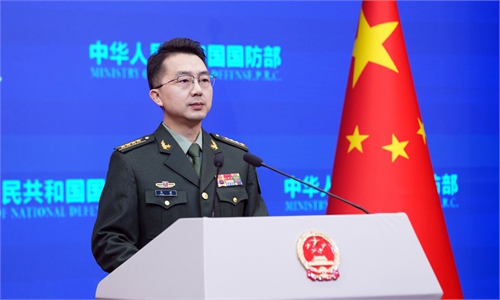
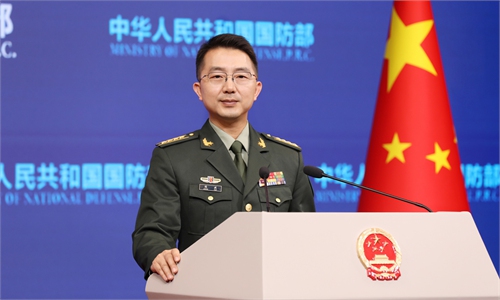
In response to a related question, Zhang Xiaogang, a spokesperson at China's Ministry of National Defense, said on April 9 that the proliferation of neo-militarism in Japan has become a real menace. Should an evil tiger be unleashed from its cage, it would inevitably wreak havoc far and wide, and plunge the Japanese people into an abyss of disaster. The international community should stay on high alert against it.
RELATED ARTICLES