Embracing cyber wellness: Young people increasingly favoring AI healthcare devices
Embracing cyber wellness
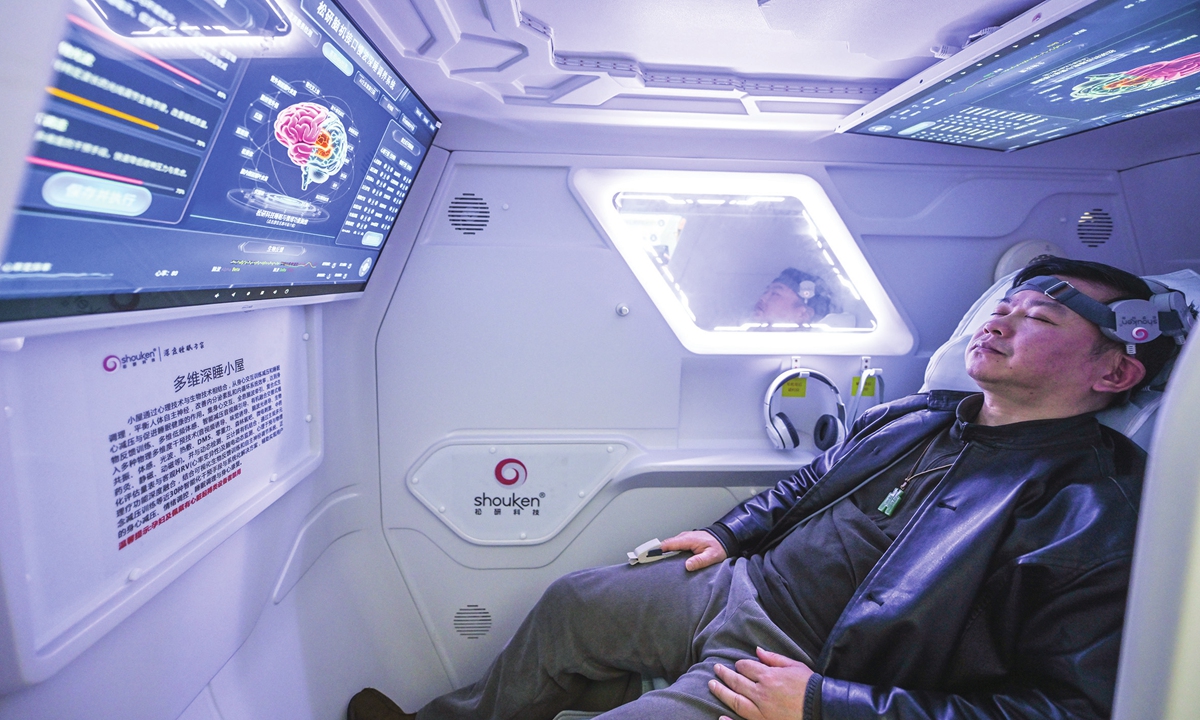
A person tries out "tech-assisted sleep" in Hangzhou, East China's Zhejiang Province, on March 19, 2026. Photos: VCG
Across China's workplaces, a growing number of young office workers are embracing what many call "cyber wellness," turning health management into a data-driven daily routine. Smart watches track their heart rate, breathing and sleep quality around the clock, while AI-powered apps analyze everything from tongue images to daily calorie intake.Some ask AI models whether their combinations of supplements are healthy and appropriate, while others carefully monitor their macronutrients meal by meal. The ways people are trying to "optimize" their health are becoming increasingly creative and tech-driven.
New routine
Crystal Kong, who had previously been having bad meal schedule choices for a while as well as poor sleep, sat down in the company cafeteria at lunchtime and, as usual, took a photo of her lunch tray before uploading it to the AI agent she had been training for months.
Within seconds, the agent generated an estimated calorie count and a nutritional breakdown of the meal: protein from the chicken, dietary fiber from the celery and broccoli, and carbohydrates from the mixed grain rice.
"It's a balanced meal and fits well with your health goals today," the agent told her. Remembering that Kong had drinks after work the night before, it added a gentle reminder: "You drank alcohol last night, so make sure to stay hydrated this afternoon and avoid another late night if possible."
Wang Shujuan, a lecturer at the School of Labor Relations and Human Resources under the China University of Labor Relations, said that the rise of "cyber wellness," a lifestyle closely tied to the latest tech devices, has become part of many young Chinese people's daily health routines for two main reasons.
According to Wang, on the one hand, heavy workloads and intense competition are putting growing pressure on young people's health, while advances in society and technology are providing new tools to support their wellness needs.
On the other hand, unlike some older generations' traditional mindset of only going to see a doctor after getting sick or when feeling obviously unwell, young people today take a more proactive approach to health management. Rather than waiting for warning signs, they prefer to continuously monitor their physical conditions and intervene early with the help of smart devices.
Herbert Mi, an academic advisor at an educational institution, spends most of his day sitting behind a desk answering students' questions. Long hours of sitting and late-night work gradually pushed him to pay more attention to his health, and his smart watch has become something like a silent companion during work.
Every day, Mi monitors his heart rate and stress levels, while AI tools analyze the data and suggest small timely lifestyle adjustments. "I want to know what's happening with my body in real time," he said. Before using these devices, he barely thought about meditation or breathing exercises.
Now, his watch sometimes vibrates during stressful afternoons with reminders telling him to stand up, stretch, or take a deep breath. Herbert laughed as he compared the experience to a mother checking in on her child during long study sessions. "When you're buried in work, those little reminders somehow really do help," he said.
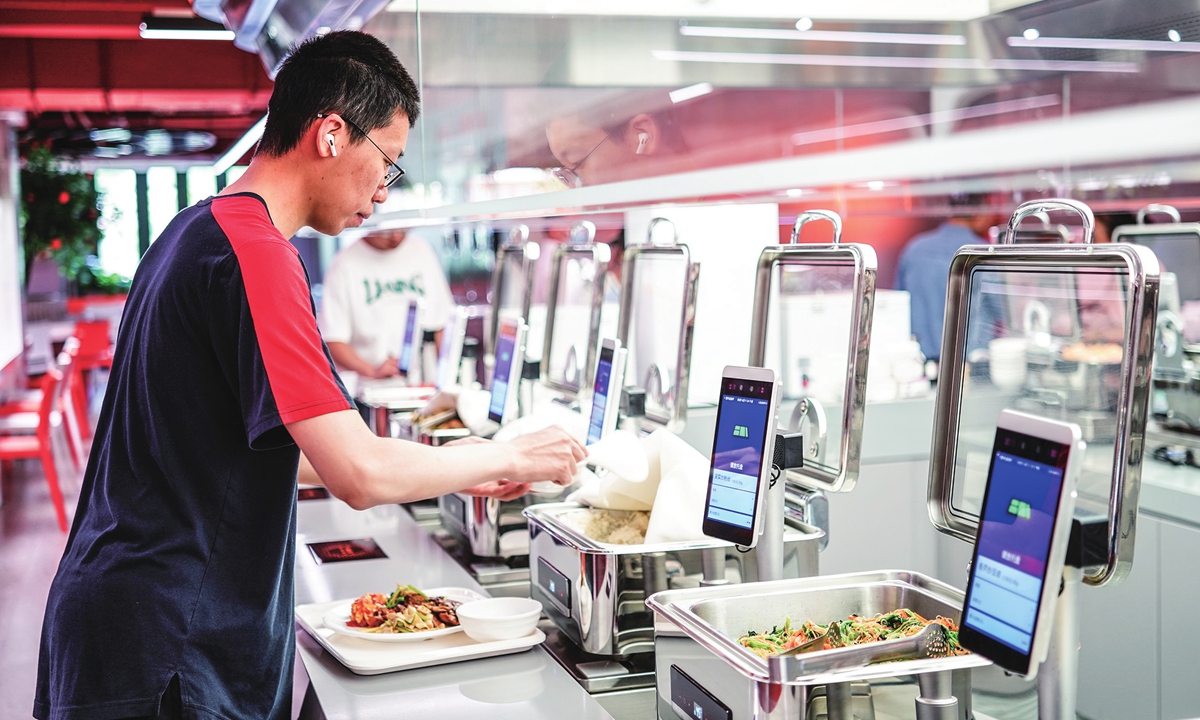
A diner fetches his meal with digital devices tallying the total cost and providing a summary of total nutritional intake at checkout at a canteen in Beijing on May 14, 2026.
Not quite a diagnosisCompared with their parents' generation, many young people today have become aware of health management much earlier in life. The shift from "treating illness after it appears" to the concept of "preventing illness before it happens" in traditional Chinese medicine (TCM) also reflects broader changes in China's economy, lifestyles and social attitudes, according to the Xinhua News Agency.
Yang Guohua, chief physician of internal medicine at Beijing Wangjing Hospital of the China Academy of Chinese Medical Sciences, told the Global Times that young people's "cyber wellness" practices have certain positive significance from the perspective of TCM's concept of "preventive treatment of disease."
TCM emphasizes adjusting daily routines, diet and emotions according to seasonal changes, circadian rhythms and individual physical conditions, while the data on heart rate, blood pressure, blood glucose and sleep provided by AI and smart devices can help young people observe changes in their bodies and quickly adjust their lifestyles, Yang said.
Christine Li, who works at a securities company, said long work hours have made her pay closer attention to her health. As she added more supplements to her daily meal plans, including multivitamin gummies, CoQ10 and fish oil, she began worrying whether taking five or six pills and soft gels a day might put pressure on her liver or other organs.
She then turned to AI for a quick reference, uploading supplement labels, ingredients and dosages to receive analyses of their functions, possible combinations and suggested timing. "I used to take everything together with breakfast," she said.
"Then AI suggested moving magnesium to before bedtime because it helps with sleep." Still, Christine said she treats AI as a supplementary tool and continues to seek nutrition consultations, as she trusts the judgment of real pharmacists and doctors more.
The booming popularity of "cyber wellness" is also reflected in the numbers and statistics. China's health and wellness market has already grown into a trillion-yuan industry, with people aged 18 to 35 making up more than 80 percent of consumers, according to the Workers' Daily.
The growing popularity of "cyber wellness" among young people is also prompting companies to pay greater attention to employee health management, Wang Shujuan said, adding that employee well-being is never just a personal matter, but one that affects a company's long-term development.
Wang noted that under modern management concepts that emphasize investing in people, corporate competitiveness increasingly depends on the quality of human capital rather than material resources. Facing the health needs of a new generation of workers, companies should view employee health management as a strategic investment and build a win-win environment for both employees and businesses, the Worker's Daily reported.
Yang said that consumer-grade wearable devices and AI tools used by young people mainly serve as tools for health monitoring and early warning, but cannot replace professional medical diagnosis, as their data may be affected by external factors and provide only preliminary information.
Still, they can help young people detect abnormal signals earlier, such as irregular heart rates or higher-than-normal pressure indicators, and talk to their doctors in time.
RELATED ARTICLES