Chinese matcha is re-emerging on global stage, boosted by technology, standardization, branding
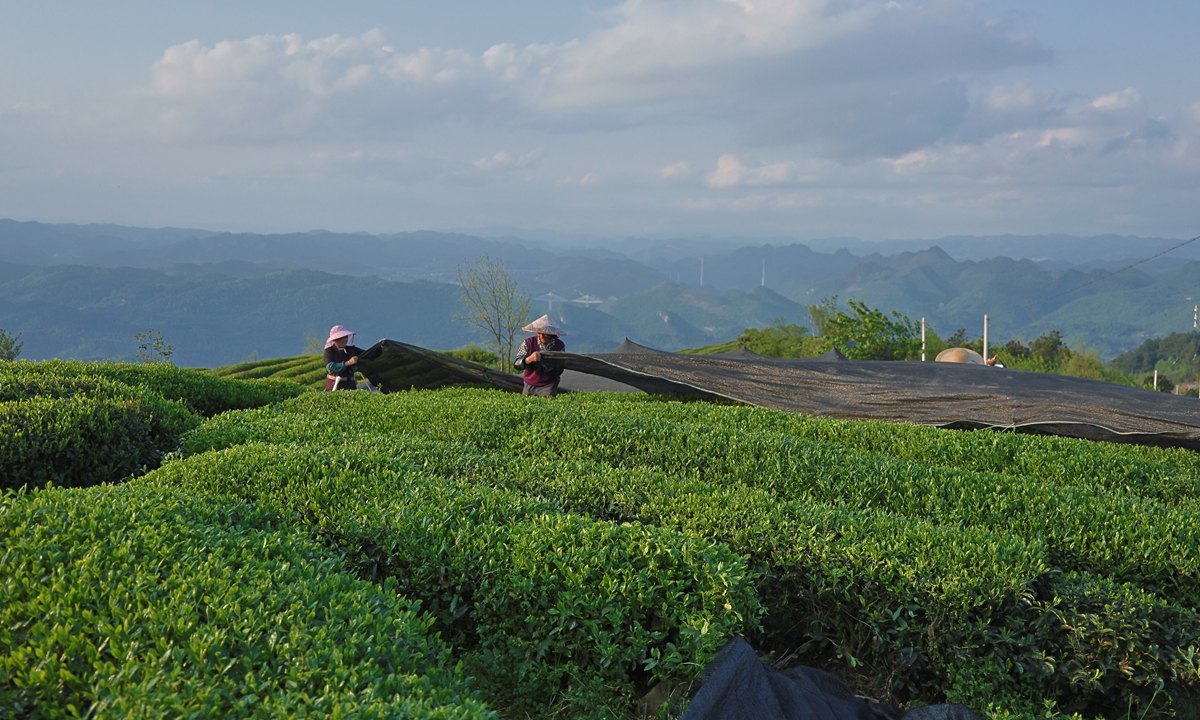
Weng'an Tea Garden in Southwest China's Guizhou Province in April 2026 Photo: Courtesy of Gui Tea Group
The ecological environment stands as the foremost factor determining matcha quality. At a tea plantation near Mount Fanjing in Southwest China's Guizhou Province, workers at Gui Tea Group noticed an unsettling change around 2020: the local bird population was in decline.
What might seem trivial to outsiders was, in fact, an early warning for the plantation's management. An investigation revealed that nearby villagers had been trapping birds to protect their crops. For tea growers, however, birds are indispensable natural allies in pest control. Acting swiftly, the company adopted technologies and reached out to local communities to restore the area's ecological balance.
Such meticulous stewardship represents a microcosm of how Chinese matcha producers are elevating quality for the export market. Backed by advanced technology, standardized practices, and brand-building strategies, Chinese matcha producers are shifting away from exporting bulk raw materials toward establishing globally recognized consumer brands.
Matcha originated in China, flourished during the Song Dynasty, and was later introduced to Japan. Yet in today's global market, matcha is no longer merely a cultural symbol but a highly standardized industrial product. Behind the rapid rise of China's matcha exports lies not simply a story of cultural revival, but a broader transformation driven by technological innovation, quality standardization and industrial upgrading, experts said.
Focus on quality
Guizhou's unique climate and geography have helped make it one of China's leading tea-producing regions, providing a solid foundation for large-scale matcha production. As the industry grows, companies are increasingly focusing on raising quality and production standards.
In the eyes of Wang Yiwen, tech head of Gui Tea Group, good matcha starts with a healthy ecosystem. To control pests, the company monitors bird populations, insect communities, and surrounding environmental conditions, uses biological controls and manual weeding, and manages over 100,000 mu (6,666.67 hectares) of tea plantations with minimal environmental impact.
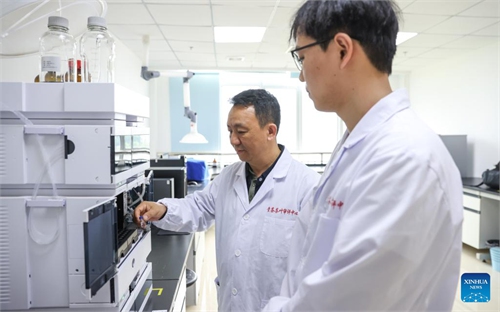
Wang added that beyond cultivation, standards are the key to expanding into international markets. Gui Tea manages its products according to EU pesticide residue testing standards, has built a top-caliber clean production workshop, and conducts long-term monitoring of indicators such as microbial levels.
Wang recalls that after the company decided to enter the matcha market a decade ago, it made multiple research trips overseas to learn experience. Through repeated trials and continuous refinement, the company gradually mastered core processes suited to its own production system and developed low-temperature grinding technology to prevent quality degradation caused by heat buildup during processing.
In 2019, Gui Tea made its first matcha export to France, marking the company's entry into global markets. In 2024, exports stood at fewer than 400 tons; by 2025, that figure approached 1,000 tons, accounting for nearly 40 percent of the company's total matcha sales and reaching more than 50 countries and regions, Chen Xiaoming, deputy general manager of Gui Tea Group, told the Global Times.
To expand its overseas footprint, the company has been boosting its global profile through international trade shows, cross-border e-commerce platforms, and overseas marketing teams, Chen said.
Zhang Yi, CEO of the iiMedia Research Institute, told the Global Times that Chinese firms are increasingly shifting toward competing in international markets on the basis of quality and standards. As more businesses move international market requirements upstream into production, China's matcha industry is accelerating efforts to build a solid quality reputation and market recognition.
Brand building
If standardized production and supply chain capabilities form the foundation of China's matcha industry, brand and cultural awareness are emerging as the new frontier of competition.
In Jingshan, Yuhang district of Hangzhou in East China's Zhejiang Province, Wang Junhua, founder of Jingbaiwei Matcha, told the Global Times that when he first joined a common prosperity project between Yuhang district and Jingshan Town, his initial research focused on the Jingshan tea industry. During his fieldwork, he discovered that matcha offers greater potential for scale and industrialization than traditional tea, while Jingshan's rich historical and cultural resources provide a unique advantage for the industry.
The real turning point came in 2025. The "bottle cap matcha" product launched by the company was taken abroad by some overseas influencers who came to Hangzhou and spontaneously spread across social media platforms like TikTok, Instagram, and YouTube. The visual effect of matcha powder blending into bottled water quickly captured attention and introduced more international consumers to matcha products from China, Wang said.
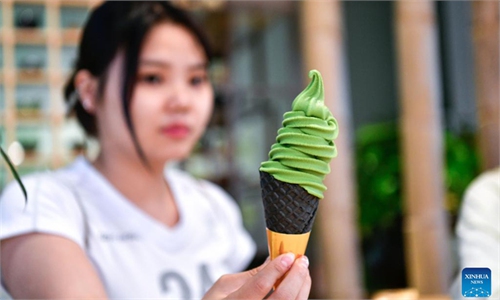
Unlike traditional matcha, this type of innovative product transforms the Song dynasty diancha tea culture into a modern consumption experience. It takes just seconds to brew, lowering the barrier to entry and shifting matcha from a raw ingredient to a consumer product with both cultural and brand appeal - helping secure millions of purchases from Europe, North America, and the Middle East, Wang said.
This shift is taking place across the entire industry. In the first quarter of this year, Zhejiang exported 1,242 tons of matcha worth 140 million yuan, a 7.3-fold increase year-on-year. A growing number of companies are exploring overseas markets through retail products, cultural and creative designs, co-branded new tea drinks, and social media campaigns.
China's matcha industry is shifting from raw material supply to brand building. In the past, Chinese companies mostly played a production role in the global supply chain. But as the consumer market expands and application scenarios diversify, more companies are developing products and brands aimed directly at end consumers, Zhang said. Going forward, the focus of competition will no longer be output, but brand development and international recognition, he said.
From farming to branding, China's matcha industry is transforming. Chinese companies are shifting from exporting raw materials to building consumer brands. The real challenge ahead is not producing more matcha, but winning global recognition for Chinese matcha, Zhang said.
RELATED ARTICLES