Illustration: Liu Xidan/GT
Some Western media outlets have seized on the decline in China's crude oil imports, with some even raising the question: How long can the country hold up?Such questions come against the backdrop of a worsening global energy crisis. The Asian Development Bank said that Asia is now suffering its worst-case scenario under the global energy crisis, the Financial Times reported on Friday, as the region is facing shocks from higher energy, shipping and input prices. As a major global energy consumer and importer, China's energy supply and demand dynamics have naturally become a focus of market attention.
Data from China's General Administration of Customs showed that in the first five months of this year, China's crude oil imports fell by 4.8 percent year-on-year. For a market that imports more than 500 million tons annually, this is a modest, manageable fluctuation - a proactive adjustment underpinned by a sophisticated, multi-layered energy security framework built up through decades of steady investment and systematic development.
First, since the launch of its strategic petroleum reserve program in 2004, China has steadily expanded storage capacity. This buffer allows the country to ride out volatility in spot prices and geopolitical turbulence.
Second, China has diversified its energy imports by establishing five major oil and gas cooperation zones spanning Central Asia-Russia, the Middle East, Africa, the Americas and the Asia-Pacific region. This diversified import network enables flexible import adjustments.
Third, domestic production has been steadily strengthened. Under a seven-year action plan launched in 2019 to boost exploration and output, China's crude oil production has stayed above 200 million tons per year. Since 2018, shale oil output has increased eightfold, and offshore fields have become a new growth engine, contributing more than 60 percent of the country's new oil output for five consecutive years. China now ranks sixth globally in oil production.
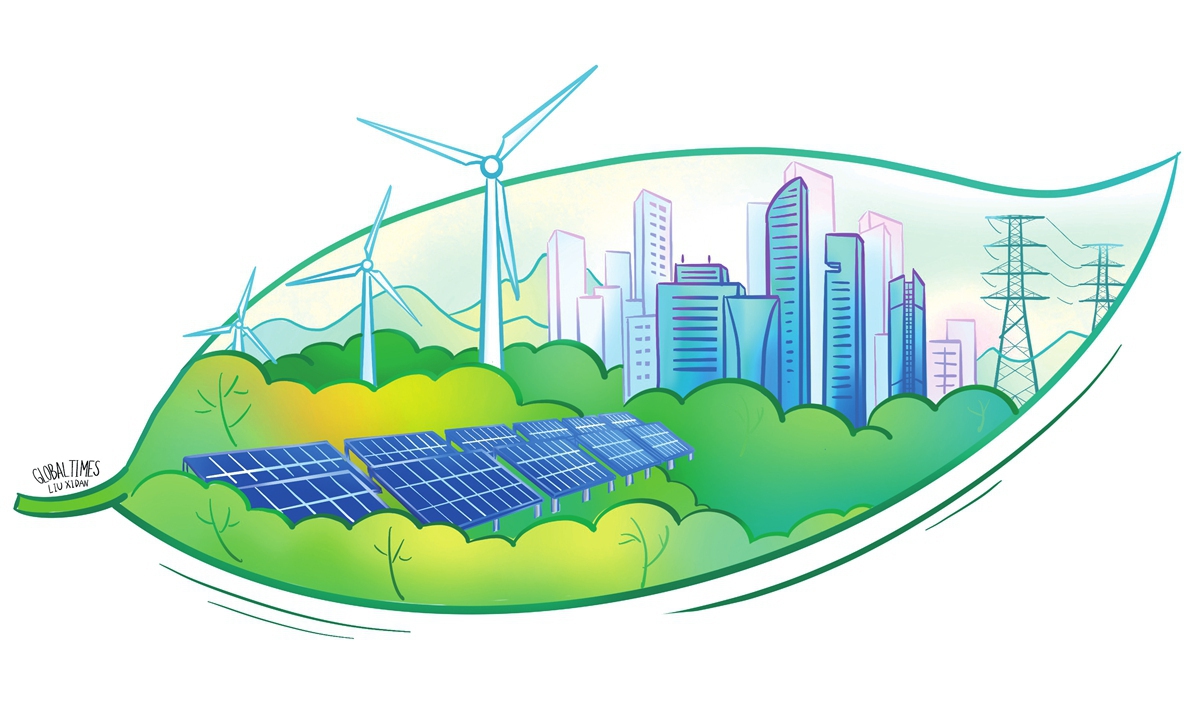
Fourth and most critically, the leapfrog development of the solar, wind power and energy-storage industries has fundamentally reduced China's reliance on imported fossil fuels. The installed capacity of wind, solar and new-energy storage has grown rapidly, driving a historic transformation of the country's energy structure. During the 14th Five-Year Plan (2021-25) period, the share of non-fossil energy consumption in China's energy mix surpassed that of oil for the first time, becoming the second-largest energy source after coal.
The International Energy Agency noted in a 2025 report that the slowdown in fuel consumption growth has followed a combination of structural changes in the Chinese economy and the rapid deployment of alternative transport technologies. In other words, China's transport technologies are already reshaping its demand for oil.
Thus, strategic reserves, stable domestic output, diversified imports and a booming new‑energy sector - these four mutually reinforcing strengths form the solid foundation that enables China to adjust import volumes proactively while keeping supply secure.
What deserves even more attention is that beyond safeguarding domestic economic stability, China's resilient energy system also supports the regional economy. On the one hand, stable energy supplies provide certainty for regional trade and industrial coordination. By ensuring smooth manufacturing and foreign trade, China helps stabilize the entire regional supply chains, preventing the production halts and inflationary spirals that energy shortages would otherwise trigger.
On the other hand, the spillover of mature new-energy technologies and green products is equally important. Cross-border shipments of photovoltaic modules, wind-power equipment and energy-storage systems are not mere commercial transactions - they are a sharing of energy technology and development experience. These exports help regional economies build independent and resilient new-energy systems, and reshape a more diversified and secure regional energy landscape.
Empowered by efforts in terms of both traditional energy security and new-energy development, China has proven its ability to weather external market turbulence. As the green transition accelerates and international energy cooperation deepens, the resilience and vitality of China's energy system will continue to strengthen. Its stable, diversified and sustainable energy framework will continue to deliver much-needed certainty and confidence for the Asia-Pacific region amid an increasingly volatile global landscape.
RELATED ARTICLES