First large-scale hydropower station on main stream of Yarlung Zangbo River in Xizang concludes acceptance check, has eased seasonable power shortage: project contractor
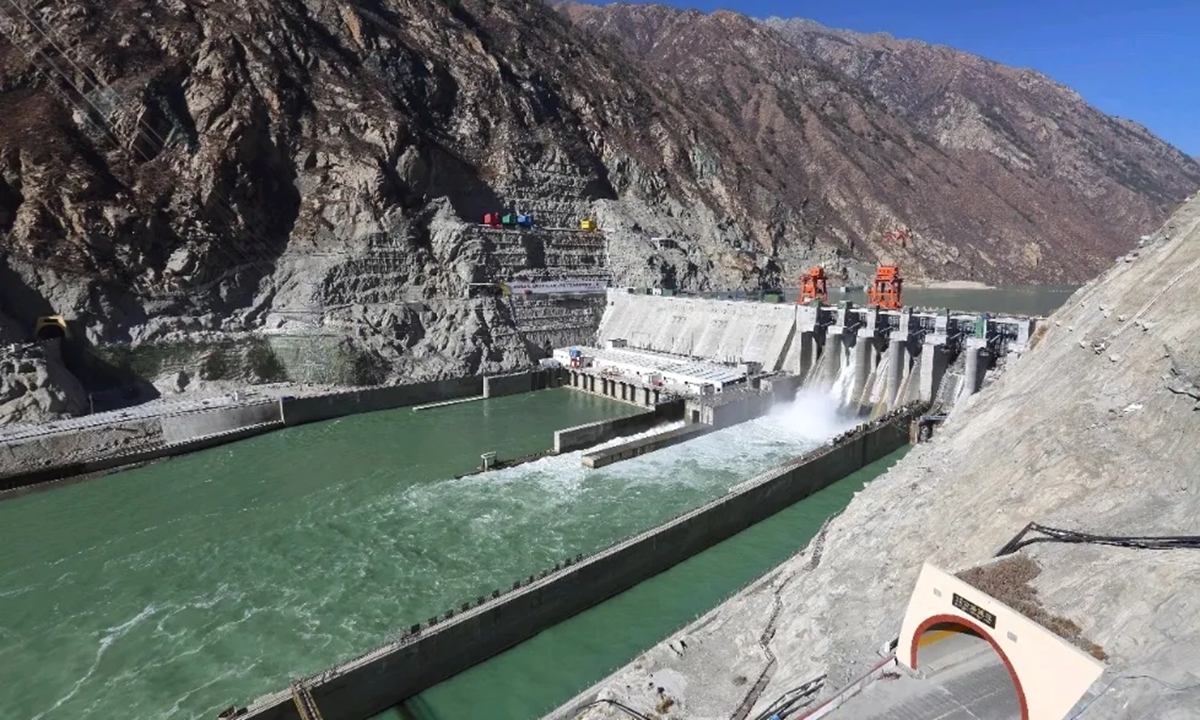
Photo: Chengdu Engineering Corporation Limited under Power China
The final acceptance meeting for the Zangmu hydropower station on the Yarlung Zangbo River in Southwest China's Xizang Autonomous Region has concluded, according to Chengdu Engineering Corporation Limited under Power China which is responsible for the planning, demonstration and full-stage survey and design, on Sunday. The project is now the first large-scale hydropower station on the main stream of the Yarlung Zangbo River to complete final acceptance.
The acceptance opinions state that the key project of the hydropower station has been fully completed in accordance with the approved design scale and plans. Since the reservoir began water impoundment, it has withstood 11 flood seasons. The key structures and fish passage are operating normally, the electromechanical and metal structure equipment meet production requirements, and the fish passage has achieved remarkable fish passage effects.
The station has an installed capacity of 510 megawatt and a maximum dam height of 116 meters. It is the first large-scale hydropower station planned and built on the main stream of the Yarlung Zangbo River. Its construction marks a major leap for power development in Xizang from the 100-megawatt class to the 500-megawatt class.
Construction of the project started in September 2010. It was fully put into power generation in October 2015, half a year ahead of schedule. To date, its total power generation has exceeded 22.2 billion kilowatt-hours, equivalent to saving approximately 7.4 million tons of standard coal and cutting carbon dioxide emissions by around 22.2 million tons, according to the company.
The hydropower station put an end to power supply by high-cost oil-fired generating units in Xizang, effectively eased power shortages in winter and spring, and pioneered the outward transmission of Xizang's electricity. It has made important contributions to the safe and stable operation of Xizang's power grid as well as the long-term stability and economic and social development of the autonomous region.
The project has also delivered remarkable environmental benefits. It features a fish passage that ranked first nationwide at that time in terms of water drop, altitude and total length, with a total of 571,000 fish passing through. The fish breeding station has released 1.973 million fish in total.
Global Times
RELATED ARTICLES