ARTS / CULTURE & LEISURE
Poetry on zoo animals bridges gap between people and nature
Dreaming at the zoo
By Published: Jun 16, 2026 10:18 PM
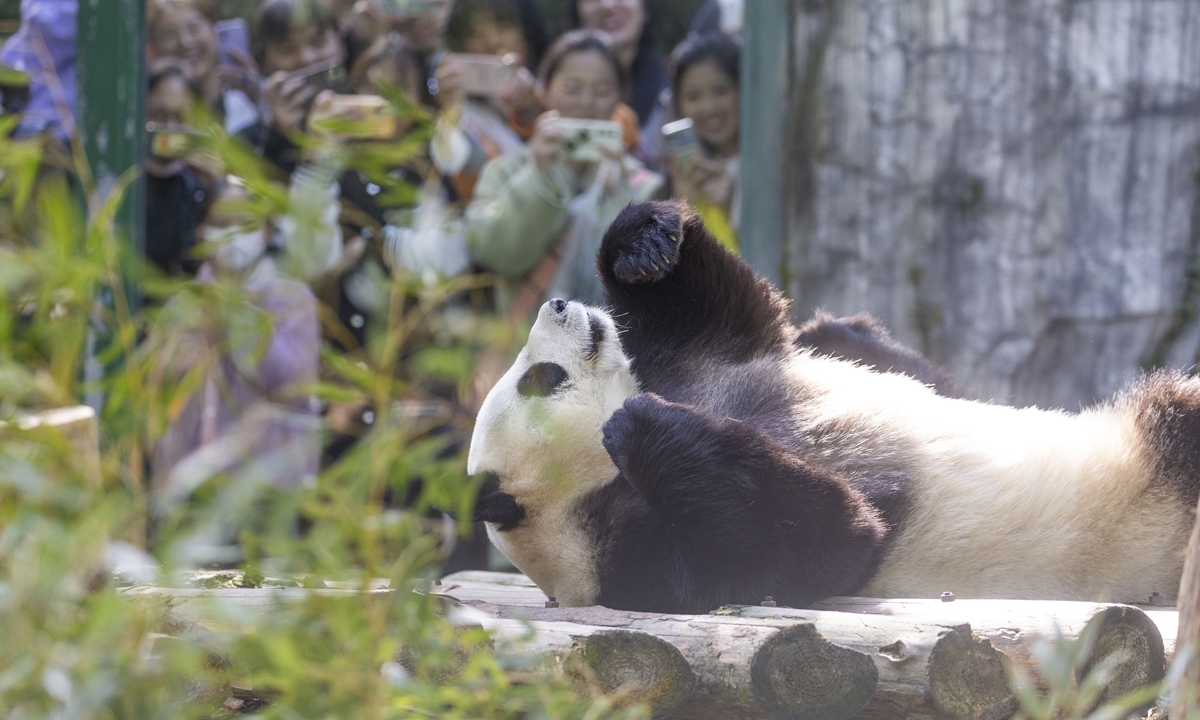
Visitors take photos of a giant panda at the Nanjing Hongshan Forest Zoo in East China's Jiangsu Province.
"Giraffes lower their long eyelashes to gently curl their purple tongues around fresh green leaves covered with dew." "In the branches, a dozing koala wakes up, lifting a furry paw to scratch its belly, playing a sleepy song of the southern hemisphere."
These poetic lines come from a special newly-published poetry collection, where every poem is written about the animals living at the Hongshan Forest Zoo in Nanjing, East China's Jiangsu Province.
This poetry collection is truly a collaborative creation. Zhang Yu, editor-in-chief of Yilin Press, the book's publisher, describes it as such because the 52 poems were written by authors of all ages and backgrounds, ranging from office workers, students, young children to retired seniors and animal keepers who spend every day with the zoo's animals. What unites them is a deep love for animals and for nature.
Actually, there were far more poems written about animals than the 52 that were included in the book. Since 2023, the zoo has partnered with several organizations to carry out the "cherish the rare with poetry" initiative - an annual public poetry contest that invites participants to write poems for wildlife.
In the third poetry contest held in 2025, more than 200,000 people from all walks of life participated, creating a bridge of words between humans and the living world.
For Shen Zhijun, the zoo's director, poetry is a gentle form of expression, able to create empathy and spark real feelings. "Instead of simply filling people's heads with facts, we want to encourage them to observe and feel with their hearts," he told the Global Times.
"Our hope is to go beyond traditional science education and bring a humanistic touch, inviting people to connect more deeply with animals and with life through emotion."
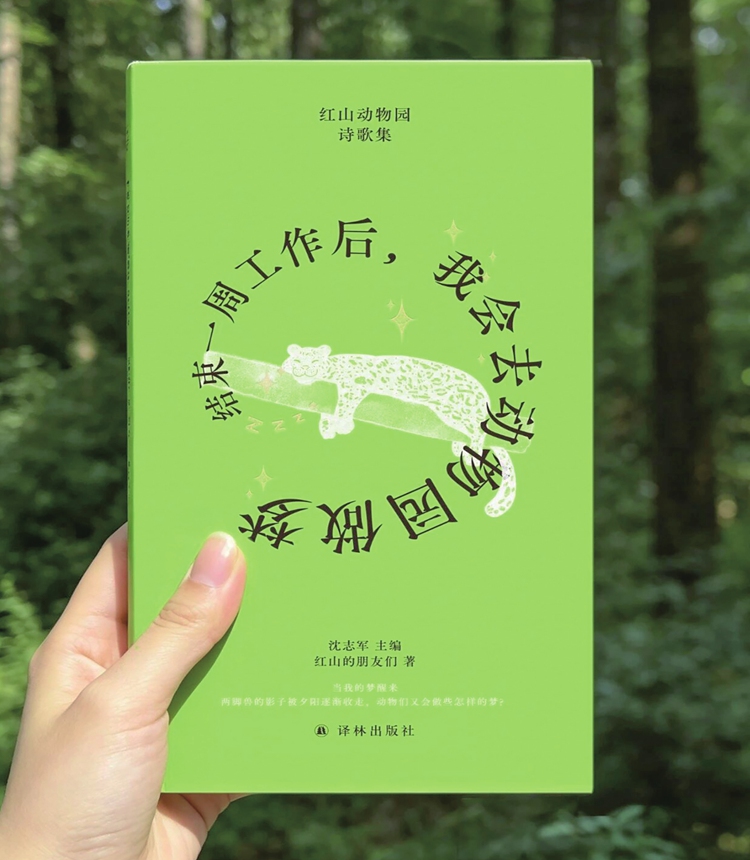
A poetry collection featuring the animals of Nanjing Hongshan Forest Zoo Photo: Courtesy of Nanjing Hongshan Forest Zoo
Meeting living beings through poetry"When I write poems, I don't just think about the names - like giraffe, gibbon, koala, or red panda. I see specific scenes: a giraffe chewing on leaves, a koala lazily scratching itself - I call that move 'koala playing the piano' - a red panda eating loquats in the treetops. Even if the fruit is still tart, they eat it without a care. You cannot find these little details in books or documentaries. A photo might catch a split second, a video a few moments, but in real life, you might wait 15 minutes or even an hour to see such a scene," recalled Wu Chencen, one of the poets, while sharing his experience as a zoo volunteer at the collection's launch event.
"I don't remember the perfect photo or the best lines," Wu said. "What stays with me is the change in the light, the smell of the air, and that burst of 'Wow!' from someone standing nearby."
Another "poet," Hou Shuwen, a primary school student, contributed a poem inspired by the film Night at the Museum, in which exhibits come to life after dark. Hou wondered what might happen in the zoo at night, when the visitors have all gone home. His poem paints vivid nighttime scenes of sloths, giraffes, owls, and other animals.
According to Shen, the second and third poetry contests were aimed especially at young people and students. The organizers found that these younger participants showed keener observation and sensitivity toward life - their poems were pure, full of imagination, and especially moving.
The zoo also invited some well-known poets to lead creative workshops right at the zoo. Children came to observe animals in their habitats and returned to classrooms to write poetry based on what they had experienced. Some poems focused on animals; others explored broader themes of nature and life, helping them express their feelings through poetry's beautiful form.
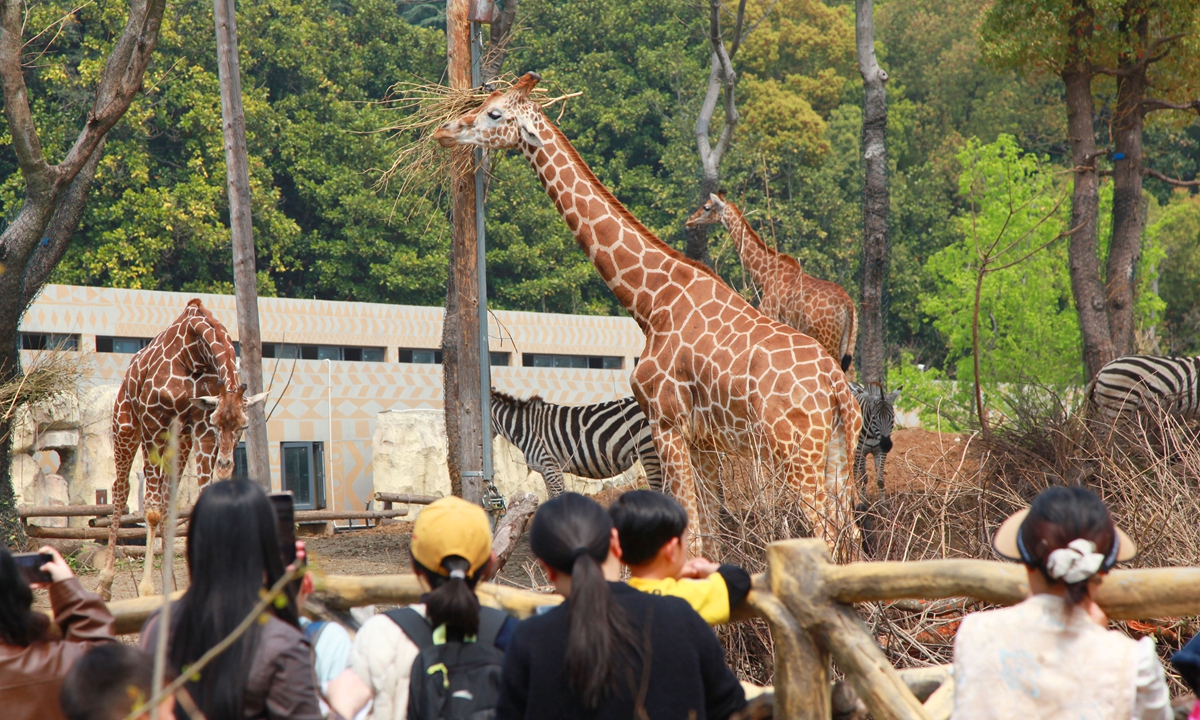
Visitors watch giraffes and zebras at the Hongshan Forest Zoo on April 1, 2026. Photo: VCG
Nature's power to healThere are 52 poems in the book, enough for every weekend in a year. For many young people, visiting the zoo on the weekend is one of their favorite ways to relax, Shen said.
In his eyes, nature has a powerful ability to soothe and heal tired spirits. In a hurried world, the zoo has become a sanctuary where people can escape the daily routine, wander among animals, and reconnect with the wild.
At the Hongshan Forest Zoo, every animal can live out its true nature and wildness, forging a real emotional link with the people who visit them. The title of the poetry collection, in fact, was inspired by the very first poem in the book: "After finishing another week in the waking world, I head to the zoo to dream." The author wanted to show that after busy, stressful days, entering the zoo feels like stepping into another world - a place to rediscover the beauty of life.
During the past three years, Shen and his colleagues have observed positive changes in people's attitudes toward nature and life through writing poems.
For example, one online contributor kept writing a whole series of poems about meerkats, carefully recording the relationships and daily routines of the colony. This is a gradual process: True feelings for animals inspire people to pick up their pens and to complete their poems; creators are driven to observe animal behaviors and relationships more deeply, gaining a better understanding of life itself.
"We hope that the wonders of biodiversity can reach more and more people through poetry," said Shen.
RELATED ARTICLES