ARTS / CULTURE & LEISURE
Dragon boats connect cultures through the spirit of unity
Paddles without borders
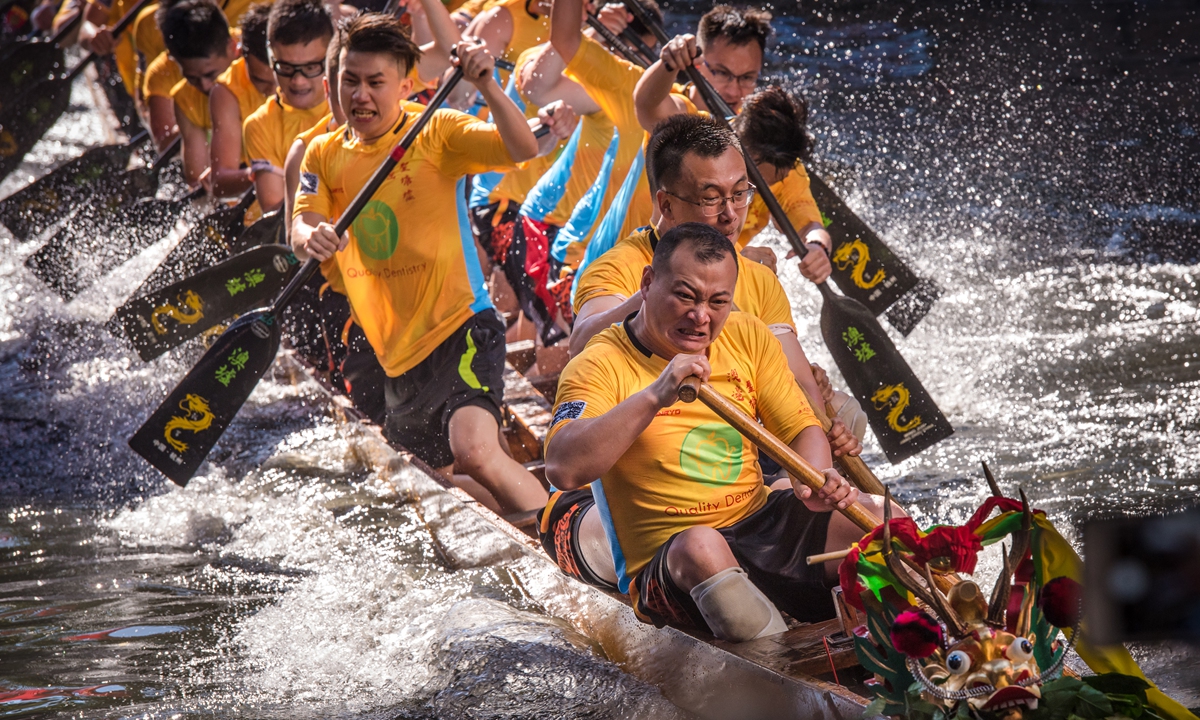
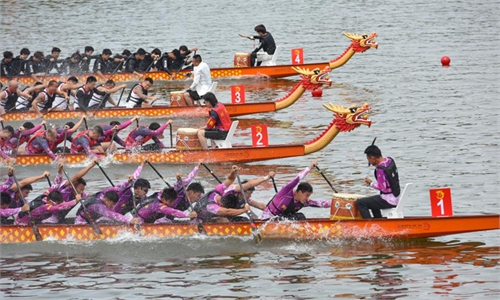
One of the local dragon boat teams from Diejiao village, Foshan in Guangdong Province, competes in the race.
Tirelessly practicing the 180-degree "killer" U-turn on the waterway during nighttime training sessions, members of the 18 dragon boat teams in Diejiao village in Foshan, South China's Guangdong Province, are racing against time for a podium finish in an upcoming local dragon boat race. The race will kick off on June 19, 2026, the first day of the year's Dragon Boat Festival holiday.
As the most iconic folk tradition of China's Dragon Boat Festival, dragon boat racing has a history of over 2,000 years.
Carried forward by generations of paddlers, the sport lives on in rustic villages like Diejiao while also steadily making its way onto global stages like the Asian Games, inviting the world to take part.
A game of culture
Unlike purely competitive water sports in other countries, China's dragon boat culture is marked by regional diversity.
In Central China's Hunan Province, dragon boats feature unique designs and come in a variety of forms, including dragon, tiger, and phoenix motifs. In Southwest China's Guizhou Province, the tradition is infused with the vibrant heritage of ethnic minorities such as the Miao.
And in Guangdong Province, widely regarded as China's premier dragon boat province, the culture reaches its pinnacle of excitement and ingenuity. Dubbed "Formula 1 on Water," Diejiao dragon boat racing is one of the most iconic examples. It may not be the biggest in scale, but its heart-pounding excitement makes the village game stand out.
The history of the village game dates back to the Qing Dynasty (1644-1911). Compared to the calm, wide-open waters in provinces like Hunan, the Foshan local waters are extremely narrow and winding. The waterway averages about 6 meters in width, with the narrowest points measuring only 3 to 4 meters.
Racing on such limited waterways, dragon boat teams would face "three deadly challenges," He Zhaobin, a local racer, told the Global Times. The most technically demanding S-bend tests teams with six consecutive sharp turns in tight quarters. The C-bend is the most perilous, as it requires the boat to execute a 180-degree hairpin turn at full speed. The L-bend demands a precise 90-degree right-angle drift. "Collisions are the norm: if you don't crash, you're not going fast enough," He noted.
Anchored in centuries of history and its unique technical demands, the Diejiao dragon boat race earned a spot on the city-level intangible cultural heritage list of Foshan in 2017. Its new status has gradually brought changes to the local tradition. What was once a race followed only by villagers has become a viral sensation on social media. And an event that once drew only locals now attracts fans from overseas.
Since 2025, the village has established youth exchange programs with San Francisco in the US, using dragon boat racing as a bridge. Racers from the village's 18 teams, including He, have served as coaches for American teenagers.
"When they first saw the dragon boats, they weren't interested and showed little willingness to participate. But over time, they learned teamwork and how to break through obstacles together," said He. He also added that dragon boat racing transformed a US boy, nicknamed "Power King," from being indifferent at the start to rushing off the bus three times to embrace his Diejiao teammates before leaving.
"Beyond skills, dragon boat racing's real value is the spirit of unity, a bond that transcends all cultural differences," He noted.
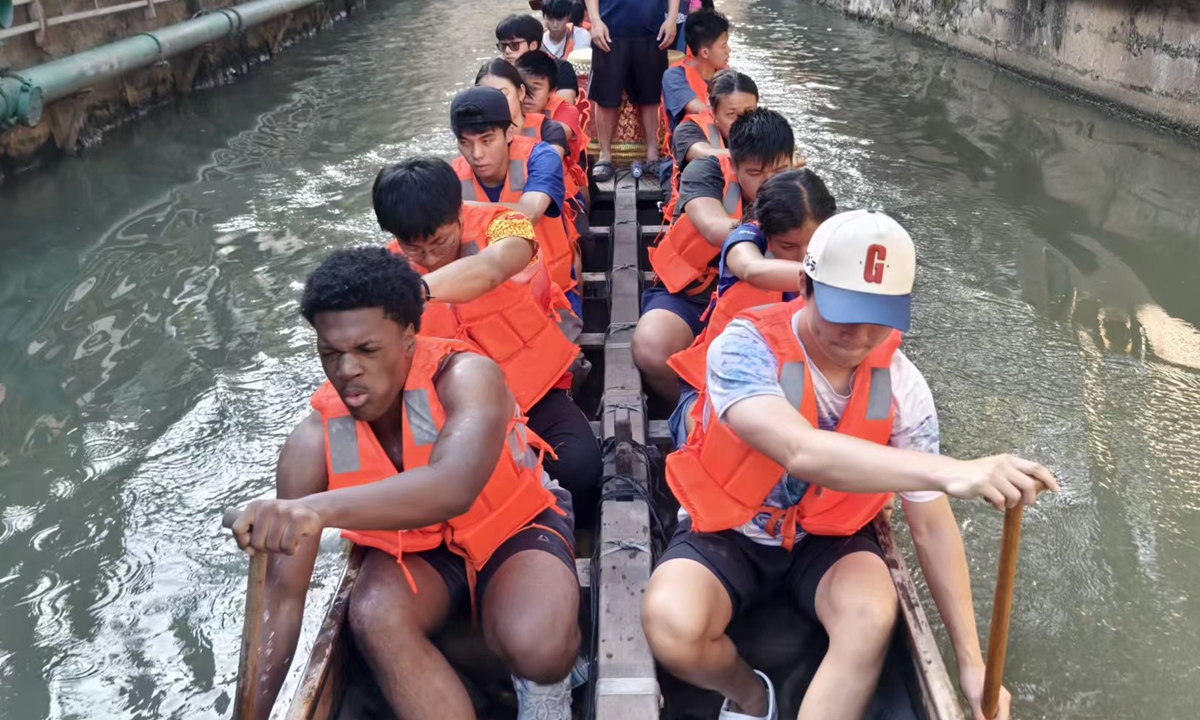
Local dragon boat paddlers and US teenagers row together in Diejiao Village, Foshan, Guangdong Province, in 2025. Photos: Courtesy of He Zhaobin
A sport for allDrawn by dragon boat racing's "spirit of unity," more and more foreigners are going beyond mere participation - they are committing to Chinese dragon boating as a lifelong passion.
Larger in scale than the village-based competition, the 2026 Guangzhou International Dragon Boat Invitational Tournament is also set to kick off during the Dragon Boat Festival. It features 3,800 athletes from 20 countries and regions across the world. Among the many domestic teams, the Guangzhou International Team is special since it consists of "both local dragon boat enthusiasts and international friends," He Weidong, the team's captain, told the Global Times.
Kimberly Kaser is a US racer among them. Unlike seeing the race as a competition, Kaser told the Global Times that she values the charm of Chinese tradition behind the sport even more than the competition itself. "Watching the dragon being awakened as it is lifted from the water and prepared for the celebrations and races is truly wonderful to witness. Dragon boat racing has now spread around the world, even to my hometown back in the US," Kaser noted.
Not just in the US, but through team-to-team exchanges and international platforms like the Asian Games in Hangzhou and the Asian Beach Games in 2026, Chinese dragon boat racing has become a worldwide sport.
For example, at the 2023 Asian Games, dragon boat racing attracted teams from across Asia, including South Korea, Thailand, and more. Meanwhile, through overseas dragon boat associations around the world, the racing culture has taken root in countries as far-flung as Italy in Europe and Egypt in Africa.
Wei Wei, an experienced dragon boat referee and a veteran witness to the sport's international emergence, told the Global Times that its Western popularity stems partly from its similarities to sports like rowing - but above all, from its "inclusive" spirit. "Compared to many sports, dragon boat racing does not set a harsh limit on people's cultures, ages, and backgrounds. This inclusiveness has made it a sport for everyone," Wei said.
RELATED ARTICLES