ARTS / CULTURE & LEISURE
Authors seek inspiration, new creations in villages
23 writers to experience countryside life in Sichuan
By Published: Jun 07, 2026 09:36 PM
Writers' village residency program
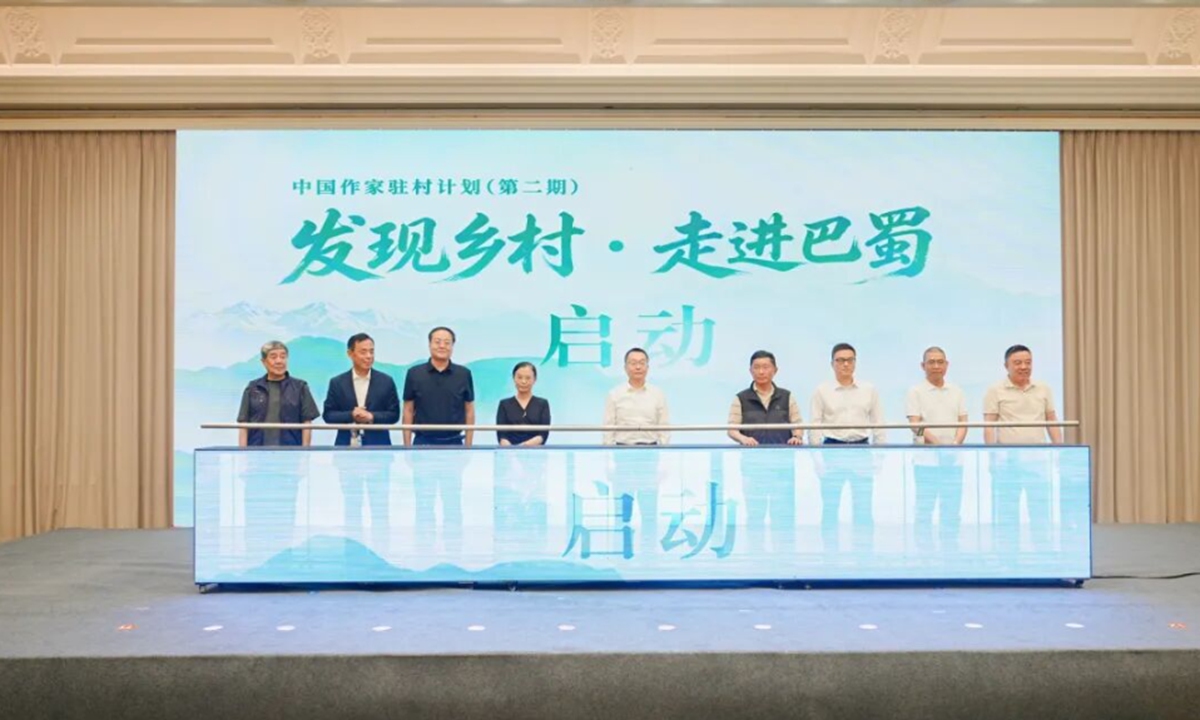
During the on-going second China writers' village residency program, 23 Chinese writers have been invited to stay for more than 10 days in different villages across Southwest China's Sichuan Province. Their goal is to explore the region's culture and historical changes, to capture local customs and people's stories, and to start new creative works based on their experiences.
The group of writers taking part in this event is very diverse and includes well-known literary figures such as Mao Dun Literature Prize winners A Lai and Liu Xinglong, as well as Lu Xun Literature Prize winners Hu Xuewen, Li Yuansheng, and Shi Yifeng, showing the strong literary foundation of this residency. The program also brings together leading online novelists like Mai Su and Tong Tong, expanding the ways literature is created and shared. According to one of the organizers, the Poetry Institute of China, bringing together writers of different ages, backgrounds, and genres creates a dynamic and diverse creative community.
Chinese writer Hu Xuewen, who often writes about villages, shared his thoughts with the Global Times on Sunday. He said he will reside in Liufang village in Zigong, and hopes to visit nearby villages if possible. Liufang is a beautiful village with centers of traditional crafts like arch-making, tie-dyeing, and paper-cutting. "I want to truly blend in, to become part of Liufang village, breathing, listening, and recording its lively everyday life. I look forward to open and sincere communication with local writers, to learning from each other and drawing fresh inspiration together," Hu said.
Hu noted this residency is a great chance for writers to gain new materials, as it will allow them to deeply experience local life. "Being in a different natural environment, with unique weather, customs, and culture, will give writers new feelings and thoughts," he added.
Another writer, Shi Yifeng, based in Beijing, told the Global Times that he will travel to a village in Deyang for the program. He hopes to learn many things from the residency: First, to observe changes in daily life, not just in information or facts, but those that truly touch his heart. Second, to learn the wisdom found in everyday life, noticing the details that do not appear in books. Third, to find renewed passion for life, which he said is key to staying devoted to writing.
A Lai, vice chairman of the China Writers Association and head of the Sichuan Writers Association, noted that rural writing needs a long period of close contact with real life and steady hard work. The residency program will allow writers to stay in the countryside for 10 days or more, giving them the chance to truly experience life there. He hopes that through this process, participants will discover people with moving stories, landscapes, and create great literary works, according to The Paper.
During the event, writers will also join seminars, creative workshops, and mentoring activities. Their works will focus on local life, history, and culture. Outstanding pieces will be selected and published together as a collection.
At the same time, the organizers will also build ongoing connections with well-known writers and platforms around China, encouraging more high-quality literary resources to be both imported and exported from local regions, according to the Poetry Institute of China.
The first China writers' village residency took place in Southwest China's Yunnan Province in October 2025. Sixteen writers and poets stayed for 10 to 30 days in different villages, gained a deep understanding of local region's natural landscape, history, and culture by living, dining, and working alongside villagers, reported Wenyi Bao.
One example is writer Ge Shuiping, whose experience changed her previous ideas about the countryside. She found out that villages are no longer "forgotten corners," but now have new life and energy, often opening up to the world through tourism. Inspired by her stay, Ge planned to keep a "village growth diary" to document changes in Yunnan villages, breaking through the limits of one-time field research.
RELATED ARTICLES