China Chamber of Commerce to EU warns of additional uncertainty from EU’s plan to develop so-called new trade defense tools
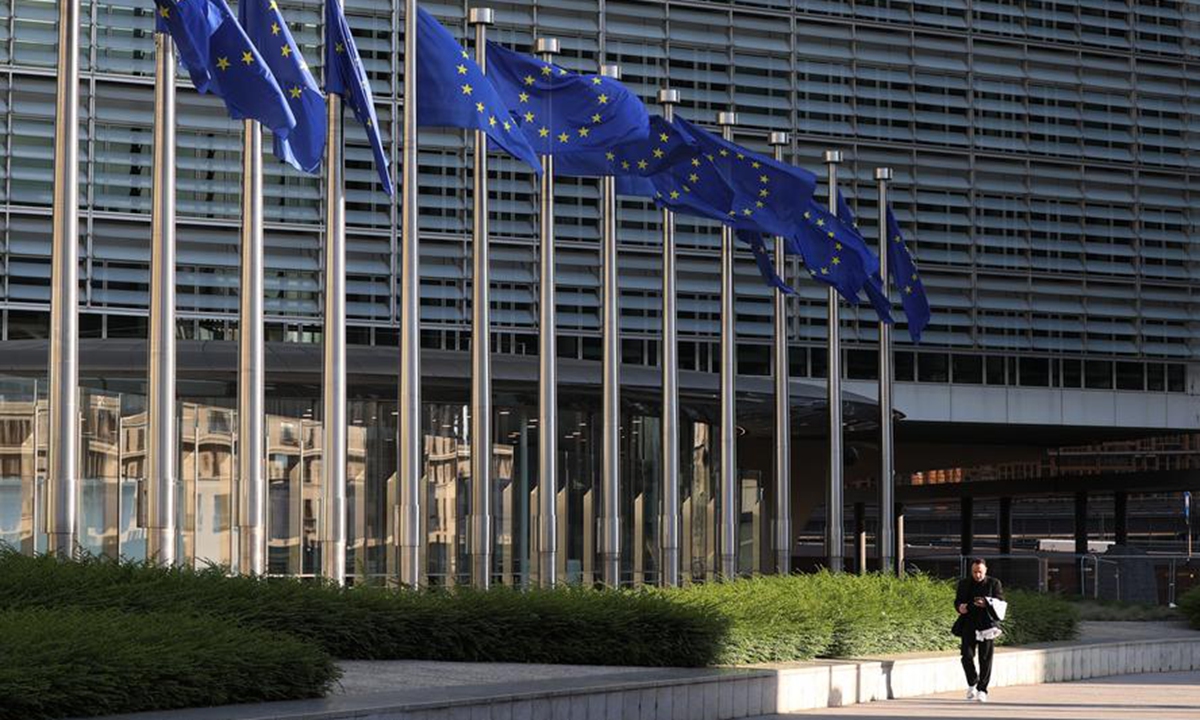
European Union flags fly outside the European Commission headquarters in Brussels, Belgium, on May 23, 2025. Photo: Xinhua
The China Chamber of Commerce to the EU (CCCEU) has expressed regret over the EU's plan to develop so-called new trade tools targeting China, which risk creating additional uncertainty for businesses and investors, adding that it is closely following the European Commission (EC)'s moves.
There is a risk that the current discussion becomes overly focused on external partners and goods trade, while the more fundamental drivers of the EU's competitiveness deserve equal attention. Focusing solely on the EU-China bilateral goods trade balance does not fully capture the mutually beneficial and complementary nature of the economic relationship, the chamber said in a statement on Monday local time.
The statement was made in response to an inquiry asking for the chamber's immediate response to the EU's plans to introduce so-called new trade defense tools and how are Chinese businesses preparing for it.
Last week, European Union leaders told the EC, which oversees the bloc's trade policy, to produce results from dialogue with the EU's main trading partners, including China, and to ensure the bloc has all the trade instruments it needs to defend its interests, according to Reuters.
In response to the EU's reported move, the CCCEU said it believes that China-EU trade is driven by market demand and the complementary strengths of the two economies. The competitiveness of Chinese manufacturing stems from innovation, efficient supply chains and intense market competition, rather than subsidies, and rising imports from China ultimately reflect choices made by European businesses and consumers.
The chamber noted that while the EU records a deficit in goods trade with China, the EU as a whole recorded a surplus of around 140 billion euros in its external trade in goods in 2025. Moreover, Chinese exports to Europe are increasingly concentrated in machinery, electrical equipment, industrial components and other products that are deeply integrated into European production networks. "We believe these imports are not replacing European production; they are supporting it," it said in the statement.
Also, it added that although the EU records a deficit in goods trade with China, the bloc has long enjoyed a surplus in services trade with China.
It is hoped that both sides will address trade frictions through dialogue and consultation. Unilateral trade measures risk provoking retaliatory actions and creating a cycle of escalating tensions that serves neither side's interests, the chamber said.
Despite the challenges posed by an increasingly complex regulatory and trade environment, Chinese companies remain committed to the European market and will continue investing, creating jobs and contributing to Europe's green and digital transition, it added.
RELATED ARTICLES