IN-DEPTH / IN-DEPTH
Readers' Reflections: China’s new development path balancing economy and ecology offers valuable solutions to Global South
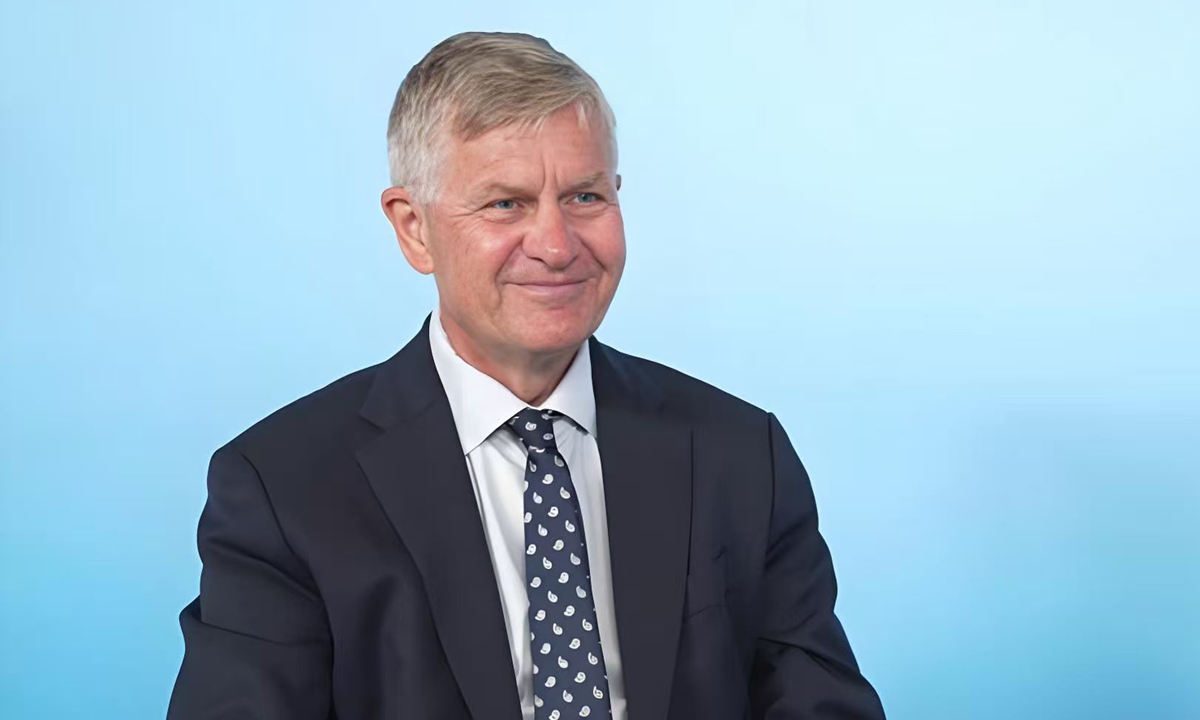
Erik Solheim Photo: Courtesy of Solheim
Editor's Note:
The year 2026 marks the start of the 15th Five-Year Plan period (2026-30). The outline of the 15th Five-Year Plan dedicates a chapter to “accelerating the green transition across the board and building a Beautiful China.”
From the guiding philosophy that “lucid waters and lush mountains are invaluable assets,” to the strategic guidance of China’s “dual carbon” goals, and further to the systematic arrangements for comprehensive green transition, China has, under the guidance of Xi Jinping Thought on Ecological Civilization, accelerated its green and low-carbon transition and continued to improve the quality of its ecological environment.
The book series Xi Jinping: The Governance of China includes a number of President Xi’s important ideas on ecological conservation. These ideas profoundly reflect the inheritance, enrichment and development of the theoretical framework for ecological civilization construction, as well as the continuity, elevation and focus of its goals and tasks.
Volume V of the book series includes “The Beautiful China Initiative” as a dedicated topic, systematically expounding the thinking and arrangements for building a Beautiful China.
In the 25th installment of the special series “Decoding the Book Xi Jinping: The Governance of China,” the Global Times, along with the People’s Daily Overseas Edition, continues to invite Chinese and foreign scholars, translators of Xi's works, practitioners with firsthand experience, and international readers to focus on the theme of “accelerating the green transition across the board and building a Beautiful China.” Together, they explore the vivid practices through which China, under the guidance of Xi Jinping Thought on Ecological Civilization, applies the concept of green development throughout the process of economic and social development, and discuss its major practical significance and contemporary value.
In the 25th article of the "Readers' Reflections" column, Global Times (GT) talked to Erik Solheim (Solheim), recipient of the 2023 Chinese Government Friendship Award, Co-Chair of Europe-Asia Center and former Under Secretary-General of the UN and Executive Director of the UNEP, to get his insights on the understanding of Xi Jinping Thought on Ecological Civilization and the reference value of China's green development path for Latin America, Africa, and the entire Global South.
GT: During your tenure at the United Nations (UN), you helped promote Chinese environmental success cases -such as the Saihanba Forest Farm in North China's Hebei and East China's Zhejiang's "Thousand Villages Demonstration and Ten Thousand Villages Renovation" project - onto the global stage, giving greater international recognition to China's ecological governance achievements. Over the past decades, what are the most impressive stories in China's ecological civilization construction and green transition that stand out to you?
Solheim: If I were to highlight one of the most representative examples, I would point to the remarkable cleanup of rivers in Zhejiang. In the past, some of these rivers were so heavily polluted that they were nicknamed "soy sauce rivers," with water that was black and brown. Today, the rivers have been completely transformed - the water is crystal clear. People can now swim in them, and in some sections, the water quality has even reached drinking standards. The number of butterflies, birds, frogs, and fish has increased dramatically, marking a full ecological revival.
China's achievements in cleaning up its air, soil, and water are among the greatest accomplishments of recent decades. This signifies that China has shifted to a front-and-center global leader in green development. Meanwhile, China has not only successfully addressed its own environmental challenges but has also provided practical, replicable solutions for many developing countries.
In the past, the UN's environmental work was heavily Europe-centered. When I joined the UN, there were almost no dedicated environment initiatives focused on China. The most important factor behind the change is the tremendous environmental progress China has achieved domestically and the country has become a significant benchmark for global ecological civilization construction. Xi Jinping Thought on Ecological Civilization has not only profoundly transformed China but also contributed valuable Chinese wisdom and solutions to global sustainable development.
GT: China's leading position in renewable energy, electric vehicles (EVs), and other fields is often described as an "indispensable force" in the global green transition. In your view, how do these advantages in clean energy industries embody the core principles of Xi Jinping Thought on Ecological Civilization? Against the current backdrop of geopolitical tensions and soaring oil prices, how do you evaluate the outcomes of China's energy transition?
Solheim: In 2018, Xi Jinping Thought on Ecological Civilization was officially established at the National Conference on Eco-environmental Protection, responding precisely to the Chinese people's growing aspirations for a better environment. By that time, following decades of rapid economic growth, the Chinese people's living standards had improved significantly, and there was a stronger desire for blue skies, fresh air, and a healthy ecological environment. This strong demand from the public, combined with resolute political will from the top leadership, drove China's tremendous green transformation over the past 10 to 15 years. This profound change is inseparable from the scientific guidance of Xi Jinping Thought on Ecological Civilization.
China has come to a deep understanding that ecological civilization is not only an environmental mission but also a major development opportunity. By vigorously developing clean energy such as solar, wind, and hydropower, China has reduced its dependence on imported oil, enhanced energy security, created numerous jobs, fostered emerging industries, and advanced high-quality economic development. What was once an environmental challenge has been transformed into a major strategic opportunity for green industrial development as well as ensuring energy security and national strategy.
So far, this transformation has not only benefited China but also served as an enormous gift to the world. Currently, China produces over 80 percent of the world's photovoltaic modules and over 70 percent of lithium batteries. Over the past decade, the cost of solar photovoltaic power has plummeted by approximately 90 percent. Price competitiveness is crucial — only affordable clean energy can truly replace coal, oil, and gas on a large scale. While exporting products, China is also increasing overseas investment and technology sharing. Other nations should also welcome Chinese investment and joint ventures with an open mind to achieve mutual benefit and win-win outcomes.
China's remarkable achievements in green transformation are attributable to three key factors: First, strong leadership. Strong commitment from the top leader has provided the fundamental guarantee for green development. Second, the efficiency of China's political system, which enables rapid decision-making and swift implementation of major projects such as solar power stations and battery factories. Third, the strengths of the socialist market economy. China possesses a vast unified market where products made in South China's Guangdong can be sold nationwide to Northeast China's Heilongjiang. This large-scale market and diverse demand incentivize enterprises to continuously improve quality and reduce costs, forging strong international competitiveness.
GT:In the article "Balance Major Relationships Concerning Eco-Civilization" in Volume V of the book Xi Jinping: The Governance of China, President Xi Jinping said that "the dialectical unity and mutual reinforcement between development and protection must be maintained throughout the process of China's modernization." What lessons does China's ecological development path - which advances ecological protection and economic growth at the same time - offer to the world?
Solheim: The core concept of "clear waters and green mountains are invaluable assets" lies at the heart of Xi Jinping Thought on Ecological Civilization. If the cost of green transition is too high, no country in Africa or the broader Global South can afford it. China has demonstrated through its vivid practices that pursuing green development does not increase burdens; on the contrary, it can significantly reduce costs. For example, shifting from coal to solar power has already delivered substantial economic benefits in China.
China never presents environment and economy as a contradictory choice. Both can be coordinated and achieved simultaneously. This new development path - integrating economic growth with ecological protection from the very beginning - was unimaginable 20 years ago, yet it has become a reality in China today.
Take Africa as an example. I once took the train from Mombasa to Nairobi in Kenya and personally witnessed the transformation. The area around Mombasa used to be quite rundown, but the Chinese-built railway station is clean, modern, and surrounded by greenery — like a beautiful oasis in the city that adds a striking touch of beauty to the local scenery. And there are many other successful cases. In Indonesia, CATL has invested in advanced battery plants. These highly visible green projects are taking root across the Global South and have become vivid examples of green development under South-South cooperation.
China will play an increasingly important leading and supporting role in the global green transition. And one of China's most important contributions is sharing advanced technologies and best practices with developing countries while actively promoting green investment. By helping other nations develop electric vehicles, solar power, and other clean energy technologies, China not only supports their green transformation but also provides them with valuable opportunities to learn, catch up, and even potentially surpass existing achievements. This Chinese solution offers important reference for developing countries seeking modernization paths suited to their own national conditions, and injects strong momentum into global sustainable development.
GT:In the article "Principles to Apply in Protecting the Eco-Environment" in Volume III of Xi Jinping: The Governance of China, President Xi said that "clear waters and green mountains are invaluable assets. This is an important concept of development and a major principle behind our modernization drive." How do you understand the profound implications of the concept "clear waters and green mountains are invaluable assets"?
Solheim: The concept of "clear waters and green mountains are invaluable assets" has opened a new path of development for humanity — one that integrates economic growth with ecological protection from the very outset and advances them in a coordinated manner. In the past, many countries often prioritized economic development at the expense of heavy environmental costs. China, by contrast, has successfully pioneered a new development model that achieves synergy between the two by significantly reducing the cost of green technologies and scaling up clean energy. This important concept holds great value as a reference for Latin America, Africa, and the entire Global South.
At the core of this concept is the spirit of mutual learning from best practices. China's successful experience in the Yangtze River can offer valuable reference for the ecological restoration of major river basins such as the Nile, the Amazon, and the Ganges. Its desertification control practices in North China's Inner Mongolia can provide useful insights for sand control efforts in the Middle East and Africa. The concept of "clear waters and green mountains are invaluable assets" fully demonstrates that ecological protection does not constrain economic development; rather, it can be transformed into new drivers of economic growth and competitive advantages.
GT: In the article "Chinese Modernization: Harmony Between Humanity and Nature" in Volume V of Xi Jinping: The Governance of China, President Xi stresses that "the next five years will be crucial in building a beautiful China." As an observer, how do you see the role of the "Beautiful China" vision in enhancing Chinese people's sense of happiness and fulfillment?
Solheim: The concept of "Beautiful China" is rich in connotation and highly inspiring. It not only vividly embodies the goals of China's ecological civilization construction but also easily strikes a chord with people around the world. If other countries could put forward similar concepts, it would help spread the idea of ecological civilization globally and jointly promote the building of a clean and beautiful world.
In China, a good example of "Beautiful China" is the city of Chengdu's plan to build around 20,000 kilometers of greenways for walking and cycling. This initiative makes it easier for citizens to get close to nature and embrace greenery, effectively improving public health and enhancing people's sense of happiness.
RELATED ARTICLES