IN-DEPTH / IN-DEPTH
Scholars’ Perspectives: China shows developing countries can forge a new path in which development and environmental protection advance in tandem
By and Zhang Han Published: Jun 23, 2026 11:30 PM

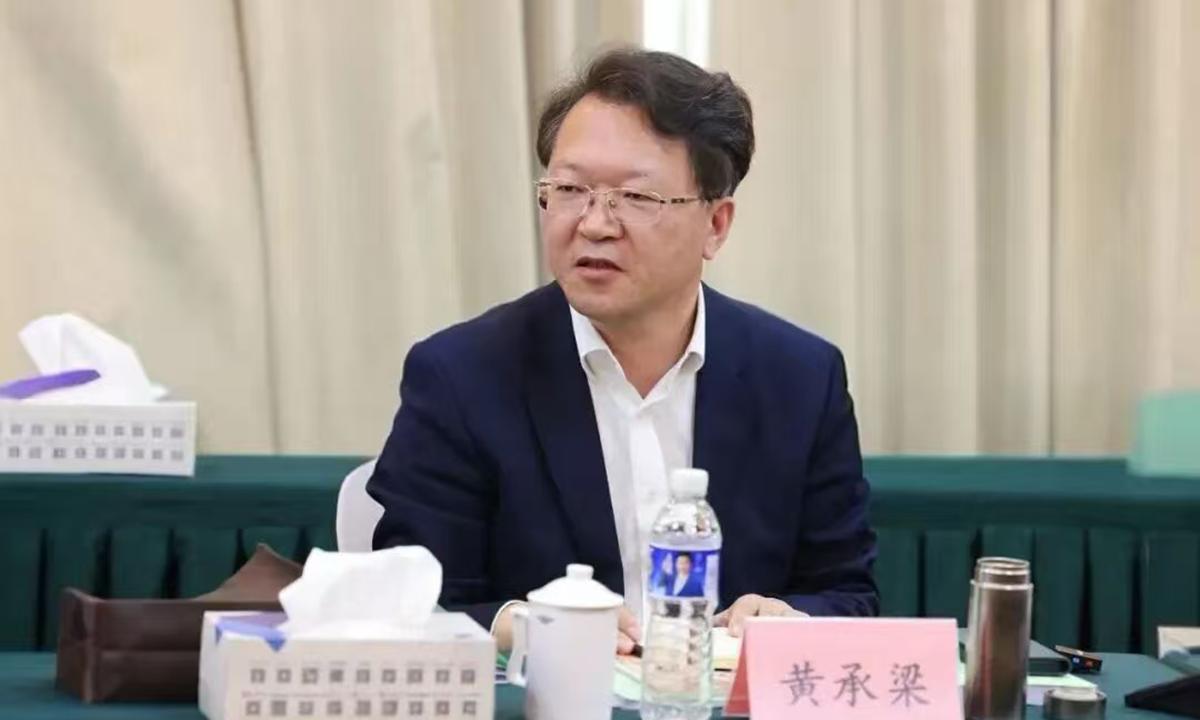
Huang Chengliang, secretary general of the Research Center for Xi Jinping Thought on Ecological Civilization at Chinese Academy of Social Sciences
Editor's note:
The year 2026 marks the start of the 15th Five-Year Plan period (2026-30). The outline of the 15th Five-Year Plan dedicates a chapter to "accelerating the green transition across the board and building a Beautiful China."
From the guiding philosophy that "lucid waters and lush mountains are invaluable assets," to the strategic guidance of China's "dual carbon" goals, and further to the systematic arrangements for comprehensive green transition, China has, under the guidance of Xi Jinping Thought on Ecological Civilization, accelerated its green and low-carbon transition and continued to improve the quality of its ecological environment.
The book series Xi Jinping: The Governance of China includes a number of President Xi's important ideas on ecological conservation. These ideas profoundly reflect the inheritance, enrichment and development of the theoretical framework for ecological civilization construction, as well as the continuity, elevation and focus of its goals and tasks.
Volume V of the book series includes "The Beautiful China Initiative" as a dedicated topic, systematically expounding the thinking and arrangements for building a Beautiful China.
In the 25th installment of the special series "Decoding the Book Xi Jinping: The Governance of China," the Global Times, along with the People's Daily Overseas Edition, continues to invite Chinese and foreign scholars, translators of Xi's works, practitioners with firsthand experience, and international readers to focus on the theme of "accelerating the green transition across the board and building a Beautiful China." Together, they explore the vivid practices through which China, under the guidance of Xi Jinping Thought on Ecological Civilization, applies the concept of green development throughout the process of economic and social development, and discuss its major practical significance and contemporary value.
In the 23rd article of the "Scholars' Perspectives" column, Huang Chengliang, secretary general of the Research Center for Xi Jinping Thought on Ecological Civilization at Chinese Academy of Social Sciences, shares with the Global Times his insights on China's path in which development and environmental protection can advance in tandem.
GT: From General Secretary Xi's concept "lucid waters and lush mountains are invaluable assets," to "accelerating the comprehensive green transformation of economic and social development and building a Beautiful China" in the outline of the 15th Five-Year Plan (2026-2030) for national economic and social development, given the outline's call for coordinated efforts to cut carbon emissions, reduce pollution, pursue green development and boost economic growth, how can we correctly understand the relations between protection and development?
Huang: Based on the scientific thesis that "lucid waters and lush mountains are invaluable assets," the 15th Five-Year Plan sets its sights on advancing comprehensive green transformation and building a Beautiful China. It interprets the logic of the dialectical unity between environmental protection and development through four coordinated tasks: carbon emission cut, pollution reduction, green development and economic growth, breaking the outdated misconceptions that environmental protection holds back economic growth and development inevitably damages ecosystems.
Carbon emission cut drives the innovation of energy mix and the phasing out of backward, high-energy-consuming production capacity. Pollution reduction presses ahead with in-depth campaigns to safeguard blue skies, clear waters and pure land, holding fast to the environmental bottom line and consolidating the foundation for long-term development. Large-scale afforestation and ecological restoration expand green spaces and boost carbon sinks, turning ecological resources into carbon sink assets and cultural tourism resources, so sound ecosystems can continuously translate into tangible economic gains.
This is a systematic project and strategic initiative to build a Beautiful China under the guidance of Xi Jinping Thought on Ecological Civilization, demonstrating its powerful practical force.
The green vision outlined in the 15th Five-Year Plan embodies a profound commitment to the nation's sustainable development for generations to come. It not only protects the lucid waters and lush mountains around the people based on current realities, but also builds up valuable reserves for sustainable development looking ahead to the future. The drive to build a Beautiful China thus runs parallel to a journey of pursuing higher-quality, more efficient economic growth and steady improvements to people's wellbeing.
The concept that "lucid waters and lush mountains are invaluable assets" offers developing countries a brand-new vision: instead of treading the old path of trading the environment for growth and then spending heavily to restore it, they can embark directly on a new path prioritizing ecological conservation and pursuing green development.
In this sense, the "two mountains" concept, which holds that "lucid waters and lush mountains are invaluable assets," is far more than merely a Chinese success story. From an in-depth theoretical perspective, it reveals that protecting the ecological environment is protecting productive forces and improving the ecological environment is developing productive forces.
Previously, discussions on productive forces mainly centered on the relations between humans and tools, as well as humans and the objects of labor. Today, natural ecosystems are incorporated into the foundational scope of productive forces, which constitutes a major expansion of Marxist theory on productive forces.
GT: Volume III of Xi Jinping: The Governance of China includes General Secretary Xi's important speech delivered at the National Conference on Eco-environmental Protection in 2018, in which he emphasized that protecting the eco-environment is a major social issue related to people's wellbeing. How should we understand the livelihood implications of eco-environmental protection?
Huang: General Secretary Xi's characterization of eco-environment protection as a major social issue related to people's wellbeing elevates environmental issues from what were once viewed as merely "technical issues" or "peripheral development concerns" to a position central to people's right to survival, sense of well-being, and social equity. To understand the livelihood implications of eco-environmental protection, we can examine the issue from two perspectives.
First, the eco-environment is "the most universally shared public good for people's well-being," benefiting everyone regardless of social class. A healthy eco-environment possesses the characteristics of a public good - it is both non-exclusive and non-rivalrous. A lavish meal or a luxury home may be enjoyed only by a limited number of people, but blue skies, clean drinking water, and safe soil are essential necessities for everyone's survival. From the perspective of people's well-being, clean air is the primary source of sustenance, and clean water is the most fundamental food. If economic growth raises GDP but forces people to wear masks when they go outside, buy bottled water for daily consumption, or worry about heavy-metal contamination in their food, then such development carries little, if any, real value for people's livelihoods. In the past, people aspired to adequate food and clothing; today, they aspire to environmental quality. In the past, the priority was survival; today, it is ecological well-being. This shift reflects the changing needs of Chinese society and demonstrates how the evolution of China's principal social contradiction is manifested in the environmental sphere. The quality of the eco-environment has become a direct measure of both the foundation and the quality of people's lives.
Second, ecological governance is "the greatest public-welfare project," serving as a direct source of people's sense of gain and happiness. General Secretary Xi has emphasized that a good eco-environment is the most fundamental public good and the most inclusive contributor to public wellbeing. Providing this public good effectively is the greatest politics and the most tangible livelihood for the people.
For example, the development of "pocket parks" in urban spaces or the remediation of polluted and foul-smelling waterways. Although such projects may require far less investment than building a major highway, they often lead to a much greater increase in public satisfaction. The reason is simple: these are improvements that people can see the moment they step outside their homes and feel with every breath they take.
Therefore, the livelihood implications of ecological and environmental protection can be summarized in three key points. First, it is a "protective barrier" for public health. Without ecological security, the protection of people's lives and health rests on a fragile foundation. Second, it is a "core indicator" of well-being. The quality of the ecological environment is, in many respects, a direct reflection of the quality of life. Third, it is a "balance scale" of social fairness. Ensuring that everyone, especially vulnerable and disadvantaged groups, is protected from disproportionate environmental burdens constitutes the minimum standard of ecological justice.
China does not pursue environmental protection for its own sake through formalistic campaigns, nor does it embrace extreme environmentalism that sacrifices people's livelihoods in the name of ecological goals. Instead, it adheres to a people-centered approach. Anything that makes it harder for people to breathe clean air, drink safe water, or enjoy a convenient and comfortable life must be firmly addressed. Any measure that can make the skies bluer, the mountains greener, the waters cleaner, and people's lives more pleasant should be actively advanced. This is the livelihood-oriented logic underpinning ecological and environmental protection in Chinese modernization.
GT: In addressing international environmental governance challenges such as climate change and biodiversity loss, could you elaborate on the global value of Xi Jinping Thought on Ecological Civilization, particularly in light of China's dual carbon commitments and other practices?
Huang: the world today is facing not only the "triple crisis" of climate change, biodiversity loss, and environmental pollution, but also a deeper predicament at the level of development paradigms. After WWII, many developing countries, in their pursuit of modernization, have been constrained by a deeply entrenched misconception—that "modernization equals Westernization, and industrialization necessarily means first polluting and then cleaning up later. In Western societies, there has also been a prevailing view that environmental protection and emissions reduction will drag down economic growth, and that developing countries in particular "do not have the qualification" to prioritize environmental protection at an early stage.
However, China's practice has offered a counterintuitive answer: environmental protection has not slowed down growth; instead, it has generated new sources of economic momentum and growth.
China has built the world's largest clean power supply system, with renewable energy accounting for over 60 percent of total installed capacity. It has also contributed around one quarter of the world's newly increased greened area. Its production and sales of new energy vehicles have ranked first globally for 10 consecutive years, and in 2025, the share of new energy vehicles in domestic new car sales has exceeded 50 percent.
What has drawn particular global attention is China's timeline for its dual carbon goals. While developed countries have generally allowed a transition period of 50 to 70 years between carbon peaking and carbon neutrality, China has set itself a much shorter timeframe of just 30 years. This reflects a proactive willingness to bear significant transformation costs in pursuit of green development.
In September 2025, General Secretary Xi, also Chinese president, further announced China's 2035 Nationally Determined Contributions (NDCs) at the UN Climate Summit. This marks the first time China has put forward an economy-wide absolute emissions reduction target covering all greenhouse gases. The move is expected to inject stronger momentum and greater certainty into global climate governance.
Xi Jinping Thought on Ecological Civilization is a broad and profound scientific system with rich connotations. Its global value lies in demonstrating that developing countries can pursue a new path to modernization without sacrificing the environment.
This path is not about "overtaking on a curve," but rather "changing lanes to take the lead" — a shift toward a new civilizational model in which humanity and nature coexist in harmony, and development and environmental protection advance in a coordinated manner.
At a time when global ecological governance stands at a critical crossroads, Xi Jinping Thought on Ecological Civilization, both in theory and in practice, shows the world that China has both the capability and the wisdom to pursue a path of mutual gain, win-win cooperation, and shared benefits in addressing the global challenge of balancing "ecology" and "development."
RELATED ARTICLES