Illustration: Chen Xia/Global Times
Much of Western Europe is in the grip of unrelenting heat waves, with temperatures toppling historical highs in some countries. France on Wednesday experienced its hottest day since records began in 1947, the national weather agency said, breaking a record set just a day earlier.As soaring temperatures drive up demand and curb output, Europe's electricity system is under mounting pressure, with extreme swings in power prices, Bloomberg reported on Wednesday.
In recent years, global warming has gathered pace, bringing more frequent extreme weather events, including heat waves and droughts, across Europe.
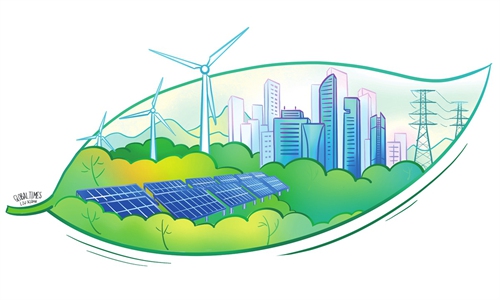
The continent's energy infrastructure built up over the past decades was designed based on the mild summers of the past, but as extreme heat waves almost become an annual norm, the system is increasingly being tested. There's a growing urgency to accelerate the restructuring of Europe's energy mix and fully embrace the transition to new energy sources.
Nevertheless, the journey to a new energy system has never been smooth. The EU has set its climate-neutral goal for 2050, and it generates about half of its electricity with renewable energy, but the upgrading of power grids lags far behind the rapid growth of installed clean energy capacity.
More worryingly, some voices advocate trade protectionism to protect local industries, erecting market barriers and raising thresholds for the circulation of green technologies and products. Such moves, seemingly protective of Europe's domestic industries, actually brake the overall progress of the energy transition, push up costs, and waste precious time for tackling climate risks.
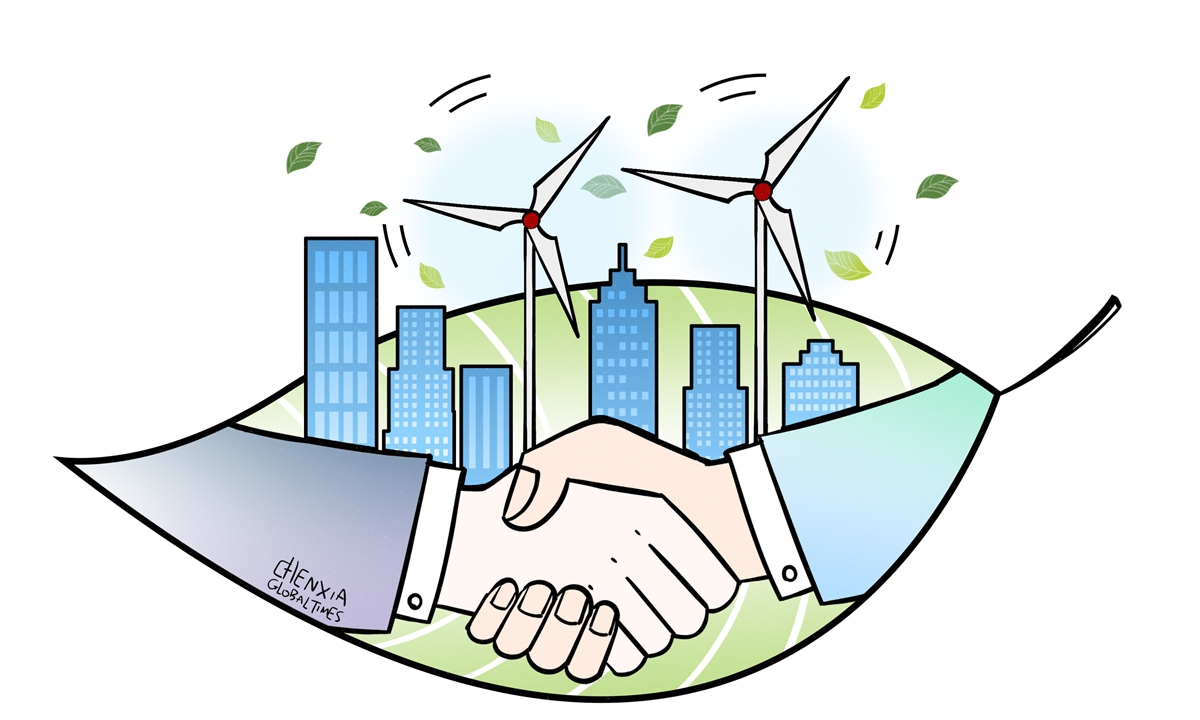
No single country or region can make the green transition on its own. Open cooperation, not self‑sufficiency, is the cornerstone of a smooth and robust energy transformation. The shift to renewables requires the coordinated functioning of a vast industrial ecosystem: solar panels, wind turbines, energy storage batteries, and smart grid equipment, each link deeply embedded in international supply chains.
If countries erect hurdles in the form of market access, tariff walls or local‑content requirements at every turn, transition costs will inevitably climb, installation schedules will slow, and the window of opportunity for tackling climate change will be squandered. Protectionism only makes the road of transition steeper and longer.
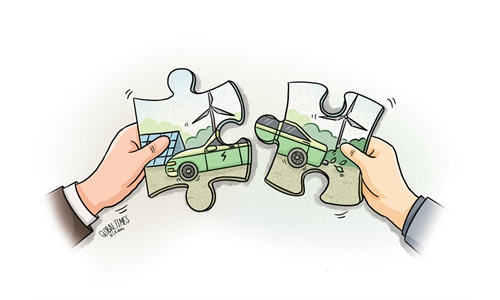
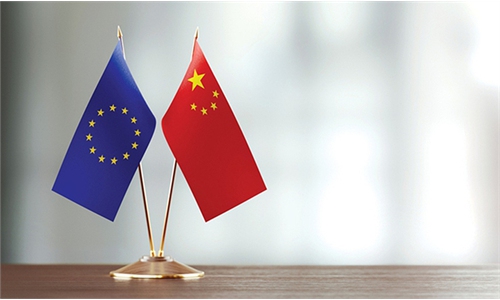
China and the EU are both pivotal players in the global green drive, and their industrial strengths are highly complementary. Europe boasts well developed green standards and a comprehensive policy framework for carbon neutrality, backed by extensive experience in energy efficiency management and smart grid operation.
China, for its part, has built a complete and highly competitive new-energy value chain, spanning from upstream raw materials to downstream applications, including solar modules, wind turbines, electric vehicles and battery storage systems. This complementarity creates significant potential for collaboration.
If Europe abandons protectionism and embraces China's new‑energy products and technologies with an open attitude, it can significantly reduce the economic costs of its energy transition, accelerate the expansion of clean‑energy installed capacity, gradually curb its reliance on fossil fuels, and enhance the resilience of its energy system. Through pragmatic industrial‑chain coordination, Europe can embark on a low-cost, high-efficiency path of energy transition.
Climate change is a common challenge facing all of humanity. As extreme weather becomes ever more frequent, politicizing trade and weaponizing supply chains will only undermine the collective efforts to respond to the climate crisis. The EU, as a pioneer in the green transition, needs to demonstrate greater strategic vision and responsibility, choosing open cooperation over confrontation, and mutual benefit over zero‑sum games.
As heat waves sweep across the continent, straining power systems, what Europe urgently needs is not higher tariff barriers, but smooth supply chains and reliable partners that facilitate its sustainable transition.
RELATED ARTICLES