SPORT / MISCELLANY
Youth basketball boom fails to boost elite talent pool, says CBA report
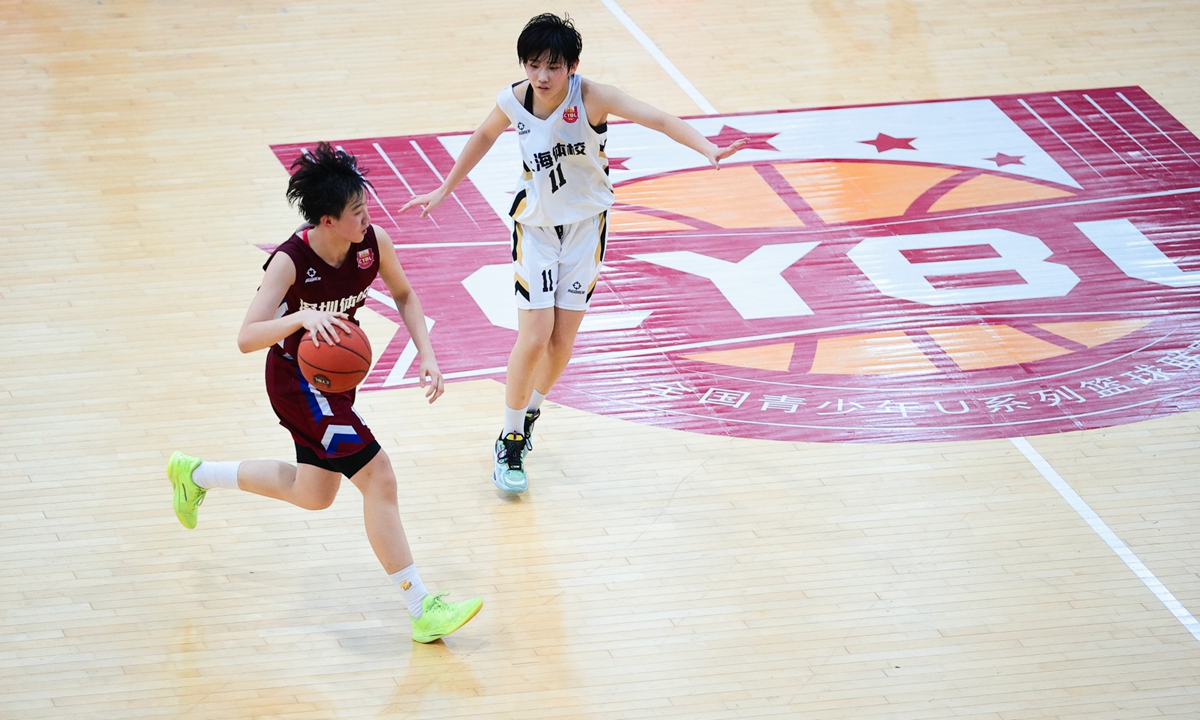
Youth basketball Photo: VCG
A new report released by the Chinese Basketball Association (CBA) on Thursday warns that China's growing youth basketball participation has not been matched by an increase in elite talent, highlighting structural challenges ranging from exam-oriented training to limited development pathways.
The China Youth Basketball Development Report, unveiled during a CBA media day on Thursday, argues that while youth participation in basketball appears to be rising, the country's core basketball population and reserve talent pool remain under pressure.
According to the report, the expansion of youth basketball participation "has not promoted the growth of basketball reserve talent." Researchers found that the pathways for identifying, selecting and developing young players remain narrow and fragmented, while coordination between the education system and the sports system remains insufficient.
One of the report's most striking findings is the prevalence of what is often described as a "retirement at age 12" phenomenon, referring to children dropping out of systematic basketball participation as they reach key academic transition periods.
The report notes that basketball participation declines sharply during middle school and high school as students face mounting academic pressure. While physical education entrance examinations have encouraged more students to engage in basketball-related activities, researchers argue that many are learning skills tailored to tests rather than the sport itself.
Under the current exam-oriented system, some students are able to complete dribbling and passing drills but lack the ability to play actual games, said Sun Zhanning, one of the report's authors, noting a larger basketball population does not automatically translate into a larger talent pool.
"From the investigation of Chinese basketball and what we have seen in international competitions, the expansion of the basketball population has not promoted the growth of basketball reserve talent," Sun said.
Sun also stressed the long-term social value of basketball participation, noting that many adults who played basketball in their youth later pass the sport on to their children, creating inter-generational influence that extends far beyond competitive results.
Several experts attending the event pointed to concerns over exam-driven training and excessive emphasis on short-term results.
Song Zhanjun, a high school basketball coach, said basketball development should focus on helping children actually learn how to play rather than simply master isolated technical tests.
"Being able to dribble and being able to play basketball are two different things," he said.
Song noted that basketball, as a highly interactive team sport, requires tactical awareness, decision-making and game experience in addition to technical skills. He hailed the recent efforts to increase school competitions, saying that students need opportunities to apply what they learn in real-game situations.
The report also identifies several challenges professional clubs' youth development systems faced, including unstable investment, insufficient competition opportunities, irregular talent transfers and limited career prospects for retired athletes.
Another major concern highlighted by the study is what it described as "championship-oriented thinking."
Researchers argue that an excessive focus on immediate results often comes at the expense of long-term development, leading some programs to prioritize winning over cultivating tactical understanding, psychological resilience and educational development.
The report further warns that academic pressure continues to squeeze training time and reduce opportunities for systematic development. In some cases, coaches resort to intensive short-term training methods aimed at producing quick results rather than supporting long-term athlete development.
Xue Zhengwu, president of the Beijing Basketball Association, acknowledged the challenges but emphasized the positive impact of the country's small-sided youth basketball initiatives.
"Small basketball has played a role in fueling and supporting the development of Chinese basketball," Xue said.
He argued that youth basketball should prioritize practical game skills and personal development rather than medals and rankings.
"The training philosophy should be centered on developing real-game abilities," Xue said. "When children can use what they have learned in games and experience success on the court, their interest grows."
Echoing that view, former China international Jiao Jian said youth basketball should focus on developing people rather than chasing trophies.
The CBA has in recent years promoted nationwide youth and mini-basketball initiatives while emphasizing improvements in coaching, competition structures and talent development pathways.
RELATED ARTICLES