China allocates 62.5 billion yuan in third batch of funds for consumer goods trade-in programs
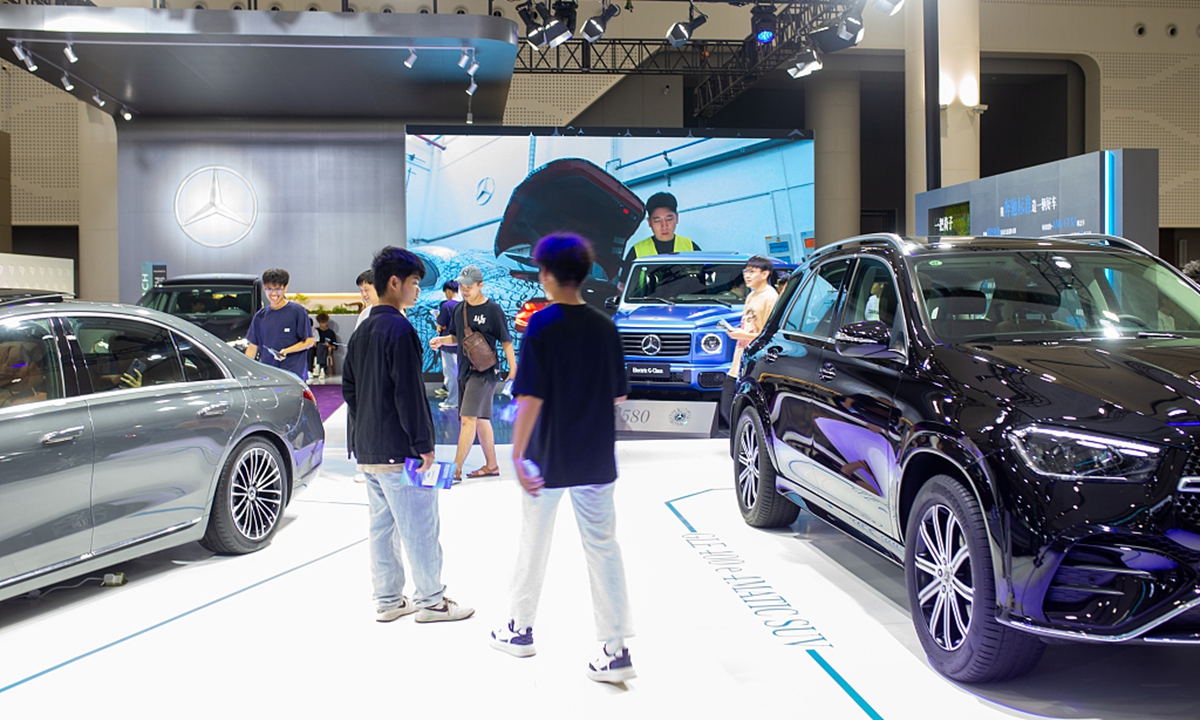
People visit cars on display at the 7th World New Energy Vehicle Congress (WNEVC) at the Hainan International Convention and Exhibition Center in Haikou, South China's Hainan Province, on September 27, 2025. Photo: VCG
China has allocated 62.5 billion yuan ($9.19 billion) in new ultra-long special treasury bonds to fund consumer goods trade-in programs in 2026, according to the country's top economic planner on Friday, which is expected to further stimulate consumer demand, experts said.
This marks the third batch of funds raised through such bonds for the programs this year, and has been recently allocated to local authorities, the National Development and Reform Commission (NDRC) said in a statement posted on its official WeChat account.
The NDRC said it will provide further guidance to local regions to disburse subsidy funds in a balanced manner, standardize and streamline the review and reimbursement process, strengthen whole-chain closed-loop management, and enhance the efficiency of central fund utilization.
As of June 20, 2026, sales of consumer goods under China's policy-backed trade-in programs exceeded 1 trillion yuan, totaling about 136 million purchases. The subsidy-to-sales leverage ratio has risen from 1:7.8 in 2025 to 1:10.3, according to the NDRC.
Driven by the consumer goods trade-in program, China's investment and consumption momentum has strengthened in recent years, providing robust support for economic growth, Li Changan, an economist at the University of International Business and Economics, told the Global Times on Friday.
He said that these subsidies have lowered household consumption costs by directly reducing prices, thereby stimulating consumer demand. This surge in consumption generates economic activity, which in turn drives overall economic growth. As the economy expands, residents' incomes rise, further fueling consumption once again. This virtuous cycle continuously injects endogenous momentum into economic development.
Thanks to the trade-in policy, the potential of green and smart consumption is being unlocked at an accelerated pace. In the first five months of this year, retail sales of high-efficiency household appliances by enterprises above designated size grew by over 30 percent; the market penetration rate of new energy vehicles in retail sales has exceeded 60 percent for two consecutive months, and retail sales of newly added subsidized wearable smart devices - such as smart glasses - more than doubled year-on-year, official data showed.
Looking ahead, Li said that subsidies will be distributed and redeemed with greater efficiency and convenience under the program, while a wider range of smart products is expected to be included in local government-led subsidy categories, and consumer participation will increase further, bringing policy dividends closer to consumers.
In March 2024, the consumer goods trade-in program was incorporated into a State Council action plan. The government plans to allocate a total of 250 billion yuan in ultra-long special treasury bonds to support consumer goods trade-in programs in 2026.
RELATED ARTICLES