Man bitten by cobra in Southwest China's Yunnan Province brings snake in a sack to hospital, doctor warns: 'Photo is enough'
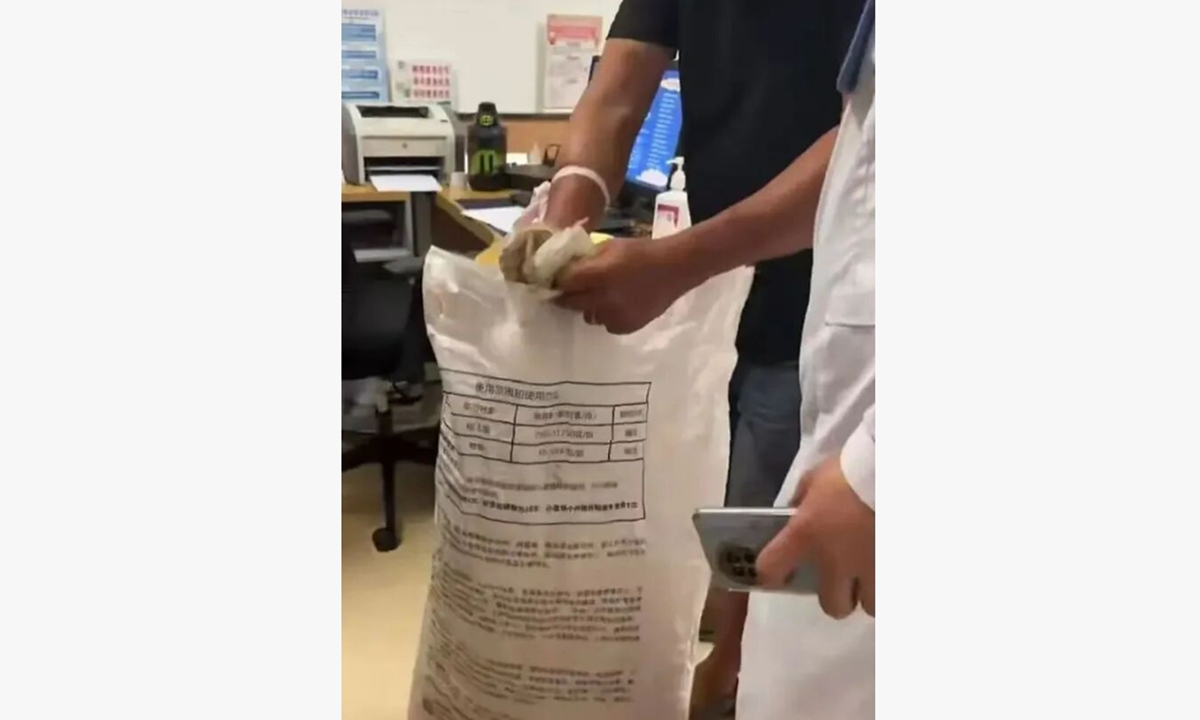
The bag with the cobra in it is brought to the doctor's office. Photo: downloaded from the official WeChat account of the People's Hospital of Yunxian.
As summer heat and humidity rise, snake encounters are becoming frequent in some parts of China. In a striking case reported by Yunnan.cn on June 20, a man in Yun county of Lincang, Southwest China's Yunnan Province, was bitten by a venomous snake, then made the unusual decision to catch it alive and bring it to the hospital.According to the report, citing local hospital sources, Mr Huang was resting at home when a snake suddenly entered his house. He initially tried to drive it away, but during the attempt, his right hand was bitten. Worried that doctors might not be able to identify the species quickly enough to guide treatment, he took an extraordinary step: He grabbed the snake with his bare hands, stuffed it into a sack, and carried it along to the People's Hospital of Yunxian in the county.
Doctor Li, who treated him at the hospital, said the snake was still alive upon arrival. It was a cobra about one meter long. Fortunately, only a small amount of venom had been injected, and the patient did not develop severe symptoms of envenomation. After symptomatic treatment, his condition remained stable, and he was discharged four days later.
"I only caught a quick glance through the bag, and it was still wriggling, but I couldn't see it clearly and didn't dare to inspect it closely, so I asked the patient to take it outside," Li recalled.
Photos from the scene showed that after being bitten, Huang had tied a cloth tightly around his arm in an attempt to slow the spread of venom. The doctor stressed, however, that this approach is incorrect. In cases of snakebite, the proper first step is to rinse the wound immediately and cover it loosely with clean cloth, then tight tourniquets or constriction of the limb should be avoided.
Li noted that this was the first time he had encountered a patient bringing a live snake to the hospital, although cases of people bringing killed snakes for identification are common. The intention is understandable: helping doctors identify the species to guide antivenom use and treatment.
However, Li said that capturing, killing, or bringing snakes to hospital is extremely dangerous and can be life-threatening. "If possible, take a clear photo of the snake instead," he said. "There is no need to bring the snake itself into the emergency room."
Global Times
RELATED ARTICLES