Xi meets Cambodia, Bangladesh leadership amid regional visit spree
China stands as ‘anchor of stability’ as regional countries ramp up ties
By and Published: Jun 27, 2026 12:06 AM



top news
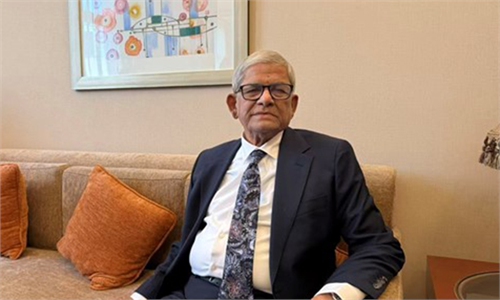
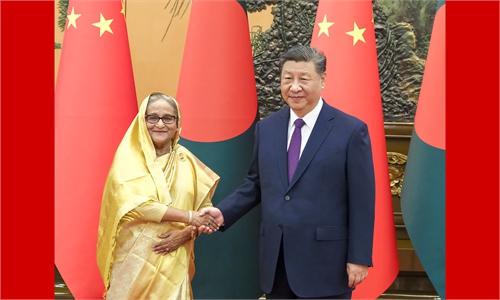
Chinese President Xi Jinping held separate meetings on Friday with visiting Cambodian People's Party (CPP) President and Senate President Samdech Techo Hun Sen and Bangladeshi Prime Minister Tarique Rahman, marking another high-profile diplomatic highlight in Beijing in late June.
According to official Xinhua News Agency readouts from the two bilateral talks, the Chinese leader and the two foreign dignitaries have reached consensus on building communities with a shared future, practical cooperation, regional governance and multilateral coordination.
During the meeting with Hun Sen, Xi said the two countries have continuously strengthened mutual trust and deepened cooperation in various fields since his state visit to Cambodia in April last year, adding that traditional friendship between the two countries is taking on new relevance to the times.
During the meeting with Tarique, the Chinese leader said that no matter how the world changes, China will not waver in its commitment to the overall direction of China-Bangladesh friendly relations, and will always be a trustworthy good friend, good neighbor, and good partner of Bangladesh.
As stated in Xinhua, both Hun Sen and Tarique reaffirmed firm adherence to the one-China principle and opposition to "Taiwan independence." They voiced willingness to expand practical cooperation, fully backed the four major global initiatives proposed by President Xi and pledged closer coordination with China on international and regional affairs.
Building a model of strategic cooperation
During the meeting with Hun Sen, Xi said that China is willing to work with Cambodia to jointly safeguard peace, seek development and foster prosperity, and make solid progress in advancing the building of a China-Cambodia community with a shared future, thereby setting a fine example for promoting the building of a community with a shared future for humanity, per Xinhua.
He noted that China and Cambodia should follow the path of steady development and revitalization, calling on both sides to promote substantive progress in the Industrial Development Corridor and the Fish and Rice Corridor. It is imperative to fully unleash the potential of China-Cambodia Free Trade Agreement, and ensure the outcomes of practical cooperation will better benefit people's livelihood, said Xi.
Stressing the importance of maintaining long-term peace and stability in their respective countries, the Chinese leader said China is willing to establish a security partnership with Cambodia, and work with Cambodia to make sustained efforts to root out the chronic problem of telecom fraud.
On building a model of strategic cooperation, he expressed China's appreciation to Cambodia for adhering to the one-China principle and for taking the lead in supporting China-proposed major ideas and initiatives.
Cambodian media have high expectations for Hun Sen's visit. Chhot Bunthang, a political analyst, told the Khmer Times that Hun Sen's visit is significant at a time of global uncertainty.
Cambodia, a key ASEAN member on the Indo-China Peninsula, is China's all-weather strategic partner in Southeast Asia. The two countries have built an all-round cooperation framework spanning politics, economy, trade and security, and maintained close coordination on cross-border security and South China Sea affairs, serving as a solid cornerstone of China-ASEAN cooperation, said Ge Hongliang, deputy director of the College of ASEAN Studies at Guangxi University for Nationalities.
According to the expert, Hun Sen's China visit is expected to further deepen China-Cambodia ties on the existing foundation.
While relying on bilateral dialogue mechanisms, both sides will better coordinate multilateral platforms including China-ASEAN cooperation, Lancang-Mekong cooperation and the SCO to advance development-oriented collaboration, safeguard the rights and interests of developing countries as well as international fairness and justice, and inject positive momentum and certainty into regional peace, stability and development, he added.
"The Cambodia-China partnership exemplifies South-South cooperation based on equality, non-interference and mutual benefit. Unlike relationships burdened by conditionalities or hidden agendas, it focuses on practical development," Seun Sam, a policy analyst at the Royal Academy of Cambodia, said in his opinion piece in the Phnom Penh Post.
"China does not lecture on internal affairs or tie aid to political reforms. It delivers tangible results — bridges, roads, schools and jobs — that improve lives. In a multipolar world, Cambodia wisely diversifies but recognizes China as its most important and trustworthy partner," he added.
Toward a higher level
On Friday, President Xi and Tarique jointly announced the building of a China-Bangladesh community with a shared future in the new era to bring bilateral relations to a higher level.
He told Tarique that China is willing to conduct exchanges in healthcare, culture and education and at subnational levels, and advance the development of the China-Myanmar-Bangladesh Economic Corridor for greater regional connectivity.
China is willing to make sound plans for orderly cooperation in priority areas with Bangladesh, and explore cooperation potential in green and low-carbon development, digital economy, information technology, and artificial intelligence, he said.
China is ready to strengthen communication and coordination with Bangladesh within multilateral frameworks including the UN, so as to jointly promote an equal and orderly multipolar world and a universally beneficial and inclusive economic globalization, and better uphold the legitimate rights and common interests of the two countries and the interests of the Global South, he said.
Online news portal Bangladesh Sangbad Sanstha noted that bilateral engagement spanning strategic coordination, trade, investment, employment-generating development projects and people-to-people exchanges is poised to elevate China-Bangladesh relations to new heights.
Qian Feng, director of the Research Department at Tsinghua University's National Strategy Institute, believed that the two sides' official announcement of building a China-Bangladesh community with a shared future in the new era not only manifests Bangladesh's full recognition of the Chinese path to modernization, but also shows that its leadership regards China as a trustworthy partner and stands ready to align comprehensively with China in strategic thinking and policy implementation to forge long-term and stable synergy.
Major mainstream Indian media outlets have closely followed the Bangladeshi prime minister's visit, specifically noting that this trip to Beijing marks Tarique's first official overseas visit since assuming office.
Choosing China as Tarique's first overseas destination after taking office in February sends a clear signal that the current government tilts its diplomatic focus toward China and attaches greater importance to bilateral cooperation, even as Bangladesh maintains major-power balancing diplomacy, said Liu Zongyi, Director of the Center for South Asia Studies at the Shanghai Institutes for International Studies.
As a core South Asian hub connecting the Bay of Bengal and the northern Indian Ocean, Bangladesh serves as a pivotal node of the China-Myanmar-Bangladesh Economic Corridor, said Qian.
"China-Bangladesh cooperation is highly complementary," said Qian, "China's high-standard opening-up offers robust technology, capital, full industrial chains and a huge consumer market. Coupled with Bangladesh's geographic strengths and massive domestic demand, the two nations make perfectly matched partners."
Anchor of stability
The concurrent high-level visits from Cambodia and Bangladesh are not isolated incidents. Since April 2026, Southeast and South Asia have witnessed a surge of top-tier visits to China.
Prior to Hun Sen's visit, Southeast Asia witnessed a stream of landmark diplomatic engagements with China. Over the past two months, leaders of Vietnam, Laos and Myanmar have paid consecutive state visits to China, aiming to deepen efforts to build communities with a shared future and push forward regional integration. Meanwhile, Princess Maha Chakri Sirindhorn of Thailand, Brunei Crown Prince Haji Al-Muhtadee Billah and Singaporean Foreign Minister Vivian Balakrishnan have also visited China in succession.
South Asian exchanges remain vibrant too, as Pakistani Prime Minister Shehbaz Sharif visited China in May and Nepali Foreign Minister Shisir Khanal came in mid-June.
Notably, China has established or further upgraded the bilateral communities with a shared future with Vietnam, Laos, Myanmar, Pakistan, Cambodia and Bangladesh in the first half of this year.
Qian Feng said the spate of high-level visits from Southeast and South Asian leadership to China since April is far from a mere diplomatic coincidence. It distinctly reveals a collective inclination among regional states to forge closer ties and expand cooperation with China, attracted by massive market opportunities and development dividends unlocked through China's high-quality development and high-standard opening-up.
"Against compound risks including mounting geopolitical tensions and a sluggish global economic recovery, regional countries have fully recognized China's core role as an anchor of stability in international economic and regional security affairs," Qian said, adding that deepening cooperation with China can shore up their domestic economic and social progress, fuel sustained growth momentum and buffer against external uncertainties.
RELATED ARTICLES