Shenzhou-23 crew conducts space science experiments, enjoys baked pumpkin after one month in orbit
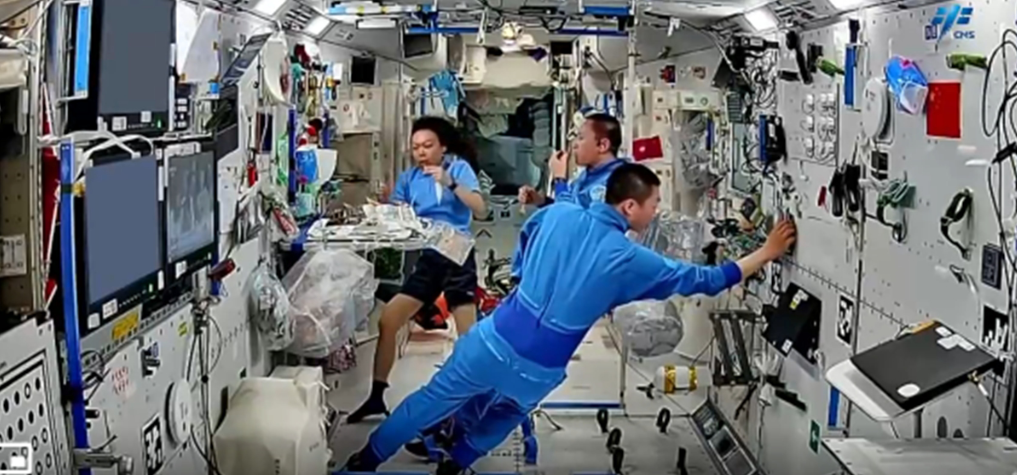
Photo: China Manned Space Agency (CMSA)
After spending one month aboard China's Tiangong space station, the Shenzhou-23 crew has continued a range of space science experiments, including collecting ultrasound data from different parts of their bodies, while also enjoying freshly baked pumpkin in orbit, according to the China Manned Space Agency (CMSA).
A video published by the CMSA on Sunday shows that taikonauts placed sweet pumpkin chunks into the space oven, bringing a touch of home-cooked warmth to life aboard the orbital outpost. Over the past week, the three crew members have maintained a busy and productive schedule.
In the field of space medicine, the crew used an ultrasound diagnostic device to perform ultrasound scans on one another's necks, wrists and abdomens. The data collected will support research on pan-vascular blood flow spectroscopy, spatiotemporal blood flow mapping, and the remodeling of muscle groups that are particularly sensitive to microgravity.
The Shenzhou-23 crew also interacted with the space robot Xiaohang, conducting touch-based interaction tests to collect data that will help optimize motion planning for robots operating in orbit. Having served aboard the Tiangong space station for more than a year, Xiaohang has now worked alongside four taikonaut crews.
Research into in-orbit electroencephalogram (EEG) testing has also progressed smoothly. The three taikonauts used EEG acquisition equipment to carry out a series of experiments, including tests on visual-motor processing and behavioral responses to different lighting conditions. Scientists on the ground will use the data transmitted from the space station for further research, according to CMSA.
In the field of microgravity physical science, the crew completed the installation of multiple experimental modules and units. They also carried out routine maintenance, including replacing samples in the containerless experiment chamber, servicing electrodes in the levitation system and cleaning observation window lenses.
As part of their health management program, the taikonauts used a traditional Chinese medicine diagnostic device to collect physiological data, providing researchers with information to support long-term health monitoring during extended space missions. They also used specialized equipment to help counter bone loss and maintained a regular exercise regimen in orbit. In addition, the crew carried out routine tasks such as organizing supplies aboard the space station.
China launched the Shenzhou-23 crewed spaceship on May 24. The mission is notable for including a one-year in-orbit stay experiment, which will provide crucial data for future long-duration space exploration, per Xinhua News Agency.
Global Times
RELATED ARTICLES