SPORT / FOOTBALL
Overseas development remains essential for Chinese football
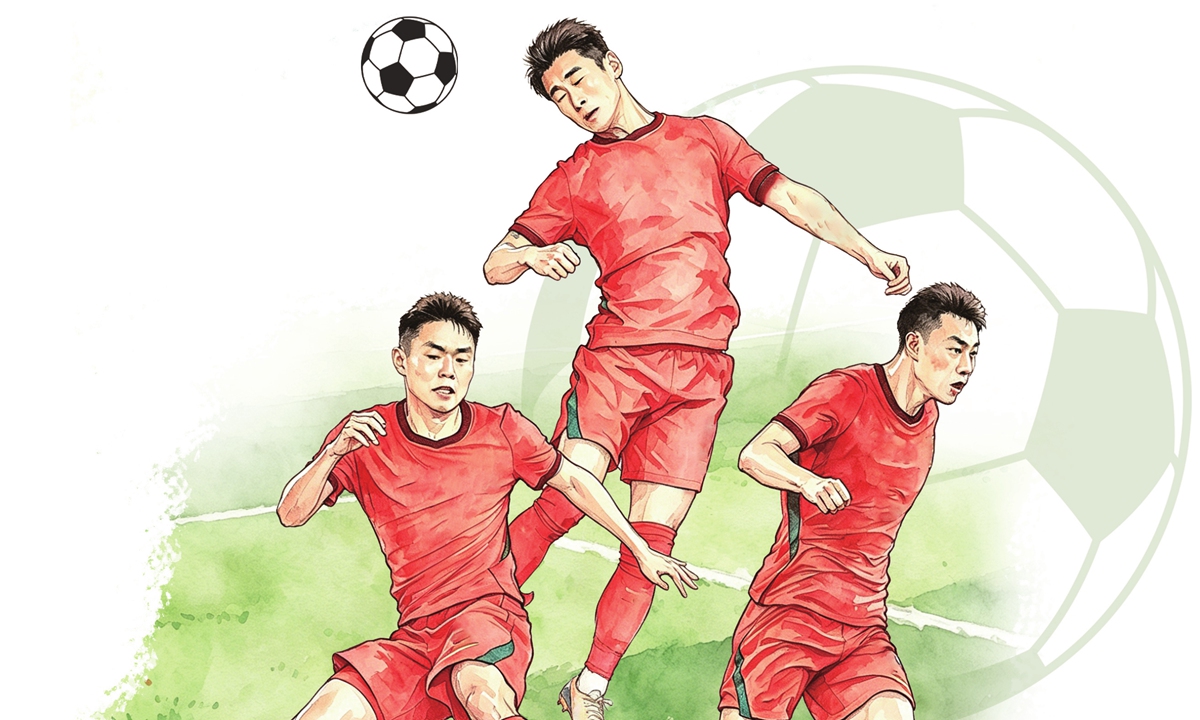
Illustration: Liu Xidan/GT
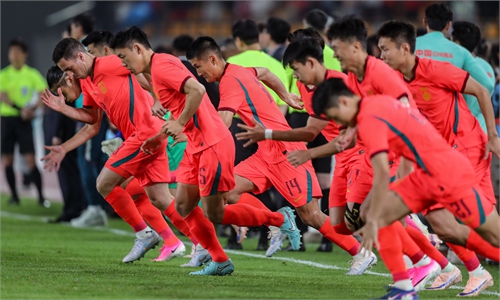
With the FIFA World Cup still underway, over in China the Chinese Super League (CSL) quietly resumed its domestic schedule.The contrast was striking. While much of the football world remained focused on the tournament, China once again watched from afar after failing to qualify.
That reality says as much about the current state of Chinese football as any result on the pitch.
The expansion of the FIFA World Cup from 32 to 48 teams has undoubtedly created unprecedented opportunities for Asian football. The Asian Football Confederation (AFC) saw its allocation increase from 4.5 places to eight automatic spots plus one intercontinental playoff berth, allowing a record nine Asian teams to qualify for the 2026 finals.
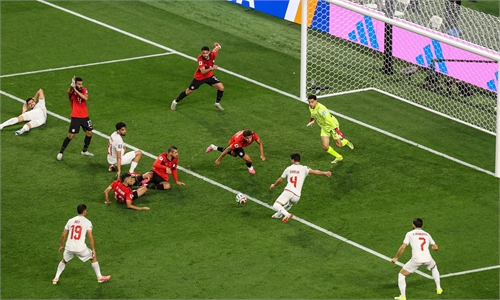
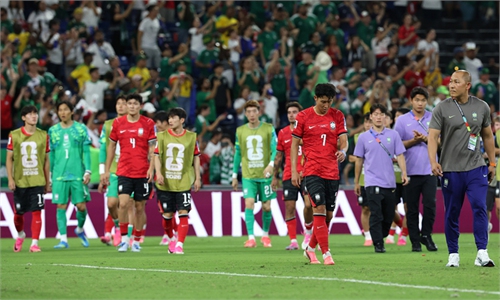
Traditional Asian football powerhouses such as Japan, South Korea, Australia, Iran and Saudi Arabia were joined by newcomers including Jordan and Uzbekistan. Yet as the group stage concluded, the excitement of nine Asian teams participating gave way to a more sober assessment. Several Asian teams struggled to cope with the intensity, pace and tactical sophistication of opponents from Europe, South America and Africa.
For China, which once again watched the tournament from afar, the lessons may be even more significant.
One point deserves particular attention: Among Asia's most competitive national teams, those that have consistently exported players to Europe's top leagues have generally been better equipped to cope with the competitiveness of international football.
Japan's football development provides a clear example. Its World Cup squad is overwhelmingly composed of players based in Europe, many of them competing in the top divisions of England, Germany, Spain, France, the Netherlands and Portugal. Australia's squad likewise features numerous players developed or playing abroad.
Their footballing identities have been shaped not only by domestic systems but also by regular exposure to faster, more physical and tactically demanding competitions.
This is not to suggest that playing overseas automatically produces successful national teams. Football tournaments are decided by small margins, and even well-developed football powerhouses can be eliminated after one poor performance. Football remains a sport decided by countless variables, from tactical decisions to injuries and moments of fortune.
However, there is an important distinction between individual tournament outcomes and long-term development.
Those Japanese and Australian systems expose players to higher standards every week rather than only during occasional international matches. They become accustomed to faster transitions, more demanding physical contests and sophisticated tactical structures. When international tournaments arrive, these players are not experiencing elite football for the first time, they have already been living it throughout the club season.
China currently faces a very different situation.
The CSL remains the primary platform for most national team players. Its overall competitive intensity remains far below Europe's leading competitions.
The consequences extend beyond individual player development.
Modern international football requires players to process information more quickly, make decisions under relentless pressure and maintain high physical output throughout 90 minutes or more.
These qualities are difficult to replicate through domestic competition alone if the overall standard of the league is significantly lower than the international level on display at the World Cup. China's international schedule has also been relatively limited against elite non-Asian opponents in recent years.
Opportunities to face European or African teams consistently have been scarce, reducing valuable opportunities for players to adapt to different tactical approaches before major qualification campaigns. This is why sending more players abroad should not be viewed as a symbolic objective or a public relations achievement. It should be understood as a critical component of player development.
Of course, encouraging overseas careers cannot become a shortcut that ignores domestic reform.
European clubs will not sign Chinese players simply because China hopes they will. Overseas opportunities must be earned through technical quality, tactical intelligence and professional standards. That requires improvements at the grassroots level such as stronger youth academies, better coaching education, and more competitive youth leagues.
A stronger domestic league and greater overseas representation are therefore not contradictory goals. In fact, they reinforce each other.
The expansion of the World Cup has lowered the qualification threshold for many regions, but it has not changed the fundamental demands of success at the tournament itself. Qualifying more easily is one thing; competing with the world's elite remains something entirely different.
If Chinese football hopes not merely to return to the World Cup but eventually to compete there with confidence, producing more players capable of thriving in the world's strongest leagues must remain a long-term priority. There is no single solution to rebuilding Chinese football.
However, if this World Cup has reinforced one lesson, it is that overseas development is not an optional extra, but remains one of the game's most important lessons.
The author is a reporter with the Global Times. life@globaltimes.com.cn
RELATED ARTICLES