Second batch of China medical expert teams to head to DRC for Ebola outbreak assistance: NHC
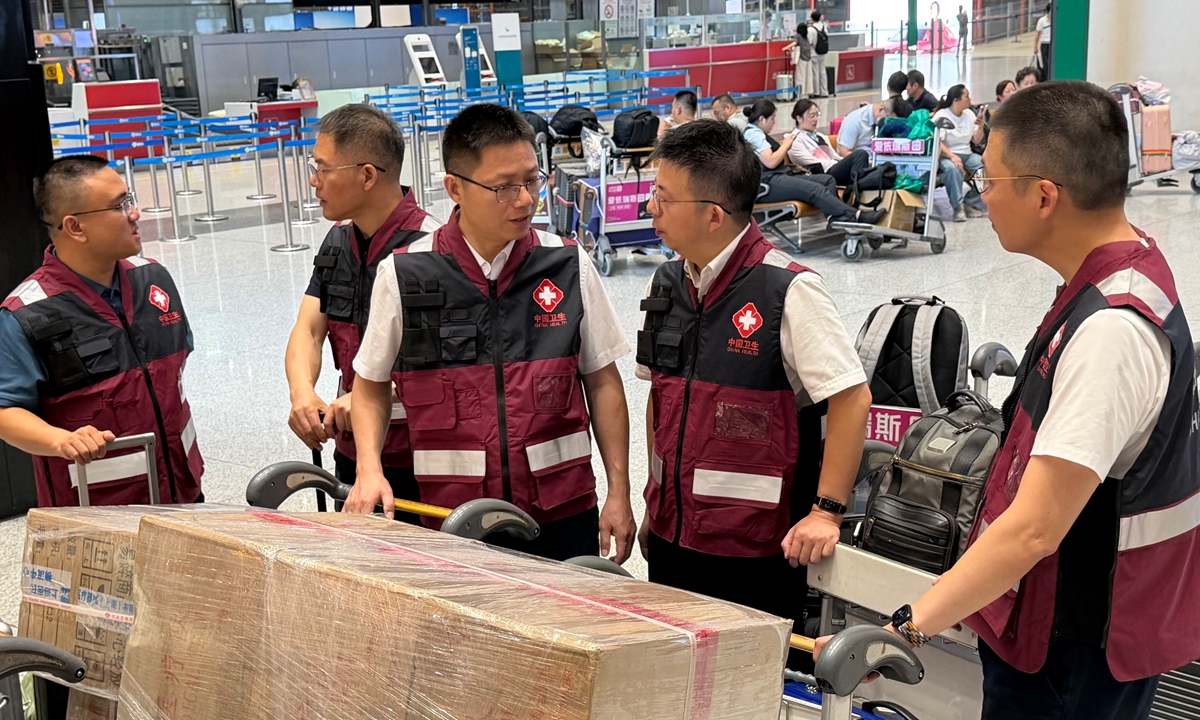
The second batch of China Medical Expert Teams departs Beijing for the Democratic Republic of the Congo (DRC) on July 2, 2026. Photo: Zhang Wanshi/GT
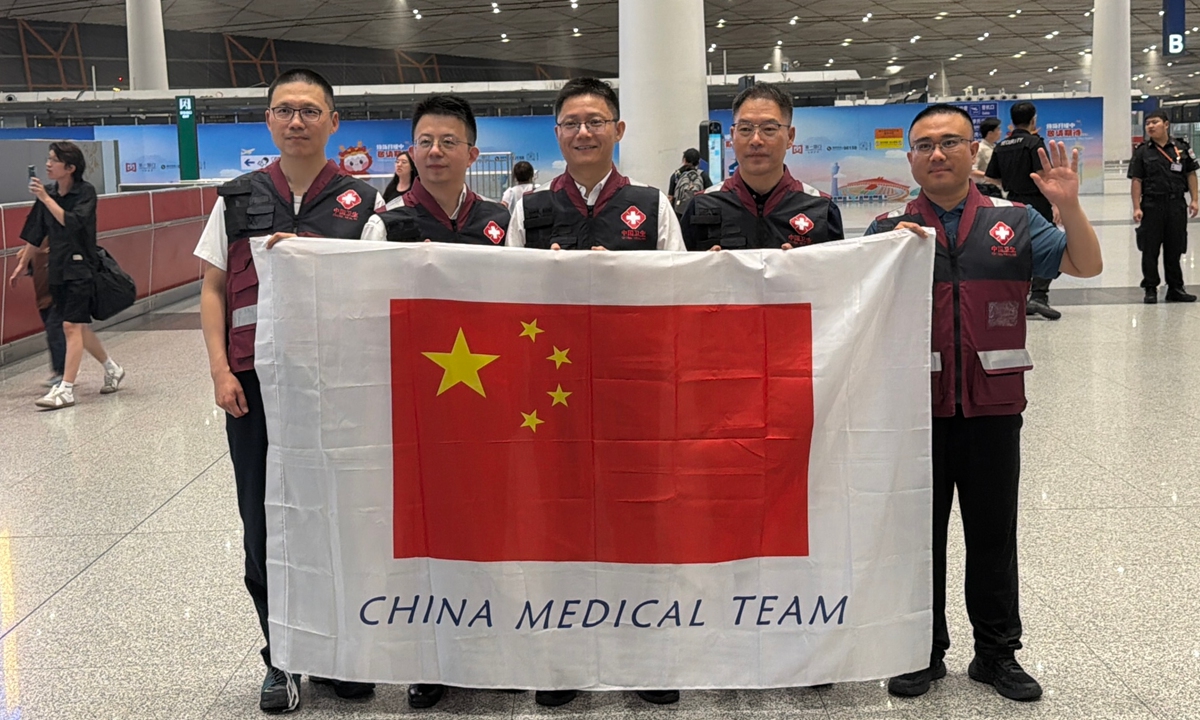
The second batch of China Medical Expert Teams departs Beijing for the Democratic Republic of the Congo (DRC) on July 2, 2026. Photo: Zhang Wanshi/GT
The second batch of China Medical Expert Teams departed Beijing on Thursday night for the Democratic Republic of the Congo (DRC) to support the Central African country's response to the Ebola outbreak, the Global Times learned from the National Health Commission (NHC).
The assistance efforts came after the African country declared the outbreak in mid-May. The outbreak, caused by the Bundibugyo virus, remains "active" in the DRC, with transmission continuing in several hotspot areas, according to the World Health Organization (WHO), the Xinhua News Agency reported.
China dispatched its first batch of medical experts to the DRC in June. Members of the second team told the Global Times on Thursday that their mission builds on the work of the first while also shifting its focus.
The leader of the second team, Gu Zhiqiang, director of the Division for African Affairs (Foreign Assistance) of Department of International Cooperation of the NHC, told the Global Times that they will place greater emphasis on strengthening institutional cooperation with relevant authorities in the DRC and international organizations such as the WHO by establishing regular communication channels.
As the epidemic continues to evolve, the team also hopes to gain a better understanding of the frontline situation and the international community's ongoing assistance efforts, Gu said.
Gu noted that the second priority is to advance scientific and technological cooperation by facilitating cooperation agreements between relevant Chinese institutions and their counterparts in the DRC and Uganda, with the aim of providing more public health products to the international community.
In addition, while the first team have developed contingency plans for Chinese enterprises and overseas Chinese communities in the region, the second team will conduct on-site visits to help implement those plans and ensure they are effectively put into practice, the expert added.
Having prepared more thoroughly and maintained close communication with colleagues already in the field, the second team is expected to transition seamlessly into the ongoing work, one of the team members, Wang Xinyu, a deputy director of the infectious diseases department at Huashan Hospital affiliated to Fudan University, told the Global Times.
The team will also work closely with local health authorities and frontline medical professionals to gain first-hand knowledge of the local epidemic situation and clinical response. Through these two-way exchanges, experts will learn from local experience while sharing China's treatment protocols and best practices in managing highly infectious diseases, Wang said.
The second team consists of five experts specializing in epidemiology, laboratory testing, and clinical treatment, with one specialist from customs, and its mission includes conducting a comprehensive assessment of the latest epidemic situation and trends.
The team also aims to promote cooperation on border health measures with the DRC and Uganda, offering recommendations to strengthen epidemic prevention and control at ports of entry.
The DRC has reported 1,406 confirmed Ebola cases, including 438 deaths, the government said in an update on Wednesday, Xinhua reported. The figures showed that 192 patients had recovered, while 609 others were receiving treatment or being cared for. The outbreak remains concentrated in the eastern provinces of Ituri, North Kivu and South Kivu, where surveillance, medical care and response operations are continuing.
Another team member, Su Qiudong, who is an associate research fellow of National Institute for Viral Disease Control and Prevention, Chinese Center for Disease Control and Prevention, said that he was deployed to Sierra Leone during the 2015 Ebola outbreak, where he was responsible for laboratory testing.
"This mission to the DRC feels different," Su said. It requires greater caution, as much remains unknown about its transmission chain. Su said that one of the primary tasks is to help improve local testing capacity and the goal is to improve testing efficiency so that results can be delivered more quickly.
Under the current arrangement, the Chinese medical team plans to work overseas for one month - three weeks in the DRC and one week in Uganda.
RELATED ARTICLES