Where exactly are certain Australian authorities trying to steer China-Australia ties?: Global Times editorial
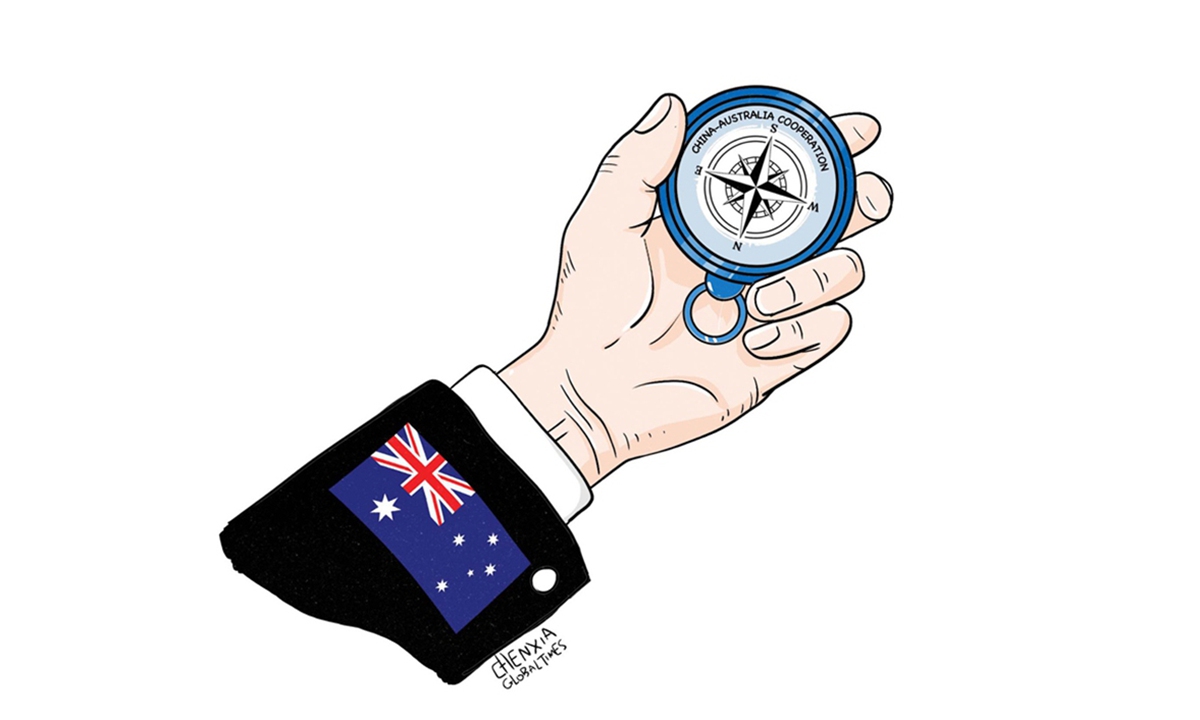
Illustration: Xia Qing/GT
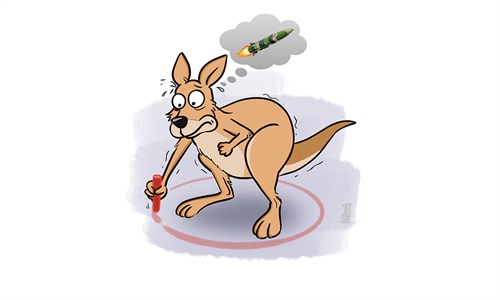
In recent months, some moves made by Australian security and intelligence agencies against China have raised eyebrows. In May, relevant Australian authorities issued a "transparency notice," claiming that a Sydney-headquartered, non-profit community group is "foreign government-related entity" linked to China, subtly urging Australians to keep their distance from the organization. In June, a video was screened during an Australian agency's annual threat assessment, using alleged charges of foreign interference against specific individuals to cast aspersions on China. Australia has also joined other "Five Eyes" intelligence agencies in issuing a so-called "security alert" accusing China of stealing intelligence. Additionally, according to sources, multiple Chinese citizens holding valid visas — including researchers and even retired public institution employees — have recently been subjected to unwarranted questioning and harassment by Australian authorities.It is understandable for Australian authorities to pay attention to security issues — that is part of their responsibility. However, these actions clearly suggest a growing tendency to view China as a "threat" and Chinese people as potential "spies" requiring strict vigilance, which has left many ordinary Chinese feeling puzzled. In a recent article, Chinese Ambassador to Australia Xiao Qian pointed out that China pursues a foreign policy of good-neighbourliness and has consistently developed friendly relations with countries around the world, including Australia, on the basis of mutual respect and non-interference in each other's internal affairs. The general perception of Australia in Chinese society is that it is a developed country rich in mineral resources and home to many overseas Chinese who have built lives there. Chinese people may want to visit the country for tourism, study, or work, but there is no indication that any Chinese harbors intentions to "invade" Australia or "interfere" in its internal affairs.
These recent petty moves by relevant Australian authorities inevitably recall the unpleasant period in China-Australia relations a few years ago. Starting in 2017, bilateral ties experienced a roller-coaster ride. At that time, Australia became the first country to ban products of Huawei and ZTE, abruptly canceled Belt and Road cooperation agreements signed between Australian local governments and China, searched Chinese journalists in Australia on dubious grounds, arbitrarily interfered with and suppressed Chinese investment and normal people-to-people exchanges, causing bilateral relations to plummet sharply.
After Australia's 2022 election, it took the new Australian government nearly half its term to bring bilateral relations back to normal, allowing Australian beef, wine, lobster, and other products to return to the Chinese market.
Compared with the Australia of just over a decade ago - which was among the first to recognize China's market economy status, actively signed a free trade agreement with China, joined the initiative to jointly build the Belt and Road, and became a member of the Asian Infrastructure Investment Bank - today's Australia is clearly more conservative. The atmosphere surrounding China-Australia relations is also a far cry from what was once described as a "golden era." Many people in both countries who devoted years of efforts to strengthening bilateral ties have lamented that it takes only a few misguided decisions to damage the relationship, but many years to repair it.
Regrettably, some in Australia have failed to seriously reflect on the period after 2017, and the conduct of certain Australian authorities is a case in point. Recently, tensions in the Middle East affected fuel supplies in Australia, leading to domestic shortages. It is understood that at Australia's request, China exported multiple shipments of refined petroleum products despite facing tight energy supply at home. Australia expressed its appreciation for China's assistance. Against this backdrop, the actions of certain Australian authorities appeared particularly jarring.
Australia enjoys one of the world's most favorable geographical environments. Apart from Japan during World War II, few countries have ever harbored territorial ambitions toward it. Unless Australia willingly boards the bandwagon of confrontation with China, no Chinese person would regard Australia as an enemy. For some Australian authorities, keeping the focus on China may seem like the politically "safe" and "correct" choice. Yet they know perfectly well which country exerts the deepest political, military, and economic influence over Australia - and to which Australia finds it difficult to say no. Australia indeed faces external "threats" or foreign "interference," but they do not come from China. Repeatedly promoting the so-called "China threat" narrative and provoking China's red line and bottom line will only undermine Australia's own interests while allowing the issues that actually threaten Australia to grow unnoticed.
Rooted in the West yet geographically part of the Asia-Pacific, Australia is well placed to serve as a bridge between the East and the West, fostering greater understanding and cooperation. It should not view China through a distorted lens or seek to "balance" China's development under the banner of maintaining peace and stability in the "Indo Pacific." In fact, many thoughtful voices within Australia have pointed out that the country should pursue a more independent foreign policy befitting a middle power. It is hoped that the relevant Australian authorities will put taxpayers' money to better use, doing more to deepen Australians' understanding of China and to promote the relationship between the two countries. Otherwise, the lessons of the past are clear enough: it would be unwise to wait until running into a brick wall before deciding to turn back.
RELATED ARTICLES