Beyond Headlines: ‘Californication’ of Chinese dining tables? Pursuit of healthy diet rooted in nation’s development, people-oriented policymaking
By Published: Jul 03, 2026 10:33 PM

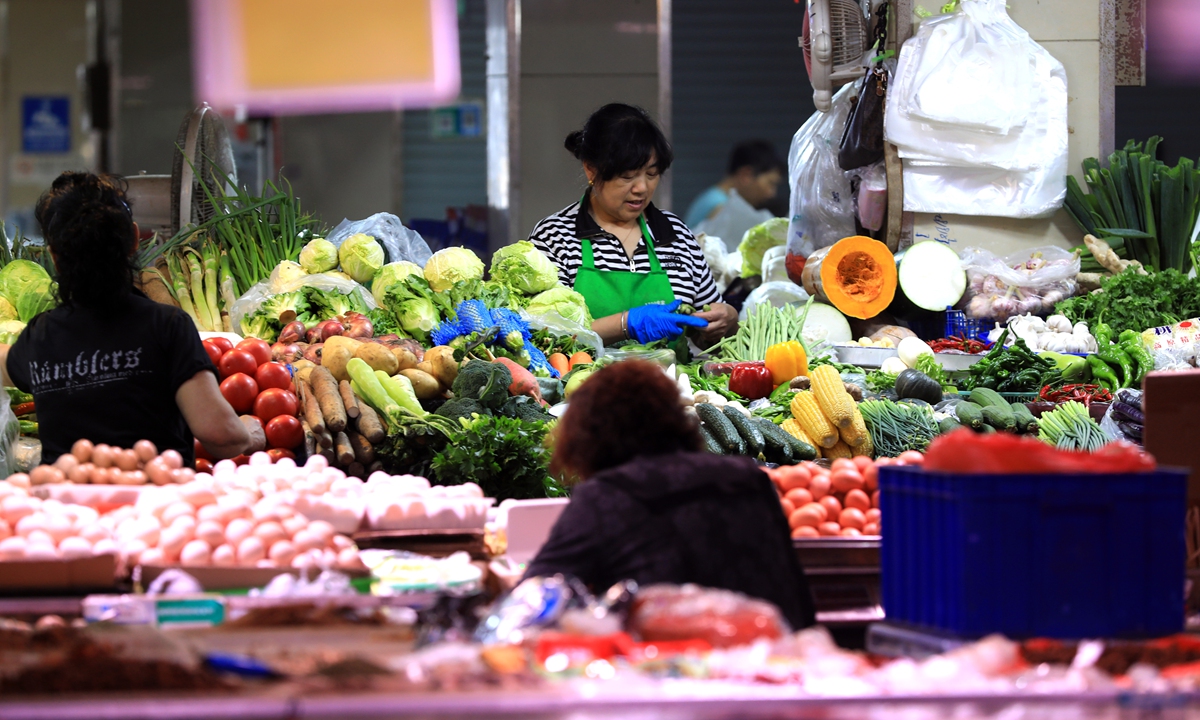
Vendors at a community vegetable market in Huai'an, East China's Jiangsu Province, tend to their stalls on June 10, 2026, as they await incoming shoppers. Photo: VCG
British magazine The Economist recently published an article titled "The Californication of middle-class Chinese diets," saying "the composition of Chinese plates is changing" - fish and seafood together are the second most popular proteins after pork, while salmon, blueberries and avocados are among foods growing in popularity.In fact, middle-class diets appear to be turning more Californian, the report said, noting that Chinese people "want to eat more healthily, safely and simply. China's food system is trying to keep up with their developing tastes."
Apart from The Economist, some western media have previously noticed the growing popularity of "white people food", referring to simple ingredients without complex and delicate cooking and seasoning, attributing the trend to its convenience and to a growing appetite for healthier eating.
These reports not only reveal a discernible trend toward healthier dietary habits among the Chinese consumers, but also offers a glimpse into how China's development and the government's continuous efforts have furnished a "reliable guarantee" for diverse and affordable food supplies on people's tables.
Shifting diet
Kang Xiaoyun first began posting healthy recipes on Xiaohongshu to keep herself motivated to lose weight. She didn't expect the account would provide her with a full-time income.
Under the name "Mediterranean Diet Diary," Kang shares her three daily meals on the platform, most are Mediterranean-inspired, but adapted to Chinese tastes: plenty of vegetables, legumes and nuts, alongside fish and healthy oils, all incorporated into familiar home-cooked dishes.
She created the account six years ago with a far more modest ambition to lose weight. "I started reading about the Mediterranean diet," she recalled to the Global Times. "What appealed to me wasn't a particular cuisine, but a way of eating. I realized its principles could be applied to almost any culinary tradition, so I combined them with my own cooking habits."
Today, Kang has amassed more than 500,000 followers. Many came for the same reason she once embraced the Mediterranean diet: to lose weight. Others are simply looking for healthy ways to eat.
Kang's rise on social media has coincided with a broader shift in China, where growing numbers of people are seeking healthier and simpler ways to eat instead of consuming savory yet greasy foods.
Restaurants serving healthy, natural and minimally processed food have been springing up across Chinese cities. Even milk-tea chains, long associated with sugary indulgence, have begun offering drinks made with fresh fruits and vegetables, and less sugar or creamer.
According to a survey conducted by Guangming Daily in December 2025, younger Chinese, particularly those born in the 1980s and 1990s, are increasingly using apps and digital tools to track calories and nutrients. Middle-aged consumers are cutting back on salt and oil to reduce the risk of chronic diseases such as hypertension and diabetes. Older people, long inclined to trust traditional ideas of food as medicine, are gradually embracing modern nutritional science.
As Chinese consumers' tastes evolve, the healthy-food industry is adapting to local preferences. In restaurants, Western-style raw salads transformed to "Chinese-style light meals" featuring familiar flavors and healthier cooking methods, according to the Guangming Daily survey.
It said that this localization of healthy food not only caters to increasingly diverse consumer preferences but also encourages a more balanced and scientifically informed approach to eating.
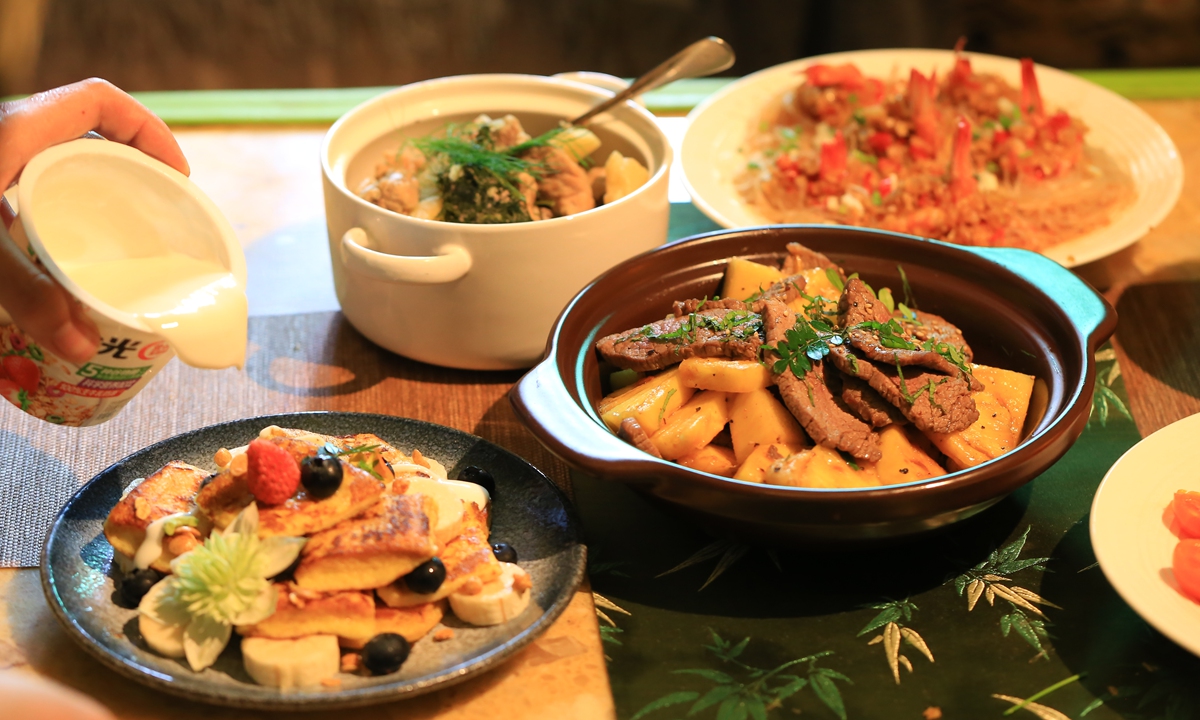
Visually appealing light meals crafted by a food blogger based in Changsha, Central China's Hunan Province Photo: VCG
From 'eat enough' to 'eat well'The Economist article also pointed out a trend: In less than four decades, the country has gone from rationing food to reining in waistlines.
Zhuang Shilihe, a Guangzhou-based medical expert, told the Global Times that China's economic development can be clearly observed through indicators such as annual per capita food consumption, including meat, eggs and dairy products, which have risen rapidly over time.
"Another example is the height of children and adolescents, which has increased significantly compared with the past," Zhuang said.
Over the decades, enhancing production and supply capabilities, as well as improving logistics have ensured fresher, more diverse choice of food for expanding population in cities amid China's quick pace in urbanization.
Zhuang noted that China's agricultural supply system has developed into a highly integrated and modern network, which provides a strong institutional guarantee for basic livelihoods. Beyond ensuring food security and stable supply, this system also supports healthier consumption patterns by improving access to safe, diverse and nutritious food.
One specific case is the "vegetable basket" project, which was launched in 1988 by the then Ministry of Agriculture to address urban shortages of non-staple foods, allowing people to enjoy nutritious, diverse, and healthy food all year long.
The program evolved from boosting output and basic distribution, to building large-scale production and wholesale networks, then to strengthening food safety systems, and most recently to enhancing coordination and emergency response capacity, according to an article on The Paper.
From "eat enough" to "eat well," the current pursuit of healthy diet is a natural phase of China's development.
In 2024, the Chinese government launched a three-year weight management campaign with the aim of encouraging healthier lifestyles and preventing chronic diseases. Last year, a plan of action was introduced to promote health-related consumption, outlining several measures in areas such as healthy eating, sports consumption, and services for the country's aging population.
From striving to provide diverse and quality food to making national initiative to comprehensively enhance public health, people's livelihood has always been the top priority of policymaking, analysts said.
When an article connects to Chinese people's changing diet with the west coast of the US, this shift actually aligns with China's overarching goal of elevating people's quality of life.
Li Shuxuan also contributed to the story
RELATED ARTICLES