Japan's plan to recycle rare earth minerals from AC units is unfeasible and reveals its weak points: Chinese analysts
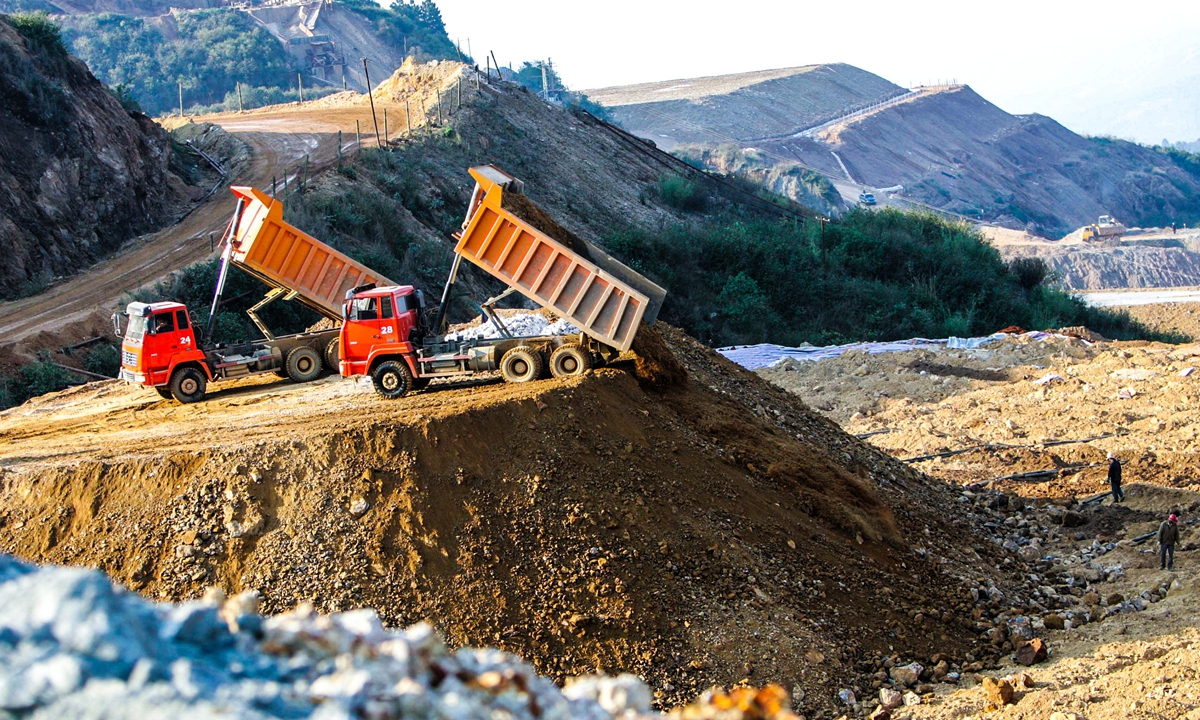
Rare earth File photo:VCG
Some Japanese media reported recently that a first-of-its-kind initiative to recycle rare earth elements from household air conditioners has begun in Japan, amidst "China's tightening of export restrictions on rare earth elements." Chinese industry analysts pointed out that this measure is costly and unrealistic, and that it also demonstrates China's export ban of dual-use items, including rare earths, to Japanese military end-users and for military use has precisely targeted Japan's vulnerabilities.
Mitsubishi Electric, which claims to be the first in Japan, began an initiative in June to disassemble discarded air conditioners and extract rare earth elements. The recycling process is carried out by specialized companies at each stage.
"First, we remove the compressor from the recovered outdoor unit and disassemble it. From there, magnets containing rare earth elements such as neodymium are extracted, refined, and reused in products. This initiative means that approximately 35 percent of the rare earth elements needed to manufacture air conditioners can be sourced from recycled materials," said Mitsubishi Electric in a statement.
This initiative is largely for public relations purposes and cannot solve Japan's fundamental shortage of rare earths. Recycling one air conditioner yields only tens of grams of usable rare earths, and the collection and refining process is extremely costly - often more expensive than buying raw ore directly. Even if Japan imports large quantities of scrap air conditioners, the overall cost would likely remain high, Zhang Xiaorong, director of the Beijing-based Cutting-Edge Technology Research Institute, told the Global Times on Sunday.
Furthermore, recycled rare earths from air conditioners are mostly light rare earths, while heavy rare earths - critical for electric vehicles and military applications - are almost nonexistent in such waste, said Zhang.
A Chinese industry analyst pointed out that only inverter air conditioners, which use permanent magnet synchronous motors, contain rare earth elements, specifically in the neodymium-iron-boron magnets inside the compressor rotor. Other components such as circuit boards, fans, and copper pipes contain almost none.
A typical Chinese-made 1.5-horsepower inverter air conditioner contains about 186 grams of neodymium-iron-boron alloy, equating to roughly 55.8 grams of pure rare earth elements. A smaller Japanese-made 1-horsepower inverter unit contains about 35 grams of alloy, or roughly 10.5 grams of pure rare earths, the analyst said, citing industry analysis.
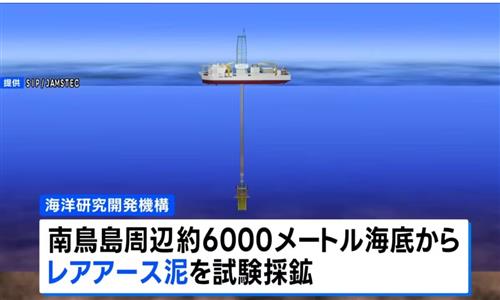
This recycling initiative also came after Japan's Cabinet Office and the country's national marine research institution announced in February that they had successfully retrieved mud believed to contain rare-earth elements from 6,000 meters beneath the Pacific Ocean near the remote island of Minamitorishima, Nikkei Asia reported.
"Deep-sea mining also offers no short-term solution, as extraction and processing costs are prohibitively high and large-scale production is unlikely within the next decade," said Zhang.
Zhang pointed out that while rare earth resources are distributed across many countries, the true bottleneck lies in refining and processing technologies, which remain heavily concentrated in China along with the complete industrial chain. "Even if alternative resources are available, building a fully independent supply chain would take many years."
Chinese experts noted that the recycle initiative and deep-sea rare earth exploitation claim may temporarily strengthen Japan's sense of national security and resource preparedness, but its high costs and technical difficulties mean it will have limited capacity to provide stable, large-scale rare earth supplies on a sustainable basis.
"Japan's move to extract rare earths from discarded household air conditioners for the first time is noteworthy. It demonstrated that China's rare earth controls over military use have precisely targeted Japan's vulnerabilities. If Japan does not correct its erroneous words and actions and stops its remilitarization moves, China's measures may be further tightened," the analyst said.
Zhang noted that these approaches can at best slightly ease psychological anxiety. Relying on them to circumvent China's rare earth restrictions is unrealistic.
On June 30, the Chinese Ministry of Commerce placed 20 Japanese entities - including the National Institute for Defense Studies - on the export control list and another 20 - such as MITSUI E&S Co, Ltd. - on a watch list. Following the initial lists released on February 24, this second batch of designations aimed to resolutely curb Japan's reckless moves of "neo-militarism."
Japanese media outlets report that shipments of key materials for high-performance magnets, such as dysprosium and terbium, to Japan have fallen to zero, while supplies of tungsten-related products have also been interrupted. According to Japanese institutional estimates, a full-year halt in rare earth imports from China - coupled with restrictions on related components - could reduce the country's real GDP by approximately 1.3 percent, or around 7 trillion yen ($43 billion).
RELATED ARTICLES