SPORT / SOCCER
Chinese team defends RoboCup 2026 title as embodied AI in sports draws global attention
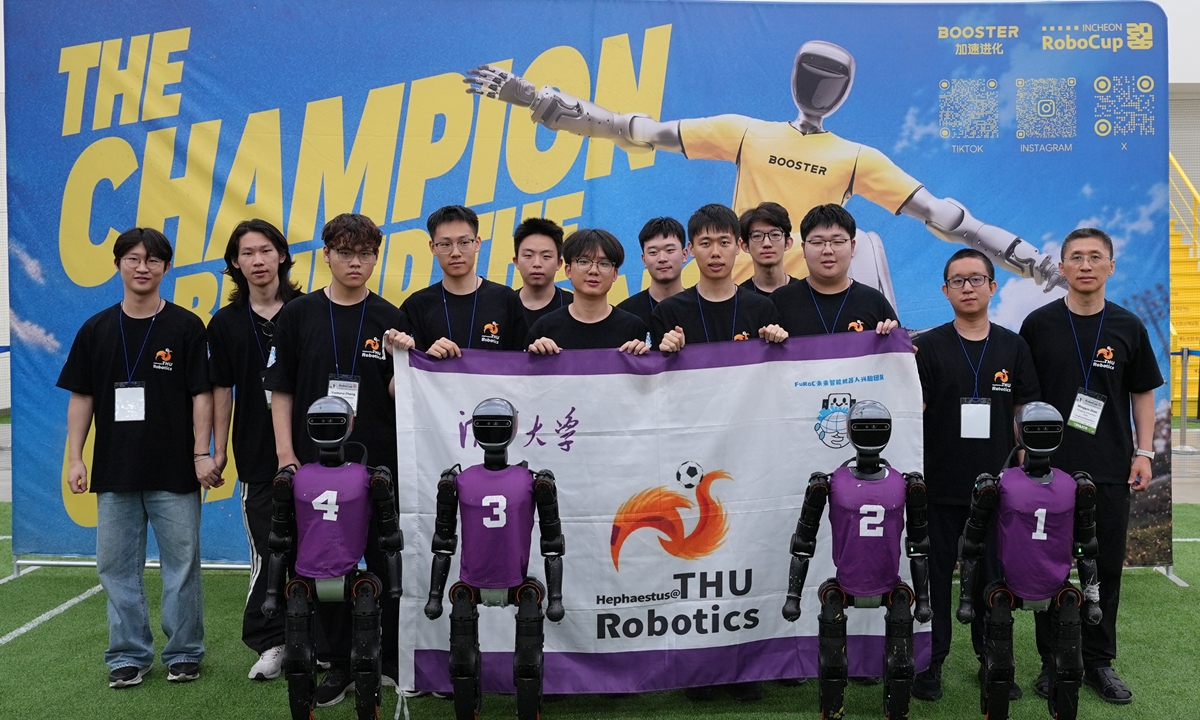
China's THU Huoshen Team from Tsinghua University has successfully defended its Humanoid League crown at the world's largest AI robotics competition, RoboCup 2026, which concluded in Incheon, South Korea, on Sunday. Photo: Courtesy of Booster Robotics
China's THU Huoshen Team from Tsinghua University has successfully defended its Humanoid League crown at the world's largest AI robotics competition, RoboCup 2026, which concluded in Incheon, South Korea, on Sunday.
The victory came a year after the team ended a 28-year title drought for Chinese competitors by winning the championship in Brazil, and highlighted its continued advances in embodied AI algorithms. The team competed using the Booster T1 humanoid robot platform developed by China's Booster Robotics, a robotics developer specializing in humanoid robots.
"This year's competition has shown that a global consensus is rapidly emerging around the standardization of embodied AI hardware platforms," Booster Robotics told the Global Times on Sunday.
According to Booster Robotics, in previous editions of RoboCup, participating teams had to build their robots from scratch, with substantial R&D resources devoted to mechanical design, hardware development, and basic motion control - essentially reinventing the wheel. This year, however, the development paradigm has shifted markedly. Leading teams have been able to focus their efforts on advancing higher-level capabilities, including visual perception, real-time decision-making, and multi-agent collaboration.
Booster Robotics noted that the growing maturity of underlying hardware platforms and development tools is also significantly lowering the barrier to innovation in embodied AI. With simulation-based development tools, young developers can build, train, and validate algorithms in highly realistic virtual environments before seamlessly deploying them onto physical robots.
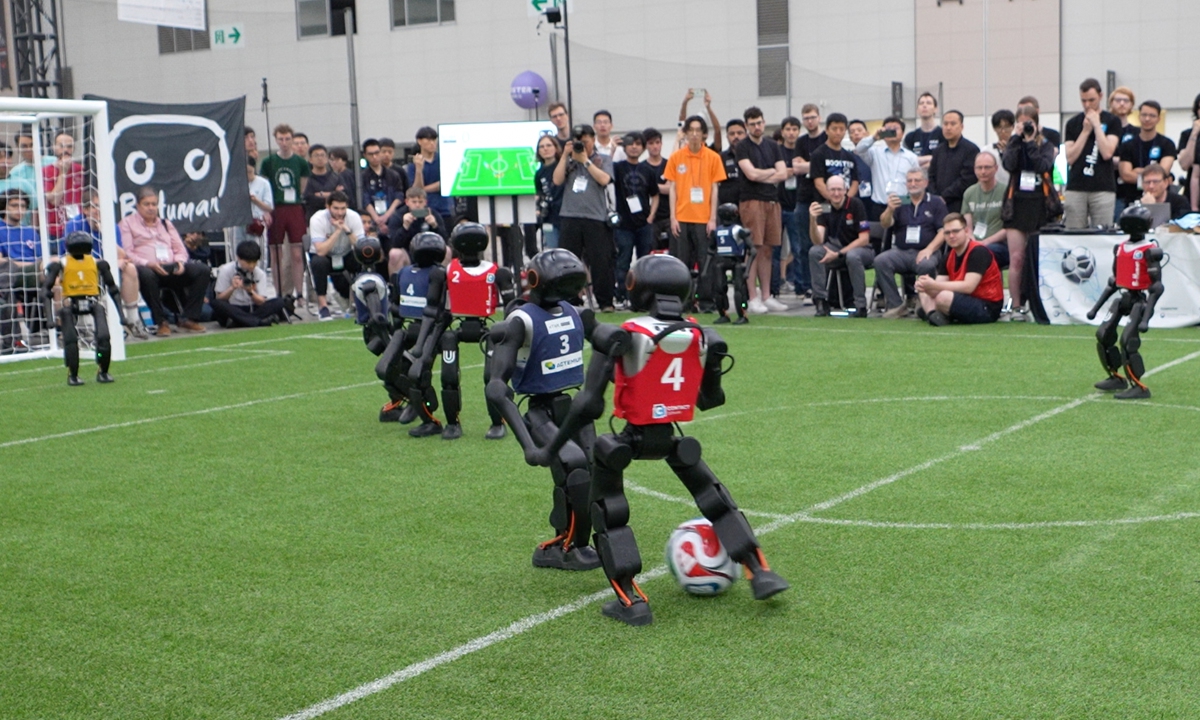
China's THU Huoshen Team from Tsinghua University has successfully defended its Humanoid League crown at the world's largest AI robotics competition, RoboCup 2026, which concluded in Incheon, South Korea, on Sunday. Photo: Courtesy of Booster Robotics
"This match shows how far humanoid robotics has come," said Ubbo Visser, president of the RoboCup Federation. "We have seen increased teamwork and advanced skills over the years already, but the new humanoid hardware paired with the new level of intelligence provided by AI puts humanoid robot soccer on another level."
According to the Korean robotics industry outlet iRobotNews, this year's competition demonstrated significant advances in the hardware stability and operating speed of bipedal humanoid robots, bringing the field a step closer to RoboCup's long-term goal of building a robot team capable of defeating the human FIFA World Cup champions by 2050. Experts noted that although today's robots still lag far behind human players in overall performance, the pace of technological progress has accelerated dramatically compared with previous years.
"Robo-soccer is becoming genuinely watchable content. Watching footage from RoboCup 2026 Incheon, you can see how multiple technologies - from ball recognition and posture control to balance recovery and split-second decision-making - are all compressed into a single play," said Yoshihiro Tanaka, CEO of the AI consulting company taziku.
RELATED ARTICLES