Extracting rare earths from air conditioners is more than just an international joke: Global Times editorial
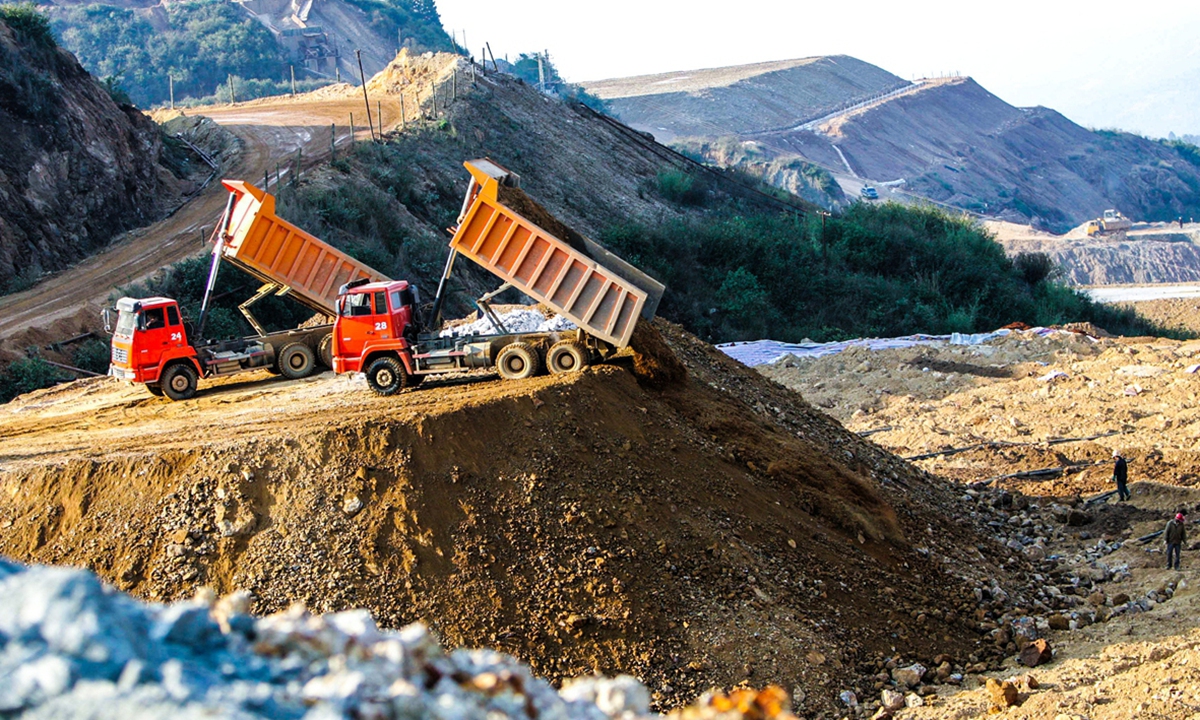
Rare earth File photo:VCG
According to a July 4 report by All Nippon News Network (ANN), as China tightens export controls on rare earths, Japan has for the first time started extracting rare earth elements from discarded household air conditioners. As soon as the news broke, Japanese netizens were the first to lose their composure. Some commented that "Prime Minister Sanae Takaichi claimed there was 'no problem' with rare earths, but in reality, it looks like we're scraping the bottom of the barrel." "We've reached the point where we have to rummage through trash." Some expressed concern that the move could lead to a surge in thefts of outdoor AC units. It does indeed resemble "trash picking," but dismissing it merely as a joke would be to underestimate the deeper signals and strategic warning it conveys.
Rare earths are the "vitamins" of modern industry and core strategic materials for high-end military industries. Elements such as dysprosium and terbium are constituent elements for high-performance permanent magnets, which are essential components in missile guidance systems, drones, fighter jet radars, and other equipment. One detail deserves particular attention: this recycling effort from old air conditioners is being led by Mitsubishi Electric. As a vital military-industrial complex in Japan, Mitsubishi Electric is deeply involved in defense electronics, radars, missile systems, and other fields, which is why it has been placed on China's Ministry of Commerce's export control list. This means the rare earths for permanent magnets extracted from civilian air conditioners are highly likely to flow back into Japan's dual-use production chain, even becoming raw materials for its military expansion - fundamentally altering the nature of the entire endeavor.
In fact, extracting rare earths from air conditioners is technologically difficult, costly, and faces major challenges in recovery rates and purity. Yet how can anyone view a country that is rummaging through garbage to build missiles as just a laughing matter?
Since the Takaichi administration took office last October, Japan has taken frequent steps toward remilitarization: pushing to revise the pacifist constitution, sharply increasing defense spending to record highs, and amending the "Three Principles on Transfer of Defense Equipment and Technology" to lift the ban on exporting lethal weapons. Right-wing forces in Japan have grown ever louder in whitewashing the history of aggression, while frequently issuing provocative statements on issues related to Taiwan question and the South China Sea affairs. The stirrings of "neo-militarism" have put the international community on high alert.
This somewhat embarrassing so-called "resource self-rescue" effort reflects, from one angle, the precision, necessity, and timeliness of China's upgraded export controls on rare earths and other dual-use items to Japan. China's Ministry of Commerce has stated clearly: The country prohibits the export of all dual-use items to Japanese military users, for Japan's military use, and for any other end-users and end-use purposes that help enhance Japan's military capabilities. The purpose is to curb "remilitarization" and nuclear ambitions. These measures are entirely legitimate, reasonable, and lawful. It is obvious that these steps are not directed at the Japanese people, but are aimed at safeguarding regional peace and stability and the post-war international order to the greatest extent possible, and preventing the recurrence of historical tragedies.
Recently, reports emerged of Japanese nationals in China suspected of smuggling rare earths. Why is Japan in such a panic? Since January this year, exports of dysprosium and terbium from China's controlled rare earth categories to Japan have dropped to zero, while yttrium exports have plummeted by more than 90 percent year-on-year. Faced with such a sharp drop in rare earth supply, what will Japanese right-wing forces use to sustain their ever-expanding military-industrial complex? Whether it is shifting defense budgets toward long-range strike capabilities, reorganizing the "Air and Space Self-Defense Force," or upgrading defense equipment in southwestern Japan, all of these depend on rare earths. Therefore, China's controls are not aimed at restricting normal rare earth trade, but rather serve as a valve to check and constrain Japan's ambitions for "remilitarization".
Japan's attempt to "pry open" this valve by extracting rare earths from old air conditioners precisely exposes the strategic predicament of its "remilitarization." To break free from its dependence on China for rare earths, Japan has searched far and wide - from Namibia in Africa to Greenland, located within the Arctic Circle, and even the seabed mud near Minami-Torishima. Yet today, Japan is farther than ever from "rare earth freedom." It is trapped in a vicious cycle: remilitarization creates greater demand for rare earths, but the more it pushes remilitarization, the less access it has to those rare earths.
Japan's unprecedented anxiety over critical minerals exactly demonstrates that "forming small circles" and "decoupling from China" cannot deliver truly stable and resilient supply chains. Today's rare earth dilemma is merely a microcosm of Japan's series of strategic miscalculations. The root cause lies in the delusions of right-wing forces. They mistakenly believe that military expansion will achieve "normal nationhood," and that they can contain China by ganging up with others - underestimating China's resolve to safeguard national sovereignty, security, development interests, and world peace.
What Japan lacks most has never been rare earth resources, but the strategic clarity to face history squarely and uphold peace, as well as the rational understanding to return to people's livelihood and development while living in friendship with neighboring countries. Hard-won East Asian peace must not be wantonly undermined by any single country.
Extracting rare earths from air conditioners is far more than an international joke - it exposes the swelling military ambitions of Japan's right-wing leaders and sounds a dangerous alarm for regional peace and the world order.
RELATED ARTICLES