ARTS / CULTURE & LEISURE
Chinese netizens accuse LV of attempting to monopolize ancient motifs after lawsuit against tea brand
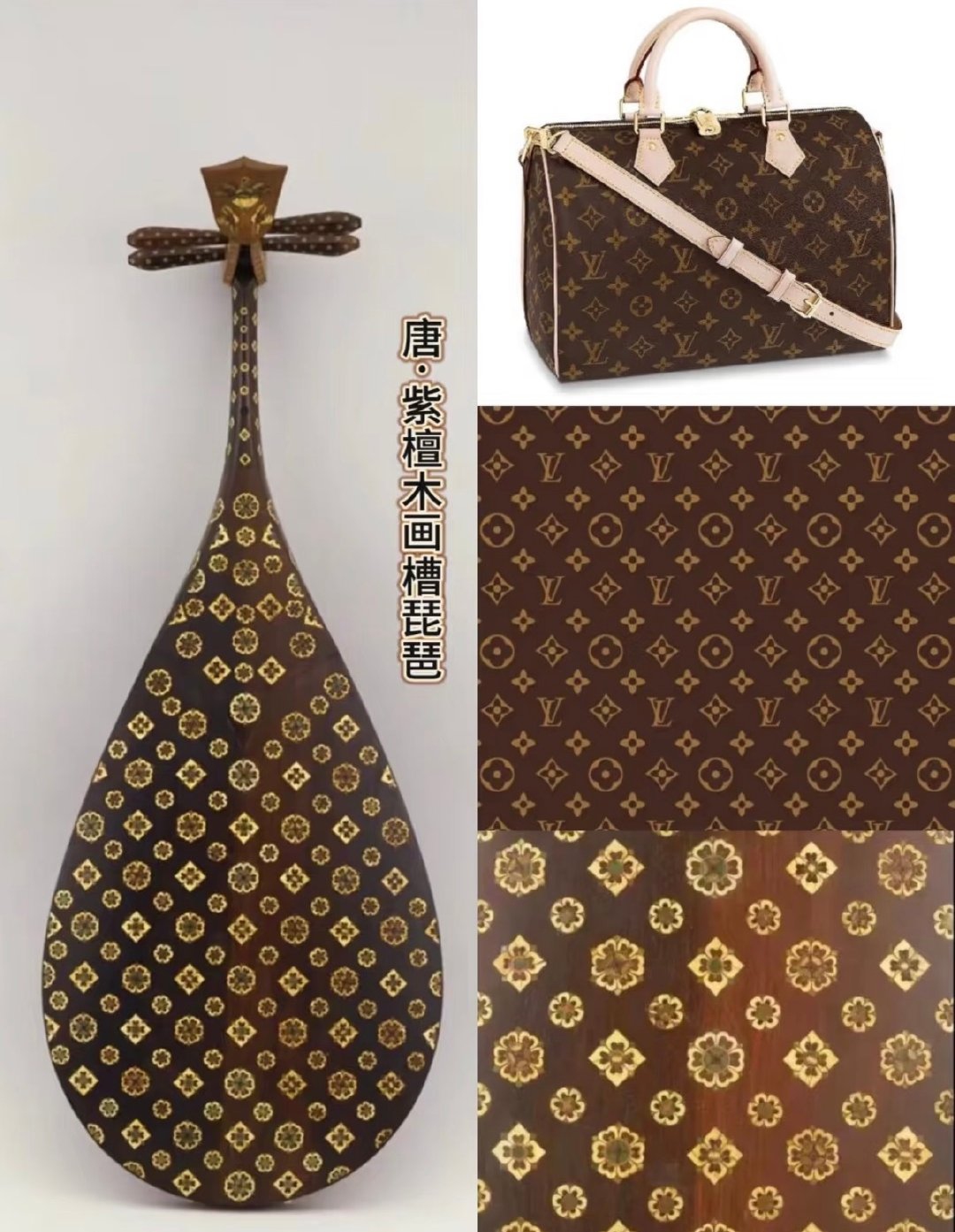
A comparison picture of the traditional Tang Dynasty (618-907) rosewood pipa (left) and the Louis Vuitton monogram pattern. Photo: Sina Weibo
A trademark infringement lawsuit filed by Louis Vuitton (LV) against Chinese tea chain Molly Tea has continued to generate heated debate on Chinese social media, with a growing number of Chinese netizens accusing the French luxury house of attempting to monopolize traditional Chinese patterns that form part of the country's shared cultural heritage.
On Tuesday, the hashtag "LV Accused of Monopolizing Ancient Chinese Patterns" climbed into the top 10 on the China's X-like Sina Weibo's trending list. Users expressed widespread frustration that traditional Chinese motifs such as the baoxiang flower and the persimmon calyx pattern — believed by many to be the origin of LV's iconic four-petal monogram — are part of China's shared cultural heritage and should not fall under the exclusive trademark control of a foreign brand. Some described the controversy bluntly as "cultural plunder plus trademark monopoly."
The dispute traces back to a June 29 ruling by the Suzhou Intermediate People's Court, which found that Molly Tea had infringed seven of LV's registered four-petal flower trademarks. The court ordered the tea chain to pay 10.3 million yuan ($1.52 million) to the French luxury house.
According to the report of Guangming Online, the judgment has not yet taken effect, as the case remains within the appeal period. LV has also reportedly filed similar lawsuits against more manufacturers, expanding its enforcement campaign.
On the Chinese lifestyle platform RedNote, Chinese users have been posting side-by-side images suggesting LV's pattern was inspired by traditional Chinese motifs, including the baoxiang motif from the Tang Dynasty (618-907). Others have uploaded photos of a Tang Dynasty rosewood pipa and the four-petal window lattice at the Humble Administrator's Garden in Suzhou, East China's Jiangsu Province, all bearing a similar quatrefoil design.
Many argue that LV's design is itself derivative. One RedNote user, identified as Weijueye, traced the origin of LV's classic quatrefoil pattern to the Tang Dynasty baoxiang flower motif — a symmetrical design based on lotus and peony.
"In essence, LV registered an element from the public domain as a trademark and is now using it to restrict Chinese brands from using similar patterns — that's commercial monopolization of a cultural element," the post read.
The case has also tapped into deeper public anger over what many see as a long history of cultural appropriation by global luxury brands. Netizens brought up previous controversies, such as Dior's skirt design resembling China's traditional horse-face skirt and Givenchy patterns echoing motifs on bronze vessels from Shang and Zhou dynasties.
In a show of support, some consumers said on Weibo they were intentionally ordering drinks from Molly Tea to back the local brand.
RELATED ARTICLES